
Sure Sex Sells, But Friendship Sells More - Are Ticketed Friends Meetups Exploiting Loneliness?
Words: Lindsey Bales
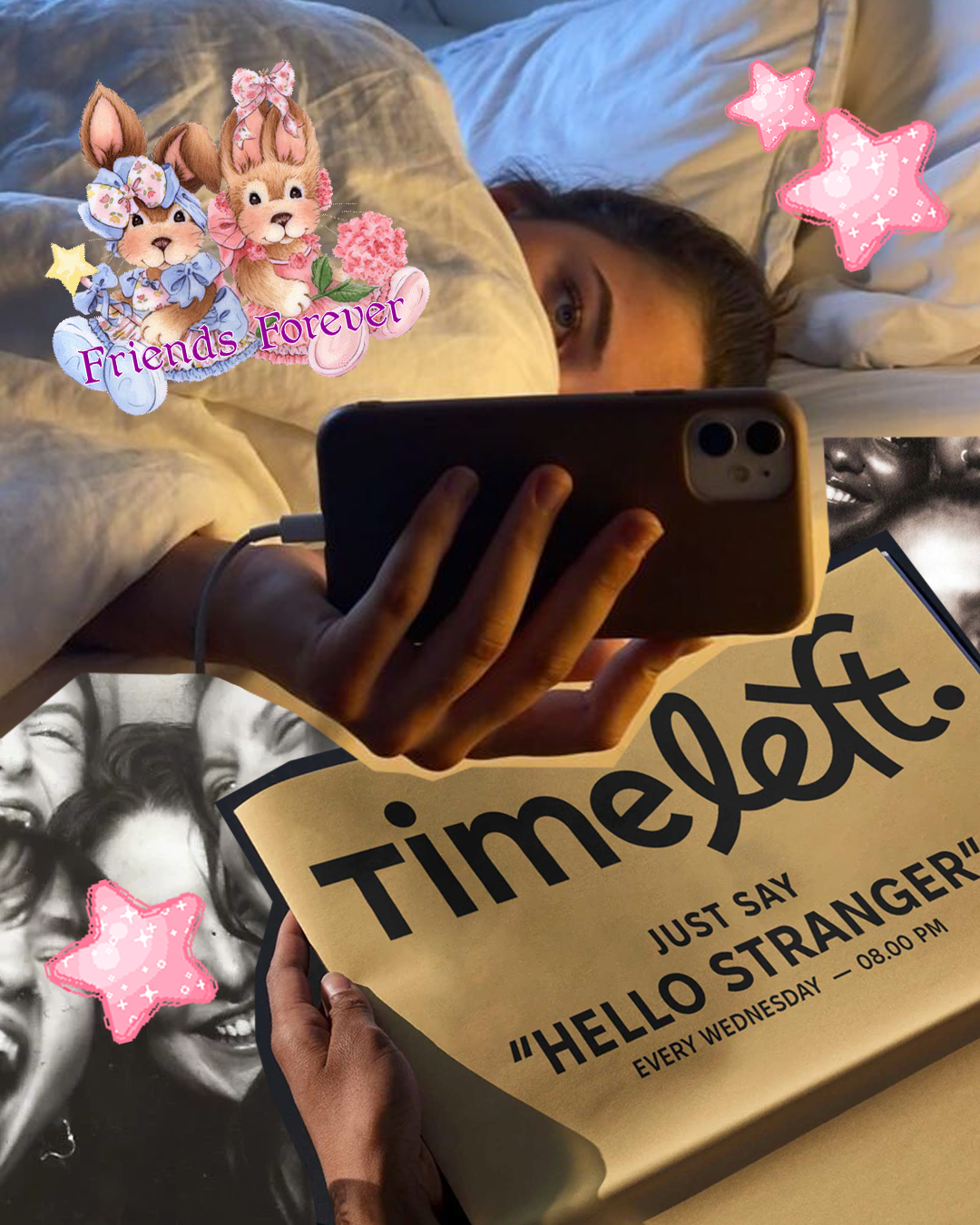
Maybe I thought Trump wouldn’t win in 2024 or I just didn’t read the dates right, but I signed up for a dinner with Timeleft - a paid app that places you at a group dinner with strangers at a restaurant - the day after the election results. I had just moved to Minneapolis, and thought, Why not, I’ll pay $16 to have dinner with some random people, sounds interesting enough. But there was no way I was going to drink alcohol around strangers after Trump was back in office, and I was fine with losing $16.
Now, I see sponsored posts for paid friendship apps that - for a fee - algorithmically curate friends for you, and group you with a paid friendship facilitator. Though I’ve wondered if I miss out on meeting new people by not using apps like this, I have started feeling that I am better than them I am a human who can talk to people. I don’t need your “how to break the ice” tab on your website. I can organically meet people! I don’t use AI to edit my writing, find recipes, or curate playlists for me, so why would I need AI to make me friends?
I posted this question on my socials, asking for people to DM me to tell me about if they’ve used a friend finding app. The first response, from A.Z. told me that they had to stop using these apps because they were “making too many friends”. They told me that these apps “changed their life” after they had moved to Milwaukee and didn’t know many people. It is efficient to make friends through a paid app who all want one common goal: more friends.
My DMs afterwards were so cluttered with happy stories that I almost wanted to stop looking at them. I started to wonder if I might be wrong about my stance on these apps and questioned why I became so frustrated in the first place. Maybe I was just being performatively “analogue” or something else pretentious.
Jenny Huberman, Professor of Anthropology at University of Missouri, Kansas City, is currently researching how these apps are reshaping human friendship. In an email, Huberman explained, “People have become far more comfortable with the idea of using digital technologies to foster social relationships. … But I think people are struggling more with the interactional demands of meeting people in an organic way and they need some help.” This makes sense to me, because nobody can afford concert tickets, or eating out, or spaces where we would generally have conversations with people regularly. People want to spend money doing things offline, but I find it striking to normalise the add-on tax of curated human connection by an app’s algorithm.
___STEADY_PAYWALL___
“When we allow a new norm of purchasing ways to make friends, we are disregarding not only those that don’t have the financial backing to do so, but also disregarding part of our nature, and interacting with the world around us.”
I decided to explore some of the popular and emerging friendship apps: Timeleft, Mesh, 222, and RealRoots after asking people’s experiences. The more I explored these apps, the more complicated and dystopian the features started to get. 222 put me through over thirty minutes of surveys. The questions even included refreshable “suggestions” of favorite artists and films (in case I didn’t have anything come to mind). Timeleft has an in-app feature called "Timeleft Connect," which creates a dedicated chat for a pair if they both mark an interest in each other.
RealRoots is the most intensive. After chatting with an AI bot, you meet your assigned friend group in person for drinks, and you continue to meet (if aligned) for six weeks through organised meet-ups, after which you become a member of the "RealRoots grad community." The RealRoots website boasts that their service provides "an amazing guide [hired employee] who facilitates deep conversation and fun activities with your group. It's the fast-track way to make a new group of friends without any of the awkwardness." The first meetup costs $25 dollars, and the six-week series costs $289. The website insists, “Friendship is guaranteed 100%.”
Jenny Huberman’s research on RealRoots is ongoing, so her conclusions are still in progress: “On the one hand, it feels like just another example of the way the tech industry makes us pay for value we create, and in that sense, I don’t like it. … On the other hand, these apps are clearly answering and not just creating a need that people have.” The unfortunate truth is, there is a need for these apps and if there wasn’t, no one would be spending money on them.
After signing up for Mesh, I got a text from the service which told me that I was actually chatting with the co-founder. A recent college grad, he made himself surprisingly available for questions (“All of our users can text us and it’s so much fun. A few of our users text us almost daily.”)
It’s easy to say that people feel more disconnected than ever; no one is really going to disagree with you. When I asked Michael of Mesh if he felt people were more lonely than other times in recent history, he stated that people tend to compare more now and spend more time on their phones. “So a very important part of feeling or being lonely and I think our perception of what it means to be lonely has increased.” Michael’s answer is direct and simple: “Get out and do the hard thing. It’s not immediately easy to meet new people or go in person. But it’s what makes life worth living.”
I wondered once again if I had the right stance on these friendship making apps, but then I thought about some of the free events I have attended recently that stood out to me. I called up my friend Courtnie Ross, who hosted really special events at her former store, LoveStoned in Missouri, who hosted free events at least monthly including drinks, appetizers, and even a professional photographer to take pictures of guests for them. She didn’t market these as friendship making events and Ross certainly was publicising her business, but she is emphatic about creating “an experience that didn’t feel transactional.”
In Minneapolis, an event series hosted by a new friend of mine Reza Cristían founded Joon Community in Texas to teach her friends how to utilise public transport during protests, which are always free, including bus fare. Cristían stressed how making the events free “opens the door for anyone, which means interacting with folks you might not primarily do so in your day-to-day."
When we allow a new norm of purchasing ways to make friends, we are disregarding not only those that don’t have the financial backing to do so, but also disregarding part of our nature, and interacting with the world around us. But more besides the point that big tech is evil, there are events that are simply… free, or provide more than just placing you with people in a space if you’re paying.
Do we want this to be the norm for making friends and human interaction? Don’t we deserve to curate our own friendships and not pay for it? We don’t need tech to continue to rule our lives and commodify them. Maybe tech isn’t really even the main issue here. Maybe it’s because our world is changing, but I think we should know that we have a say and how this changes.
When I reflect on my Timeleft dinner that was scheduled for the day after Trump was reelected, maybe I should’ve gone. That specific date would’ve probably been the most spontaneous that you could get with this app. People would’ve had feelings, no matter what they were: a deep sadness and possibly scared, or excited and boastful. Maybe I would’ve found friends feeling the same way that I did: confused as hell. Maybe I would’ve found friends there, but I feel like if I started finding my friends in a new city through these apps, I would’ve continued finding my friends through paid apps forever.