
From Mother Mary to The Moment - The Evolution of the Popstar Thriller
Words: Eleanor Brady
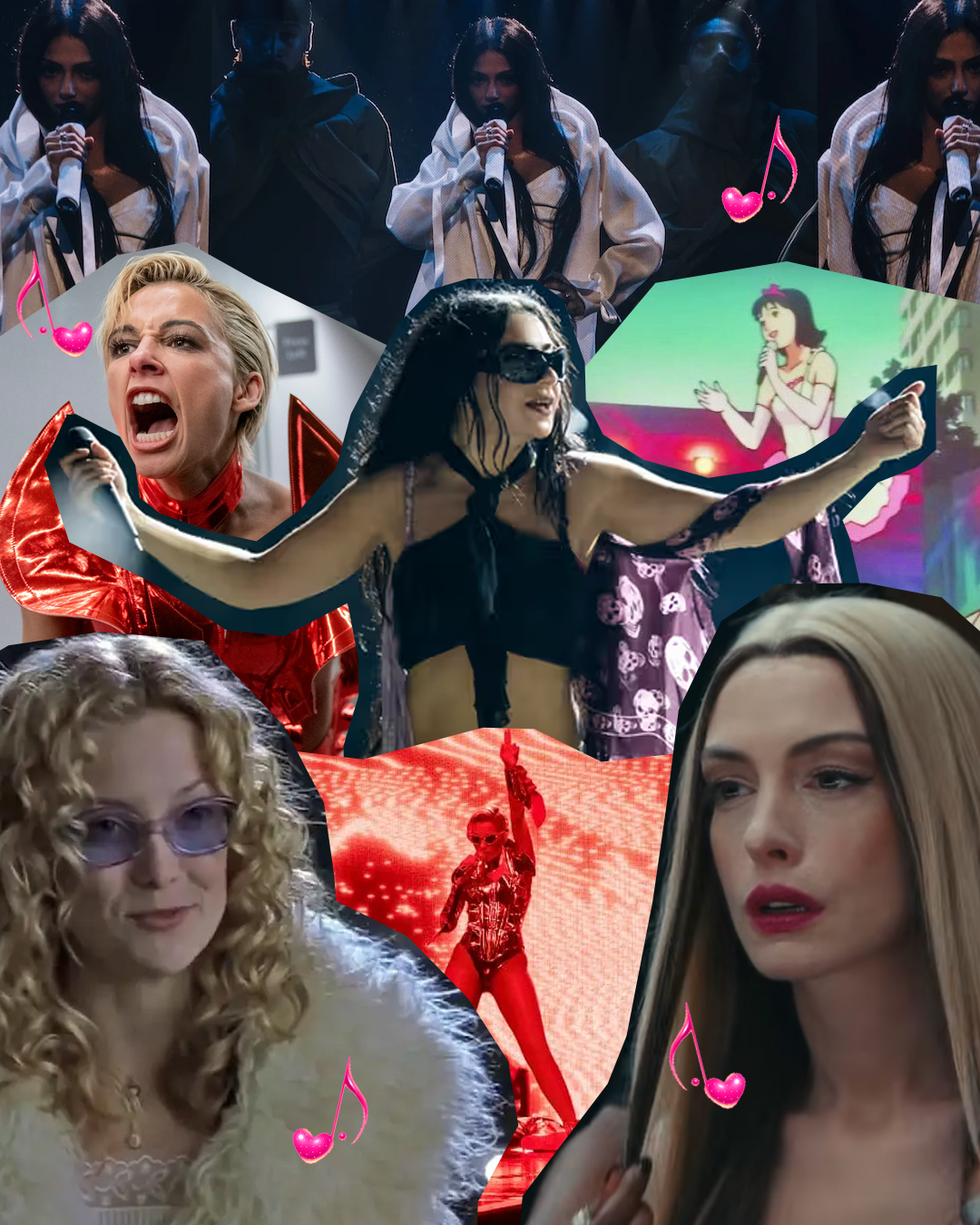
In Charli xcx’s recent mockumentary The Moment, which satirises the past zeitgeist of Brat Summer, there is one particular standout moment of dark humour. As Charli prepares for her tour, she hosts a fan meet and greet. It is awkward in the way you might anticipate. Fans bring gifts and monologue about how Charli saved their lives. It makes for an uncomfortable watch and crucially, breaks the fourth wall, to remind the audience how unnatural being a popstar in 2026 really is. This theme looks set to carry through into XCX’s next project, albeit with significantly darker undertones. In a Vogue interview last year, Hathaway described the role as “the most challenging” of her career due to the film’s intensity. Although The Moment is a semi-autobiographical take on XCX’s own experiences of fame, her next Hollywood project Mother Mary, which she and Jack Antonoff have produced the soundtrack for, is a bigger budget take on similar themes.
Mother Mary, set for release in April, stars Anne Hathaway as “a sort of Gaga-Taylor Swift hybrid”. Her character reunites with a former friend/designer played by Michaela Coel to make a dress which causes their relationship to reach boiling point. Despite the premise remaining largely under wraps, the film has been described as a “psychosexual pop thriller”. Whilst not an official term nor genre, the ‘pop thriller’ has emerged as a significant cinematic trend in recent years. The focus of popstars in popular media isn’t new - a glut of films have sought to chart the unstable, glittering ecosystem of pop, celebrity and fandom - like A Star is Born, Almost Famous and even KPop Demon Hunters. However, as this genre has developed in the past few decades, so has a cult community of fans, with the ‘pop thriller’ evolving into a genre-bending cautionary tale of stardom in the digital age.
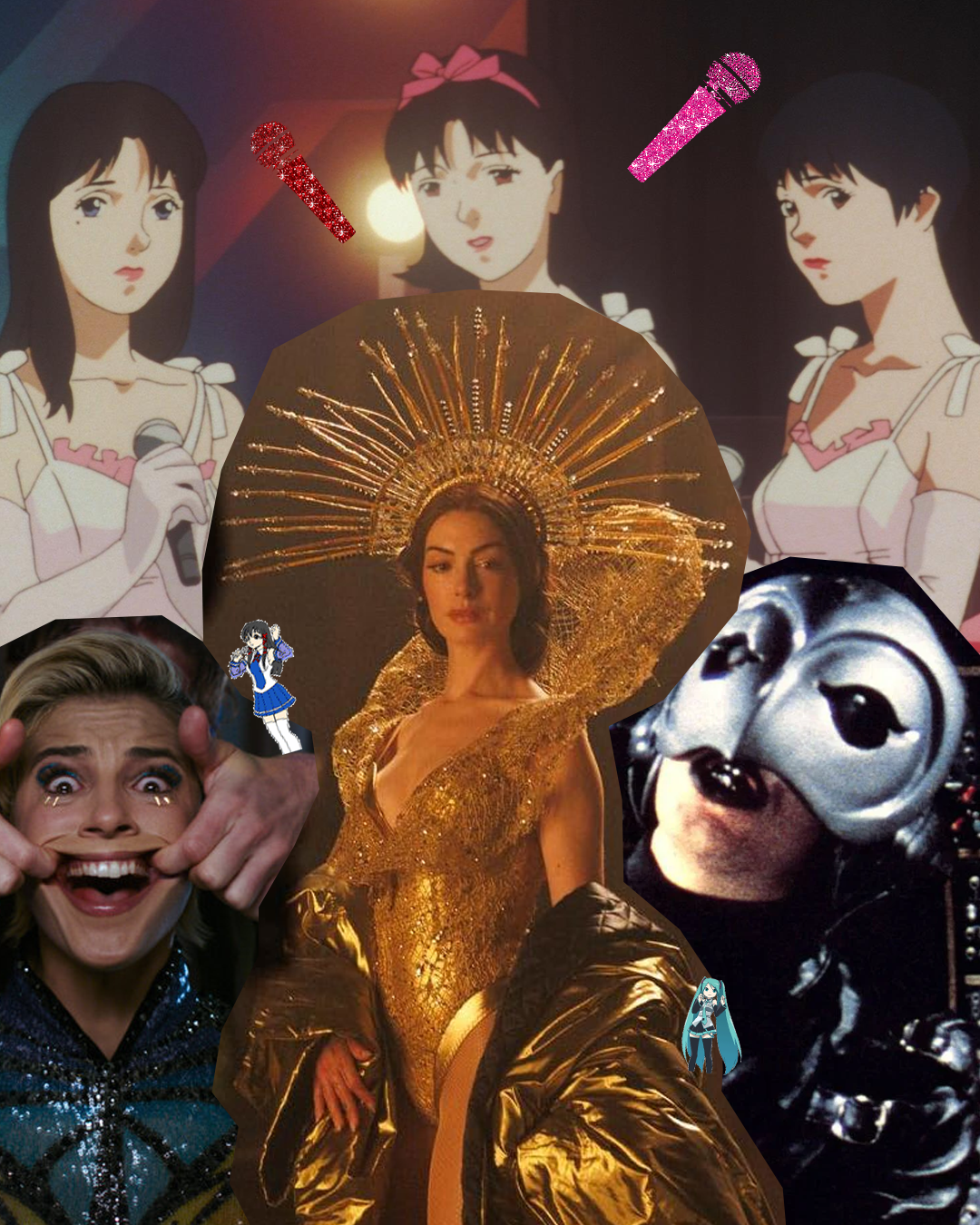
One of the earliest on-screen portrayals to expose the darker realities of pop stardom was Phantom of the Paradise. Set at the height of the “Rock Star” persona, Brian De Palma’s 1974 campy rock-opera, much like its namesake, follows maimed composer Winslow (William Finley), who becomes obsessed with Phoenix (Jessica Harper), an ambitious chorus girl, whom he treats as a vessel for his music after his mutilation.
In spite of its theatrical excess with musical numbers and lavish costumes, the film presents Phoenix as a replaceable commodity in a male-dominated industry. In one particular sequence, Phoenix is ushered through a pair of security-manned doors and the audience sees glimpses of a woman being pinned down on an infamous casting couch. Phoenix storms back out the doors a moment later: “I just can’t do it. Not that way.” Phantom depicted the industry as a soul-crushing machine that consumes artists, their music and in the case of female performers, their bodies, for profit and fame.
___STEADY_PAYWALL___
“From MTV-era access to hyper-visible, algorithmically amplified performers, fame is now synonymous with being constantly surveilled.”
It was seventeen years later, when MTV released its 1991 documentary Madonna: Truth or Dare, the popstar image was redefined forever. MTV’s signature format traded the mystique, which previously surrounded global icons for intimacy - boasting an all-access pass to Madonna herself. The film showed Madonna both on-and-off stage during her seismic Blonde Ambition Tour, scattered with moments including jokes and innuendos with dancers, discussions of her own sexuality, and private moments with then-boyfriend Hollywood star Warren Beatty. Whilst this ‘backstage’ content is now synonymous with fame, with popstars sharing endless reels and short-form content, at the time Truth or Dare was a genuine unfiltered insight into Madonna’s real life. For 11 years it remained the highest grossing documentary of all time, reflecting the increasing appetite for continuous fan access to their favourite performers.
By 1998 this trajectory of new media-enabled fan dedication had evolved rapidly alongside globalisation and technology, epitomised by Satoshi Kon’s Perfect Blue, a film which has been credited as inspiration for female-centred thrillers including Black Swan. Unlike its predecessors, Perfect Blue brings pop stardom into the digital age through Mima Kirigoe (Junko Iwao), an idol-turned-actress punished by fans for abandoning her “pure” popstar image.
A website “Mima’s Room” is soon created, which seeks to document her life without consent, posting her fake diary entries. This supposed insight into Mima’s private life results in an extreme fan obsession. The website fuels ‘Me-Mania’, a stalker who has been convinced by Mima’s Room that he’s talking to the real Mima through the website, and that this Mima is an impostor who needs to be killed. As Mima becomes entangled in violence she cannot explain, the film portrays fame as a blur of reality, performance and obsessive spectatorship at a time when chatroom spaces were central to fandom, allowing for discussion in real-time.
Fast forward to today, top music artists command massive social media followings, allowing for 24/7 monitoring. Smile 2 (2024) internalises these pressures, presenting popstar Skye Riley (Naomi Scott) as the ultimate ‘final girl’, whose public image is policed by her manager mother and record label chief. Despite its thriller premise being akin to the original Smile, the film sticks close to Skye’s life in the spotlight, with scenes of her rehearsing in costume, negotiating brand deals, and smiling for parades of fans lining up to pose for “badass” selfies.
As she starts to be infected by the deadly smile, Skye’s hallucinations become intertwined with the pressures of fame, at one point a demonic flash mob of fans even performs in her apartment. However, unlike the original Smile, Skye’s fame adds another layer of questioning for the audience, whether fans are grinning because they love her or due to a more sinister force. In Smile 2, every scene is infused with awareness of being a popstar in the 21st century.
Last year’s release Lurker goes further, mapping how in digital-era pop stardom, fandom reshapes power and identity. Matty (Théodore Pellerin), an unfulfilled fan, obsessively studies budding music star Oliver’s (Archie Madekwe) social media archive to manufacture intimacy, gaining access by initially pretending indifference before embedding himself in the artist’s inner circle. His escalation, from sabotaging collaborators to orchestrating and filming compromising sexual encounters to blackmail his way back into relevance, reveals a system where control lies not in talent but in access, content, and proximity. This dynamic is best summarised by Oliver’s own lyrics: “What’s the difference between love and obsession?” Matty’s trajectory highlights the fluidity of status and ability to move from fan to idolised insider through increased online access.
From MTV-era access to hyper-visible, algorithmically amplified performers, fame is now synonymous with being constantly surveilled. Stan culture, parasocial intimacy, and online obsession collapse the distance between fan and star, making admiration and scrutiny increasingly relentless. The popstar thriller today doesn’t simply mirror the pressures of fame, but the digital ecosystems that create, amplify, and sometimes consume it, as the lines of performer, persona, and audience become increasingly blurred.
