
Culture Slut: K Pop Demon Hunters and The Sailor Starlights
Words: Misha MN
Going into the Oscars this year, I felt surprisingly disconnected. I hadn’t found the right time to go see Jessie Buckley in Hamnet, had never heard of One Battle After Another, skipped Frankenstein because I heard Mia Goth was only in it for five minutes and Jacob Elordi wasn’t hot, and honestly, you’d have had to pay me to go see a movie about ping pong, no matter how many Timothee Chalamets were in it. I cheered the success of Sinners and their hot black cowboy vampires and booed Sean Penn’s supporting win (I can’t ever support a man who tied Madonna to a chair and punched her in the face). Amy Madigan was the runaway shock of the season, and we saw the first ever female winner for Best Cinematography in Autumn Durald Arkapaw, which felt momentous. Conan was embarrassing, the stars were shining, and the red carpet commentary was bristling. There was only one nominee that I was super-invested in, and that, shock horror, was K Pop Demon Hunters.
I am not a Disney gay. I’m not a kid’s movie gay. I’m not a Pokemon gay, a gaymer, an animation gay, or any other potential arrested development gay. Like anyone else, I might enjoy an occasional nostalgic revisit of a favourite childhood film in moments of vulnerability, but I’m not baying at the moon for the release of Toy Story 7, nor do I have strong opinions on the quality of kid focused media today compared to yesteryear. However, I did see K Pop Demon Hunters, and I absolutely fell in love. It's fun, colourful, punchy, stylish, it's got catchy music and cute characters, it's all you could want from cinema’s most viral offering to the new millennium.
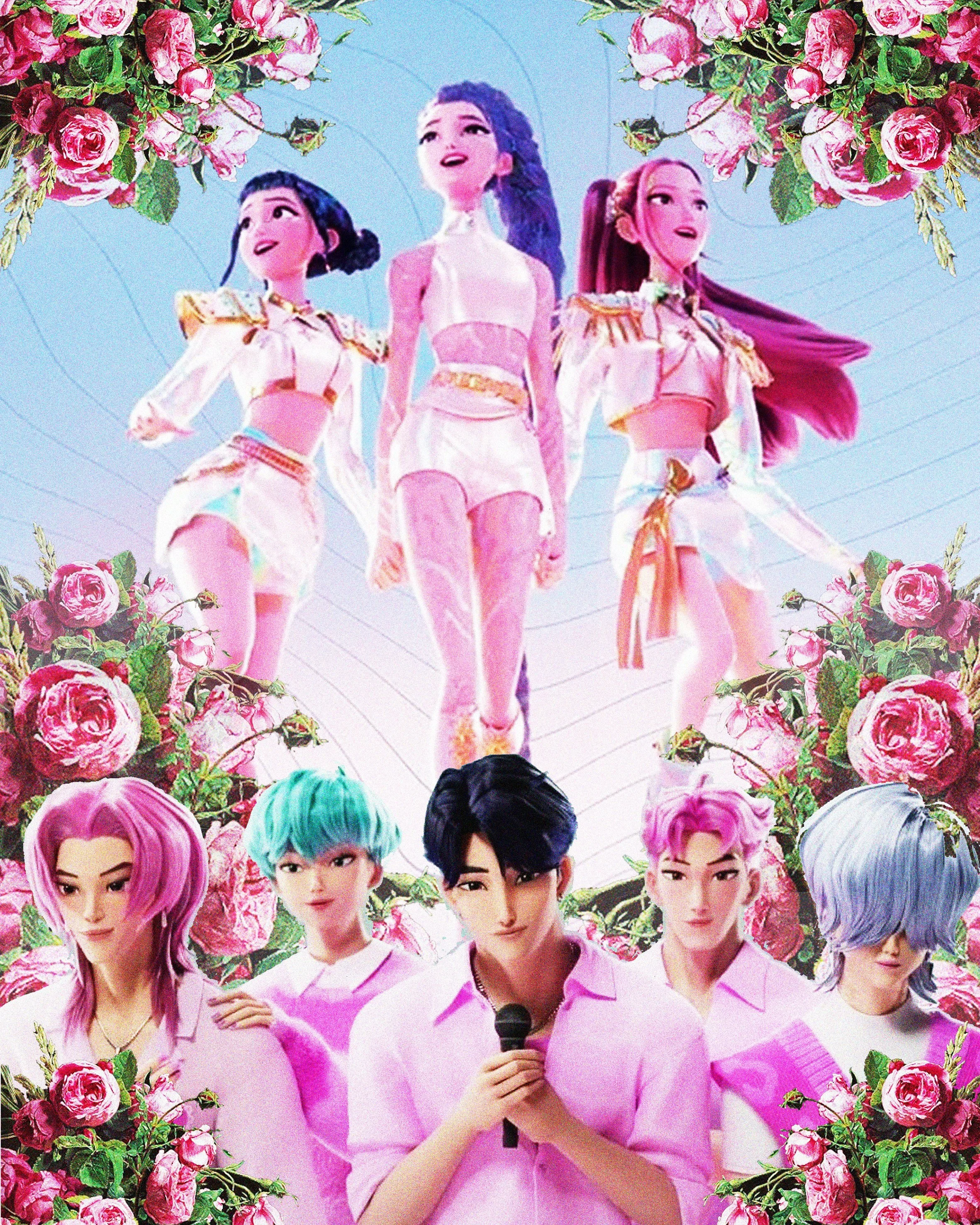
K Pop Demon Hunters follows the story of a trio of songstresses, the latest in a long line that stretches back for generations, who use magic to maintain a barrier between our world and the demon world, and who hunt down any monsters that manage to make it through. It’s kind of like Buffy the Vampire Slayer meets Sailor Moon, but with K Pop idol bands. Things get complicated for our heroes, Huntrix, when a rival band, the Saja Boys, shows up, clearly demons in disguise, and start stealing their fans. Both groups use music to influence the energy of the audience, either to reinforce the magical barrier, or to blow it wide open for the demon king to come through. Of course, like all good Magical Girl stories, our heroines realise that through the power of friendship and self acceptance they can do anything, and eventually save the day and release their most popular music yet.
___STEADY_PAYWALL___
The film went viral almost as soon as it was released, helped in part by its gloriously straight-forward-yet-pulpy name, and its use of the K Pop canon of music, imagery, tropes and trends. Kids went wild for it, it was funny enough for parents to enjoy it too, K Pop stans loved its music, and it managed the supremely difficult task of being both culturally specific to Korean mythology and celebrity, but also being American enough to maintain a broad comedic appeal to the English-speaking world. Awards bodies also loved it, showering it with prizes for best animated movie from many different regional critics awards, all the way up to the Academy Awards, where it received Oscars for both Best Animated Feature and Best Original Song (prying it out of Diane Warren’s icy claws, continuing her record-breaking seventeen-year-losing-streak). It also continues the recent upswing in the popularity and critical success of Asian-focused media in Hollywood, a trend that started with Crazy Rich Asians, a rom-com which arguably reinvented a dying genre, and carried on through to things like emotional immigrant family drama The Farewell, and the Best Picture-winning Everything Everywhere All At Once, not to mention renewed appreciation for non-American films like Parasite, Perfect Days and the absolute boom K Dramas are experiencing amongst middle-aged white women.
While watching K Pop Demon Hunters, a memory in me was scratched that I couldn’t quite put my finger on at first. What could it be? Was it just that the songs had already become ingrained in me from seeing them all over social media? Was it the child-like wonder of enjoying a well-made animated film? Or was it the story itself? A group of fun young women leading a double life as warrior Magical Girls who have to defend the world against the forces of darkness? A mysterious hyper-popular boyband of undetermined supernatural origin that is up to no good, led by a handsome heartthrob that might not be as evil as he seems? This is a Sailor Moon plot-line, specifically the Sailor Starlights from the final arc of the Sailor Moon Stars manga in the late 1990s. Images flood my mind, memories come crashing back, it’s like I've finally awoken from my slumber as a Sailor Scout from the Silver Millenium.
“What is most memorable about the Sailor Starlights is that their human form is male, but their guardian form is female, swapping their boxy suits for skimpy bralettes, hot pants and thigh high boots.”
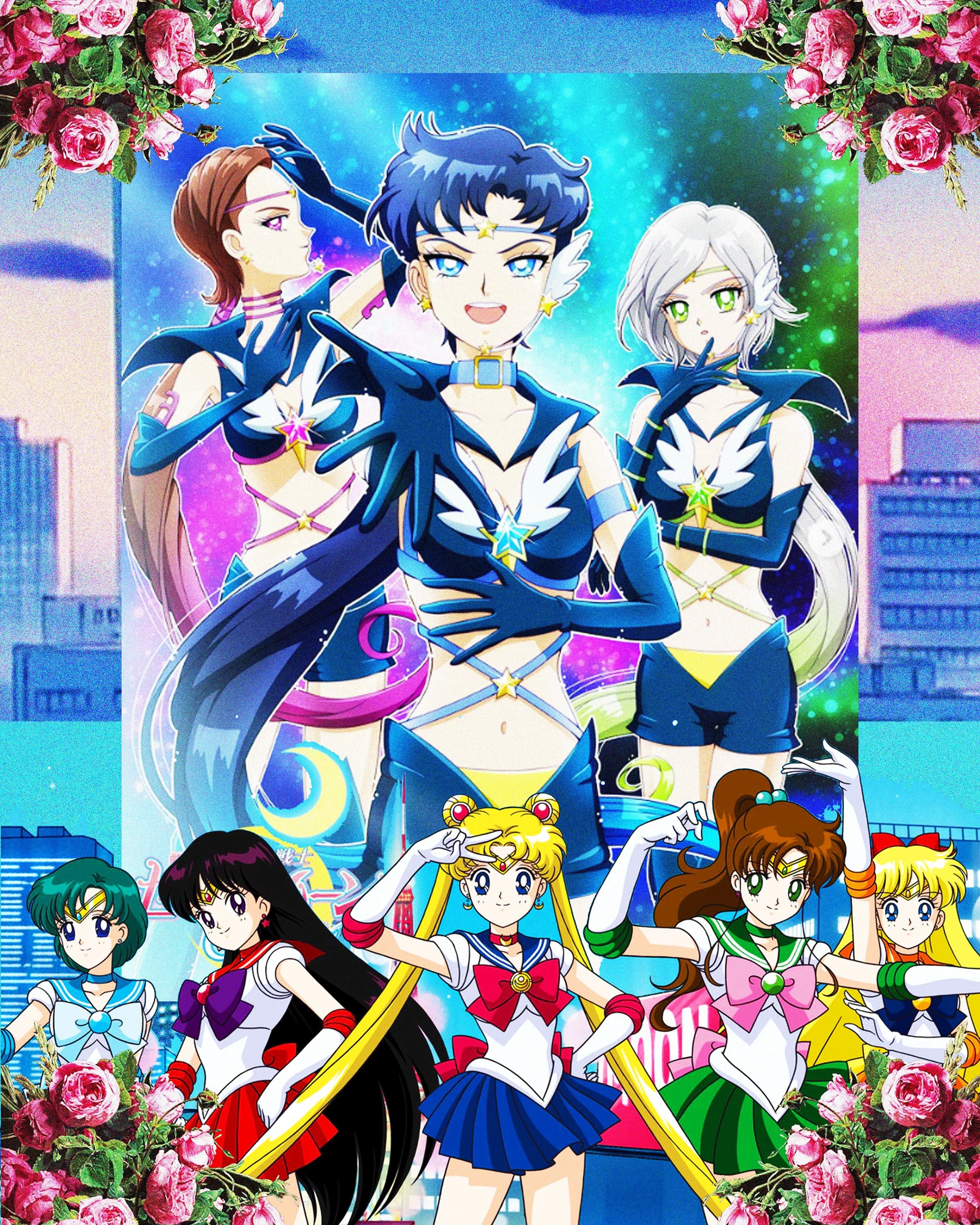
For those not in the know, or who need a refresher, Sailor Moon was one of Japan’s biggest cultural exports in the 90s, starting off as a hugely popular manga that got its own anime adaptation, which was sold to American distributors who made an English language dub, and it was shown constantly on television for decades to come. The plotline follows Sailor Moon, also known as Princess Serenity, the princess of the Moon, and her warrior friends Sailors Mercury, Mars, Jupiter, Venus (and more) as they fight against the forces of evil trying to take over the world, and live normal lives as high school students. The American dub brought its own issues, glossing over some of the more liberal Japanese plot points like gay villains and lesbian Sailor Scouts, but it still delivers the essence. Its messages of love, friendship and kindness sound cliche, but Sailor Moon truly is the blueprint for that cliche, and it hits every time one of the Scouts sacrifices herself for her friends, even though you know she’ll probably get resurrected before the end of the show. The later seasons got very complicated, including not only time travel to the past, but characters visiting from the future, including Sailor Moon’s own future daughter from the 30th century, monsters arriving from the Dead Moon, Sailor Saturn trying to destroy the universe so it can be reborn but in fact only destroying herself and becoming as baby who grows back into a little girl whilst every else stays the same age, Sailor Moon having to travel into the Shadow Galaxy so she can battle ancient greek primordial deities like Lethe (Oblivion) and Mnemosyne (Memory), fight Chaos itself and destroy the Galaxy Cauldron with the help of her own final form from an as yet undisclosed future. Oh, and Sailor Moon also has the Holy Grail, for some reason.
One of the final seasons introduces the Three Lights, Tokyo’s hottest idol boy band, and wouldn’t you know it, they’ve transferred to Sailor Moon’s high school and are in her class! She starts to fall for the lead singer until we finally realise that they are not what they seem. Whilst their human form are handsome idols, the Three Lights are actually the Sailor Starlights, Sailor Guardians from a distant planet, in search of a lost princess and fighting against a mysterious enemy. What is most memorable about the Sailor Starlights is that their human form is male, but their guardian form is female, swapping their boxy suits for skimpy bralettes, hot pants and thigh high boots. Their waists are snatched and their breasts are bursting forth, but their faces don’t change, creating this kind of multigender androgyne that truly boggles the mind. I don’t think the American version ever got to this part of the story, so they never had to come up with an appropriately Lutheran explanation to its more conservative audiences for this gender transgression, but it’s audience never really needed one. In a world where every character can exist simultaneously in the long past Silver Millenium on the Moon, in modern day Tokyo, and in 30th century Crystal Tokyo, all whilst remaining 16, a small thing like the mechanics of sex really ceases to matter.
What did matter to me was that, as little boy who dreamed of being Sailor Moon one day, seeing male-presenting characters who could access their true powers by transforming into beautiful women truly opened up the world in ways I couldn’t imagine. The Magical Girl genre has always been focused on unlocking the power of the overlooked, on daring to imagine all the secrets of the universe are locked in the heart of a child that everyone underestimates, in the idea that only through self acceptance and self love can someone be their final form, no matter what that may be. Once Sailor Moon recognises the Sailor Starlights for what they are, fellow planetary guardians sworn to protect the universe, she embraces them, she loves them with all her heart, and fights to resurrect them alongside her other friends after they’ve been killed in the battle against Chaos. Sailor Moon has always been about acceptance, from the passionate lesbian love between Sailor Uranus and Sailor Neptune (a relationship altered to be “cousins” in the American dub) to the discovery of new Sailor Scouts from the farthest corners of the universe, so long as you share the common enemy, Sailor Moon would fight (and die) for your right to exist.
K Pop Demon Hunters continues this theme of acceptance when Rumi has to reveal to her friends that she is actually part demon, something she's been fighting against her whole life. They rally round her and continue their fight against evil, saving the world over and over again, proud to have her by their side. We often think that wherever we are right now is the pinnacle of progress, the most permissive era we’ve ever been in, but I can’t imagine any mainstream American network taking on board radically inclusive shows aimed at school kids in the current climate. Not like Sailor Moon in the 90s. No matter how much the west tried to mute the diverse characters of Sailor Moon, they still exist. They are right there, on the page, on the screen, in your heart. More recent adaptations like Sailor Moon Crystal, Sailor Moon Eternal, and Sailor Moon Cosmos keep the queerness, the strangeness, the openness, and we are all richer for it. In this world of ever encroaching darkness, in the name of the Moon, I will punish you!