The Littlest Funeral Home is Reimagining Deathcare on Social Media
Words: Carys Manjdadria-Jenkins
Make it stand out
How do we bury Barbie? The blondest non-biodegradable beauty queen will not return to earth, nor her spirit ascend to the cosmic realm. We commit her figurine to the landfill funeral pyre: nylon to nylon, vinyl to vinyl, PVC to PVC. Ever in rigor mortis, plastically immortal.
The bodies are piling up in a dollhouse in America. @LittlestFuneralHome is the campest palliative deathcare can offer. Dethroning death as taboo, creator Erik Forrest uses dolls to become acquainted with the abject. Emblaming tutorials are a scroll away from skits of funerals-gone-wrong. The melodrama of the dollhouse soap opera screens spontaneous combustion, a Madonna-soundtracked purgatory, velveteen crimson drapes shrouding the autopsy table from the crystal chandeliers. In Erik’s funeral home, mourners drink bleach from shot glasses and crash services. Morticians, Leatherface-style, dissect the dead. Flowers in the parlour never bloom nor rot - the dead are forever in plastic.
Miniatures, the 1:12 scaling down of the monumental, reveal the human concern for dimension. To organise, to understand. Death, the ultimate unrepresentable, is an absence into which we fantasise an excess. To miniaturise is to desperately represent, shrink the unthinkable into something you can hold in your palm. In dollhouses, domestication house-trains the feared into a safe space, containing monsters in architecture traditionally reserved for nuclear families, in toys traditionally reserved for children.
Erik domesticates the corpse because it, alongside the doll, is an instance of abjection. The abject is the repulsive reaction (horror) to a collapse in meaning caused by a collapse of the two most central distinctions: subject/object, self/other. When something disturbs our personal or societal order (e.g. corpses), the distinctions break. It’s an eruption of the Real into our rejection of death’s insistent materiality. On dying, our self is ejected from our corporeal form, our bodies are emptied - a subject/object breakdown. What are we beneath the self we have created? Flesh rotting as food does. When we see the dead - (un)familiar bodies - we experience the uncanny. The almost human: doll, corpse, a doll’s corpse. In death, the human is hollowed into the humanoid. ___STEADY_PAYWALL___
“How do you want to be remembered? Which coffin varnish best represents you? Buy Now, Die Later!”
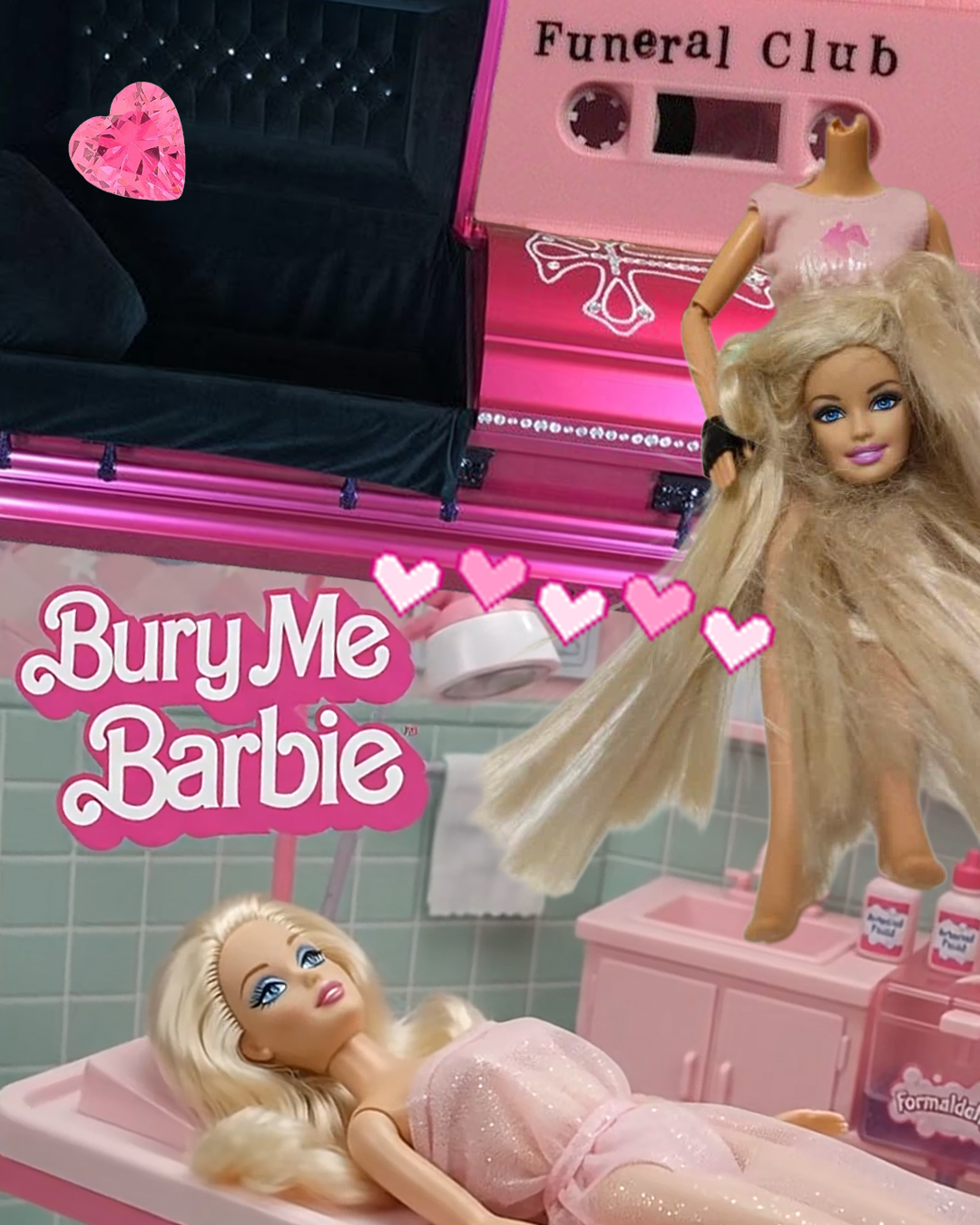
It becomes plasticised - it becomes a doll. The uncanniness of the corpse, its pallid complexion and lifeless eyes must be fixed via makeover. Make-up tutorial from a mortician. ASMR gunshot restoration of Ken Doll. All that beautiful work for a closed casket. In one reel, the littlest funeral home throws a Miss Mortician Pageant. Miss Decomposition, Embalmer’s Choice, Best in Bloat: pageant girls back from the dirt to win a place at the pearly gates. Beautifying the abject body speaks to our desire for death to not touch us, for the self we have constructed to not be ejected in its entirety. But such beauty is abandoned for the camp heralding of the ugly Other.
Trashiness, putrified bodies, glitter and grotesque. The camera shakes, the dolls move stilted - the amateur hand of the omniscient divine mover. Erik himself isn’t a mortician - he owns a chain of ice creameries.
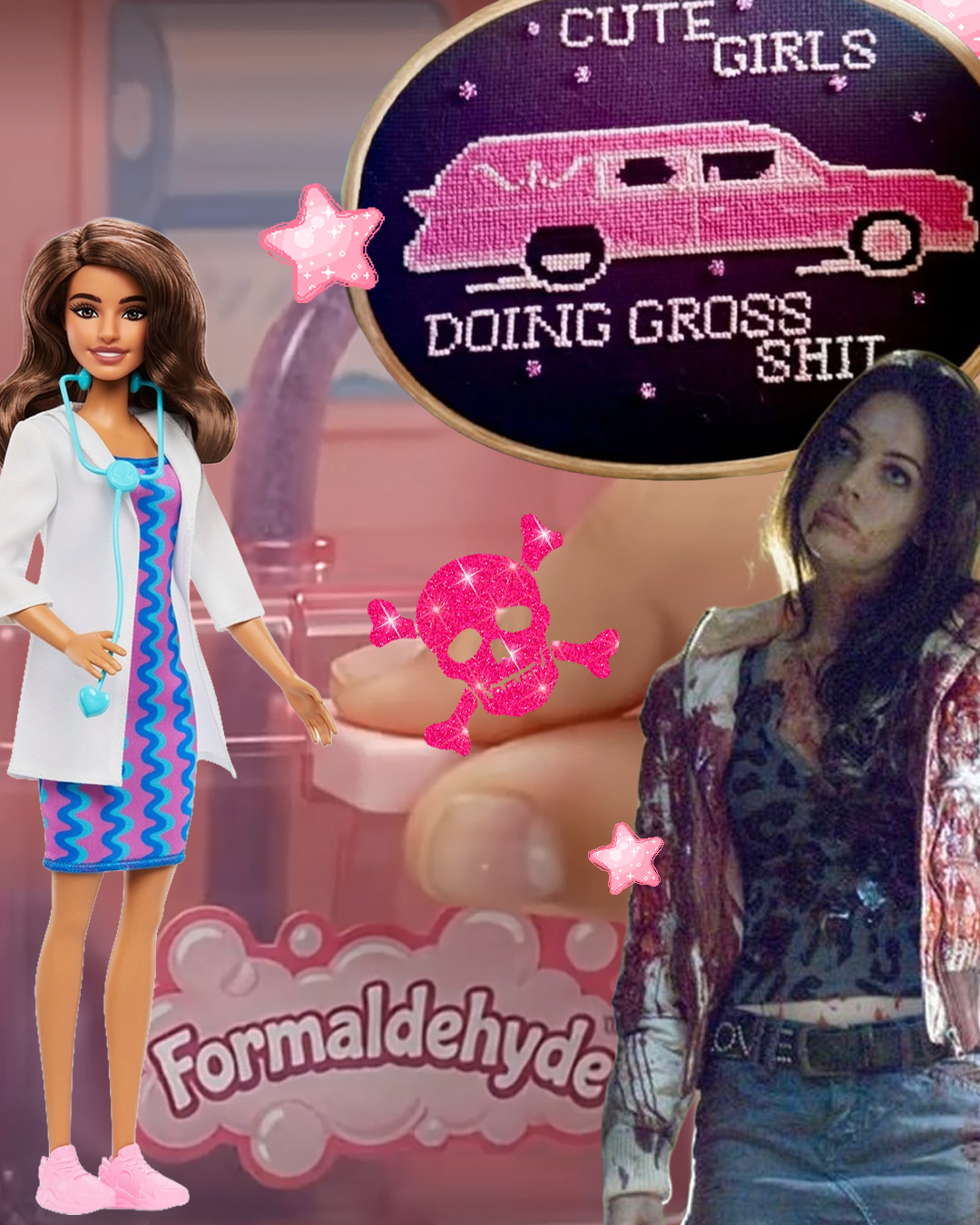
Yet deathcare’s expectation of dignity is desecrated by such outsider restorative art, the aesthetics of ugliness unearthing the sacred monster of death. Visual desecration is found in the morbid humour of Instagram’s comic morticians: meme pages (Cute Girls Doing Gross Things, The Funeral Life), day-in-the-life influencers (Retseleve, Dan the Funeral Man), the miscellaneous (Erik). These creators memeify the gravest of subjects. Despite any seeming derision, it is clear in his attention to his miniatures that Erik deeply respects the deathcare industry. It is this outsider reverence that has made his page a fan-favourite.
His work is often stumbled upon by confused scrollers. There is a fear of those who don’t fear death, who domesticate and laugh at it. Reckless flaunting of taboo always brings accusations of perversity, but the damnation of morbid curiosity only worsens our defensive euphemising of death, moving cemeteries to the periphery of cities and filling corpses with plastic to make them prettier.
Dolls, the most material of girls, are the perfect way to explore the state of death in a consumer culture. Funeral directors guide mourners and their money towards the grave. Dying is a financial exchange - this is the most important purchase of your life. How can you be buried in style? Decorate your coffin, consider rhinestones - something shiny to attract the worms. How do you want to be remembered? Which coffin varnish best represents you? Buy Now, Die Later!
Erik’s posts took a turn last February with his Dahmer project. It owes a lot to Frances Glessner Lee, who he hashtags as citation, the mother of forensic science and creator of crime scene dioramas. In her ‘Foreword to the Inspector’, she instructs the mighty men of the law to shrink themselves to the level of murderer and victim. Erik doesn’t use his dolls here, focusing only on the domestic and mental interior of the serial killer. It is the interior where victims five through to seventeen were murdered, where the arrest took place, and where Dahmer’s desires were materialised, hedonised, and preserved in the freezer. Mythologised by true crime junkies, Erik has recreated the apartment in painstaking detail, touring viewers through the decor, and only alluding to the corpses. Such absence of the usual gruesome details is sobering, removing the possibility of delighting in depravity. Spatialising Dahmer’s brain, he works in the incessant quest to understand why killers kill. It’s another unrepresentable to shrink, as Erik asks “are there any famous scenes that can be respectfully depicted in miniature? (#true crime #dahmer)”. Apartment 213, its muriatic acid drum, The Exorcist III on VHS: he turns from the mundane to the sensational, crossing another taboo. He put the Dahmer posts behind a subscriber’s paywall, self-censoring through money. Whether his aim is mercenary or respectful, glorification or understanding, even Erik can’t escape the true crime circus’s monetisation of real-life gore.
In his fiction, Erik is no killer. Importantly, his cadavers never truly die. They are always resurrected or turned into ghosts. There’s no graveyard. They’re never laid to rest. Ironically, nothing can die in the dollhouse. Otherwise, who would be the recurring cast in this freakshow? Through the act, they play immortality: situated in a shared symbolic order in a pre-existing pop culture ancestry. Simulation, simulating, simulacra as Russian nesting dolls getting smaller and smaller until infinity, until absurdity. Like death: always pointing towards something else, never graspable in and of itself. Miniatures always leave something out. Erik reanimates the abject corpse, but the plastic doll hopes never to die.