Words: JohnOswald Crichton
With its sprawling kingdoms, swashbuckling heroes and epic adventures, fantasy in its many forms has captured our imaginations for years as an escape from the ordinary. But in recent years, one particular corner of the genre has taken the literary world by storm: Romantasy.
If you’ve been into a bookshop lately, or spend any time on BookTok, you’ve almost undoubtedly encountered it. For the uninitiated, romantasy is a literary subgenre that brings the best bits of romance and fantasy together. High stakes. A love story. Vivid worlds. Powerful heroines. Magic. And, at times, smut.
This formula has proven hugely successful, with Bloomberg describing romantasy as “the billion-dollar genre [that] has transformed the book industry.” So what happens when this renewed interest in fantasy transcends literature, inspiring pop stars to build fantastical worlds of their own? ___STEADY_PAYWALL___
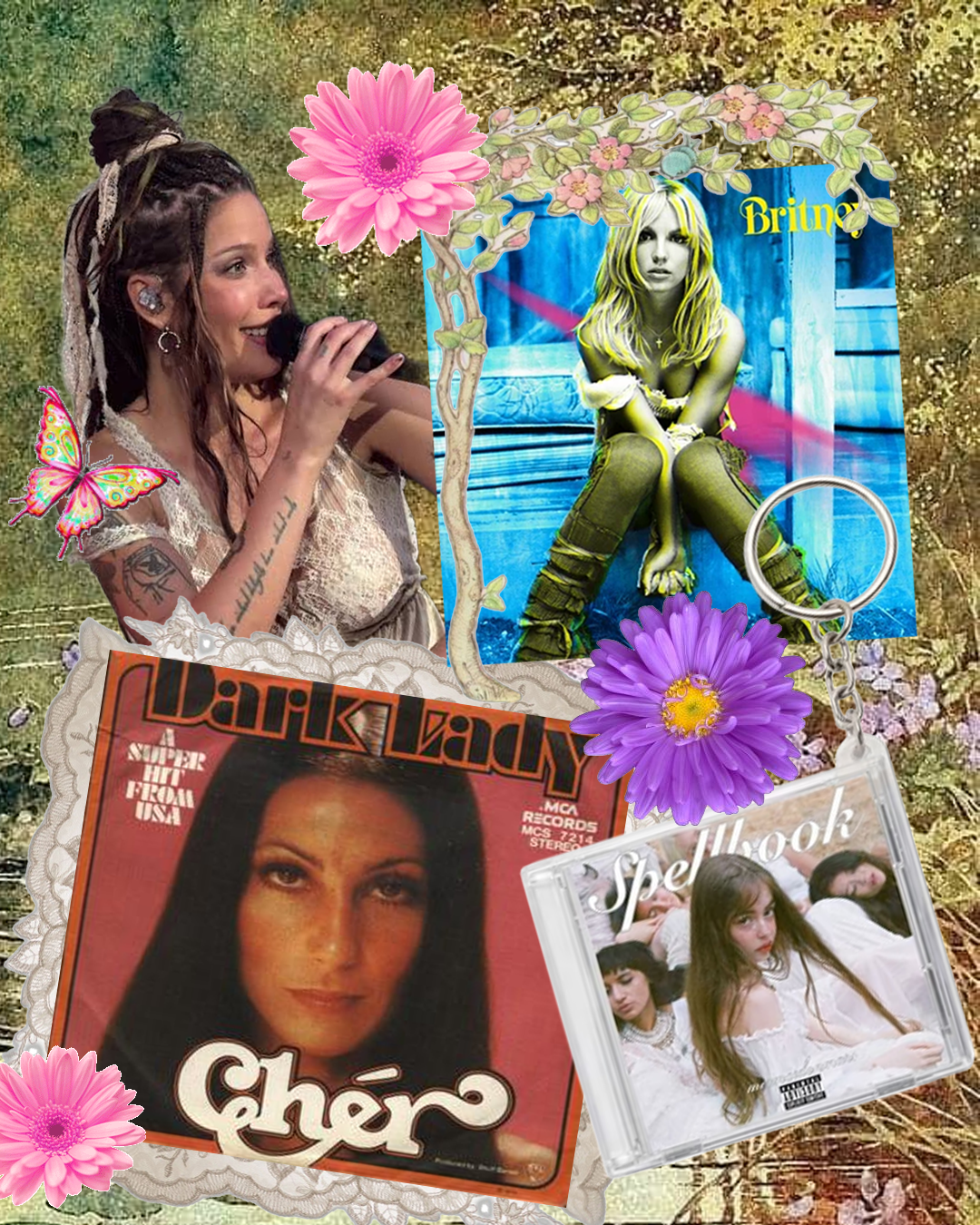
From Cher’s iconic 1974 single Dark Lady to Britney Spears’ 2001 album cut Cinderella, pop music and fantasy have never been strangers. Even this year, Halsey’s Girl in the Tower Tour was split into three acts, each themed on a mythic archetype: The Mother, The Maiden, and The Mage. Beyond the mainstream, a new wave of pop girls are doing more than referencing fantasy - they are building elaborate worlds for their music to exist within.
We often turn to fantasy worlds for escapism, a sparkling refuge in challenging times when real life feels increasingly unsteady, amid global conflicts and economic instability. For Dutch singer-songwriter mermaidonmars, born Shanna van Loozenoord, that desire to escape began in childhood, when she was drawn to fantasy stories of hidden worlds accessed through “secret mirrors or doors.”
“Imaginary places are important because they bring people together away from judgement and prejudice. Through BookTok, romantasy has formed its own girlhood”
“It’s always been [about] escaping to somewhere prettier and softer than this world,” she reflects. For her debut album, Spellbook, released last December, the 22-year-old artist created her own universe full of spells, witchcraft and goddesses.
Still, magical worlds are not just about escapism. They can be used to process our difficult feelings and translate them into art. “Everybody loves a metaphor for their hard feelings, making it have a purpose, calling it red instead of blood,” mermaidonmars says. “I think using imagined worlds to describe real and ugly things makes them bearable and more poetic, a lot more romantic as well.”
The underlying appeal of fantasy seems to be its ability to transform feelings into something easier to deal with.
Mollie Elizabeth, a 23-year-old singer preparing to release her second EP, People Pleaser, sees fantasy in a similar light — not as simple escapism but a way to make sense of an increasingly unsteady world. “It’s an amazing tool to make heavy things feel less heavy. That’s what I try to do, because there’s too much crap going on already: the news, fake news, and AI,” she tells me, noting that the COVID-19 pandemic was when she restarted expressing herself through fantasy. “I feel like people have enough real things to worry about that I don’t need to add to it.”
For Mollie, fantasy has become a part of reconnecting with her inner child. This has meant rewatching old Disney films, with the bright colours and jaunty music of Alice in Wonderland being an early visual and sonic inspiration. Growing up in the secluded — and quite magical — woods of Washington State’s Cascade Mountains, returning to these aesthetics felt like a natural homecoming.
“I’m a big animated-film fan,” she says, as we bond over a shared excitement for Laika Studios’ upcoming stop-motion epic, Wildwood. At the core of many fantasy epics is the idea of mythology, whether that is through gods and goddesses or mythic heroes. While Mollie finds inspiration in the whimsy of childhood films, a deep mythos sits at the core of mermaidonmars’ creative galaxy.
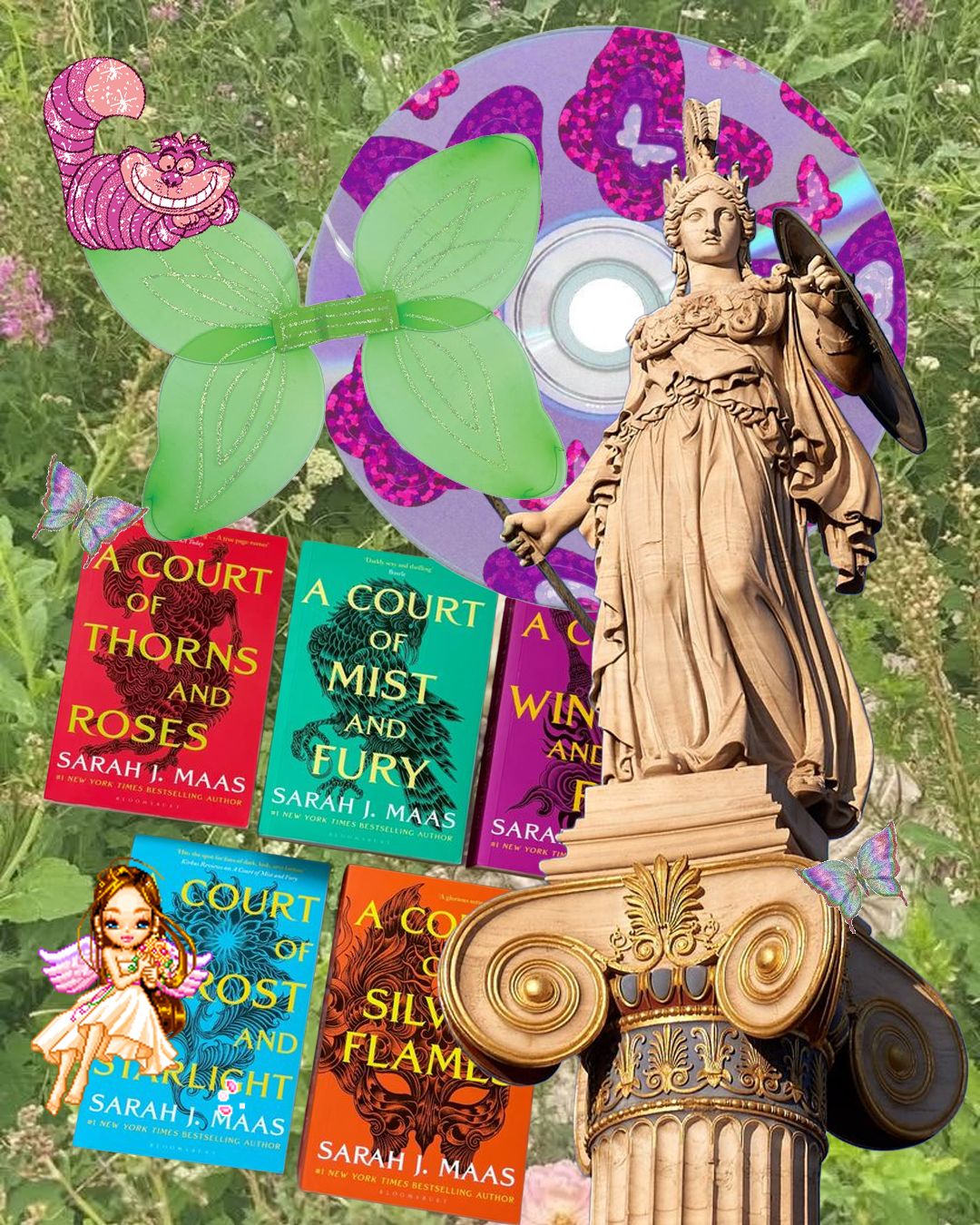
On her album, she dedicates a song to the Greek goddess Athena. “She has power beyond anything we can imagine, yet she’s a woman equally as much as me and my girls listening to these songs,” she gushes. “I might not wield a sword like she can, but I try and channel her through my pen.”
Funnily enough, one of her photoshoots does actually see her confidently wield a sword.
Joking aside, female agency is a particularly powerful part of fantasy, and especially romantasy. These imagined worlds offer a place for women to freely show their power and even to find a safe space. They can become a community built on shared experiences and values, a girlhood of sorts. For mermaidonmars, this is really important; she wants to build an authentic connection with her fans and offer them something genuine.
“I read books that have a similar world and wish I could crawl into those pages. I want to make a world like that for listeners, and myself as well,” she reflects. “I always want it to feel like their world as much as mine when they’re listening.”
Imaginary places are important because they bring people together away from judgement and prejudice. Through BookTok, romantasy has formed its own girlhood. Even Mollie has recently been enjoying the genre. “I’ve been on a little ACOTAR kick, reading about fairies—very, very promiscuous fairies,” she says, laughing, referring to A Court of Thorns and Roses, by Sarah J. Maas, a hugely popular romantasy series.
Beyond the magical worlds and mythical creatures, fantasy offers a space to explore what it means to be a woman. In romantasy, heroines can be powerful, imperfect, and complicated all at once. Mollie’s music grapples with similar themes, exploring what it means to be feminine, whether that is in a fantasy world or Los Angeles in 2026. For her, that means considering modern beauty standards and the impacts of plastic surgery, weight-loss drugs like Ozempic, and generative AI.
“The main person I write my music for is a younger version of myself. I developed an eating disorder when I was really young because I thought my body didn’t look right,” she says. “Seeing us go back to that same cycle, with everyone looking so emaciated, is difficult. I feel very protective of the people affected by it, so I hope my message is getting to them.”
From the success of romantasy to the imagined musical worlds of pop girls, fantasy has become part of contemporary internet culture. It’s a way to process, explain and even cope with the ever-changing times we live in.