
Words: Shelby Cooke
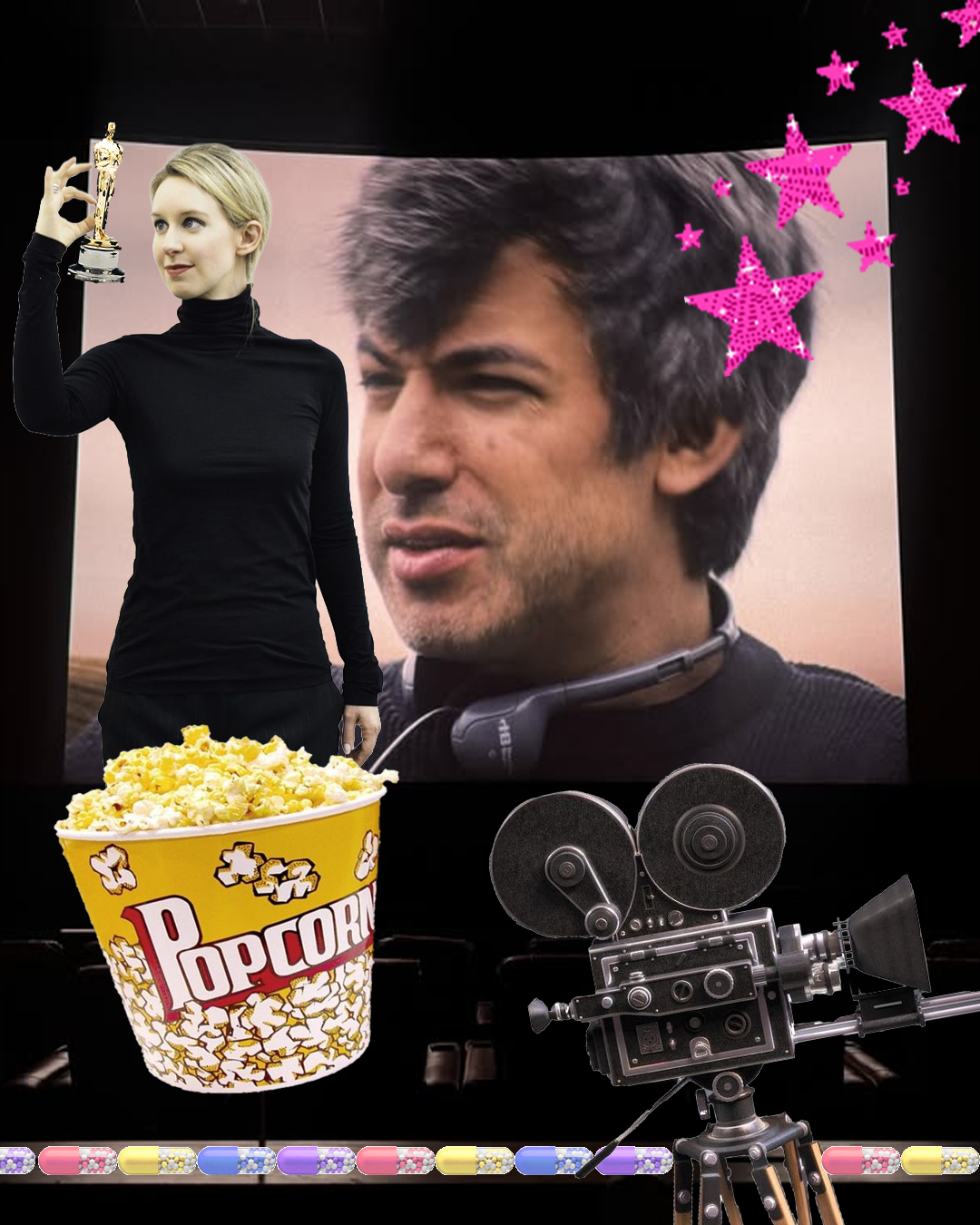
Towards the end of Nathan Fielder and Lance Oppenheim’s thrilling true-crime documentary, You Can See Everything (2026), we watch Fielder and actress Amanda Seyfried read a script based on Nathan’s prison visit with the film’s subject, Elizabeth Holmes. Seyfried — who won an Emmy for portraying Holmes in the drama series, The Dropout (2022) — is recruited by Fielder to help recreate moments not captured on camera, visualising crucial behind-the-scenes conversations for the audience.
These reenactments, which occur frequently throughout the latter half of the film, are not solely based on fact; rather, they’re the product of Fielder’s memory. While discussing the Holmes and Fielder prison dialogue, Seyfried points out that the phrasing Nathan allegedly remembers Holmes saying indicates that she intentionally conned Fielder and the A24 production team. Nathan, dismissing Seyfried’s assumption, claims that he remembered Holmes’ statement wrong, insisting that they change the script to a less incriminating word — which, in turn, changes the meaning behind Holmes’ motive.
Upon reflection, Seyfried asks Nathan one last question before the movie ends: Is there something you’re leaving out because you want to protect her? Nathan — clearly uncomfortable with the level of scrutiny on him — retorts back: “I’m not trying to put my feelings into this. I’m trying to be accurate.”
Immediately after this declaration, the director cuts to a flashback of Nathan and Elizabeth swimming in the ocean together, laughing and having fun. In this moment, we are reminded of a scene earlier in the movie where Holmes invites Fielder for a swim; he replies he’s afraid of cold water. After this initial conversation, the scene abruptly ends, and we assume Nathan decided to keep things professional and refused the swim. But now, at the conclusion of the story, we see that Nathan did, in fact, take her up on that offer. It appears their relationship is harbouring something more. ___STEADY_PAYWALL___
“Oppenheim influences our emotions to point us towards this distrustful opinion of Fielder. Oppenheim compels us to become sceptical that our purveyor of truth — the man tasked with showing us everything — is just as distrustful as the duplicitous individuals he’s studying.”
Seyfried’s closing assertion leads us to the underlying question at the centre of this three-hour drama: Is what we’re seeing fact or fiction? While Elizabeth Holmes’ eccentric story is the gravitational pull of this picture, the movie is ultimately not about her. At its core, this film is a commentary on our contemporary media landscape and the ways in which “the truth” is presented.
You Can See Everything notably has two directors — Nathan Fielder and Lance Oppenheim. It’s unclear what the dynamics are between these co-directors. We’re unaware of who chooses which scenes, whose creative vision takes precedence, who has final say on the finished product. But within this cinematic world, we can perceive Nathan as the director in control of the Holmes investigation, serving as an on-screen journalist. In contrast, Oppenheim remains unseen, the director positioned behind the camera. Together, Fielder and Oppenheim engineer a film that plainly tempers with the ethics of documentary filmmaking, showing how the audience can easily be misled.
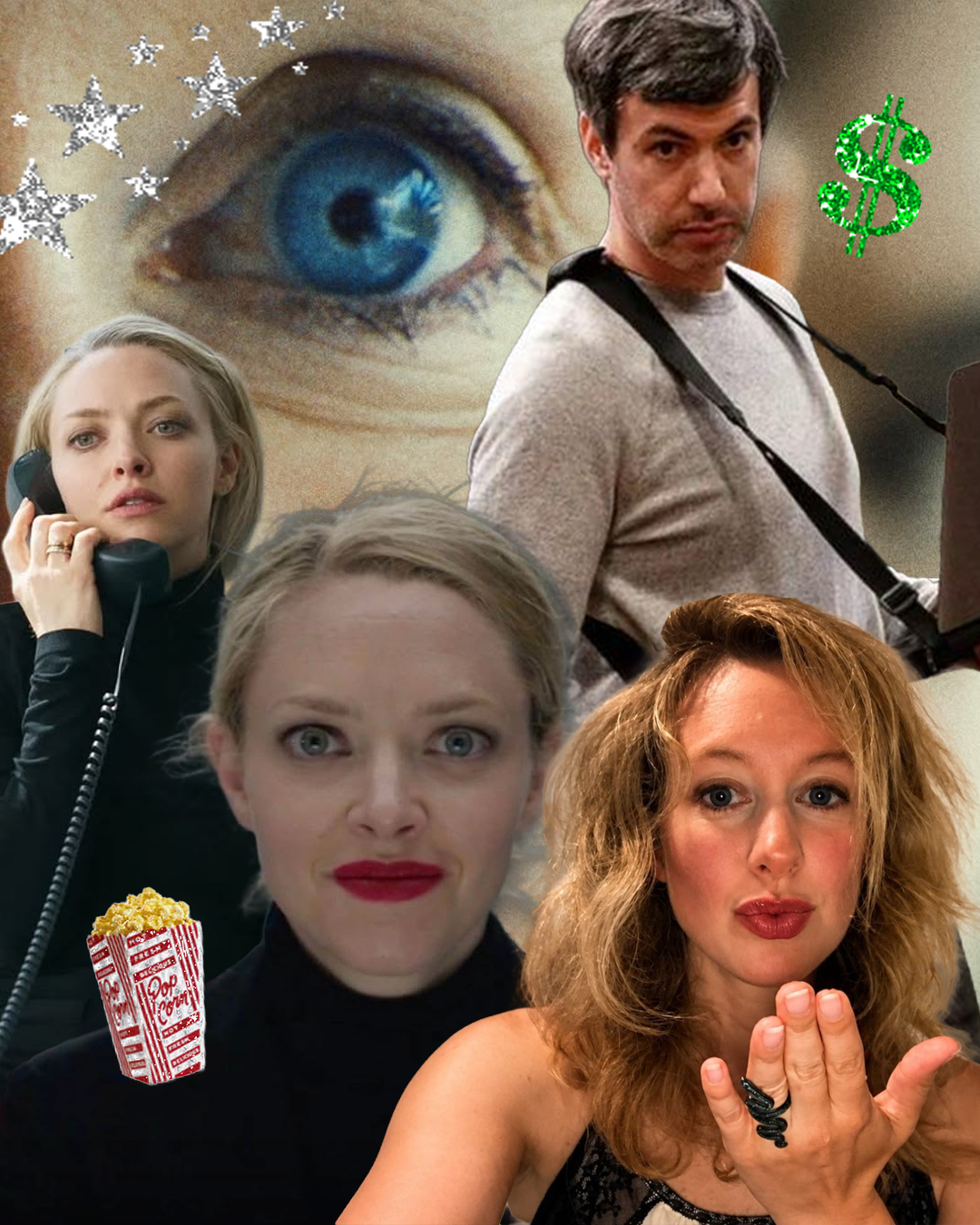
In You Can See Everything, Fielder continues his tradition of blurring the line between reality and fiction, heavily featuring exaggerated storytelling in this new project. Over the course of multiple years, Fielder becomes consumed by Holmes, fixated on understanding her motives and intentions, determined to make sense of her idiosyncratic nature. What comes with this level of zealous devotion is something unbiased documentarians must avoid at all costs: emotional investment in a subject. Nathan, despite his attempts to remain objective, becomes personally intertwined with Elizabeth, allowing his judgment to be clouded by his feelings for her.
Looking at his history, we can presume that Fielder is, once again, playing a characterised version of himself on screen. In this case, he’s presented as the imperfect documentarian, someone who lets his emotions dictate the story. Although Fielder never outright acknowledges that he’s performing a somewhat hyperbolised account of reality, Oppenheim uses the language of cinema to push us towards perceiving Nathan as an unreliable narrator.
A visual hallmark of the film is the intense close-ups of eyes. The camera places each player in this bizarre triangle under the microscope, treating all three — Elizabeth, her partner Billy and Nathan — as equally dubious. With each claustrophobic lingering shot, we are given uncensored access to the windows of these people’s souls. The uncanny presentation of the subjects makes us hyperaware of shifts in their demeanour.
Oppenheim primes us to voyeuristically investigate body language, asking us to decipher each movement with acute examination. We notice how Nathan’s face evolves from condescendingly squinting when he doesn’t believe something he’s being told to a softening of his gaze when Elizabeth’s tears fall, eventually developing a concerned expression when Billy misuses her image. The close-ups bring us into Fielder’s personal space, where nothing can hide. We feel as if we can spot the moment Nathan’s intentions change from rational onlooker to affectionate ally devoted to saving Elizabeth’s reputation.
In the same vein, Oppenheim’s editing persuades us to question Nathan. The aforementioned scene showcases how editing decisions and the placement of scenes create a storyline that might not necessarily be true. By putting the swimming scene at a moment when Nathan’s integrity is under examination, Oppenheim makes the interaction between Fielder and Holmes suspicious. Had this scene played directly after we saw the invitation, we would have viewed the situation differently (perhaps, it would have been comedic watching Nathan stumble about in the water). Instead, we’re left with a cryptic final message: Nathan Fielder is hiding something from us.
Through the visuals, Oppenheim influences our emotions to point us towards this distrustful opinion of Fielder. Oppenheim compels us to become sceptical that our purveyor of truth — the man tasked with showing us everything — is just as distrustful as the duplicitous individuals he’s studying.
What this all amounts to is a film that can’t be trusted. We can’t be sure that what Fielder and Oppenheim are showing us is real — it’s, at most, a skewed version of what happened. You Can See Everything is an exercise in crafting perceptions. This documentary is biased, and the directors know that. They are both culpable in this filmic misdirection to help us understand how a documentary, the film genre designed to tell the supposed “truth,” can actually be manipulated by those who produce it. We’re told “you can see everything,” but, in actuality, we’re only seeing a peculiar perspective that has been filtered, edited and performed.
Perhaps, then, the thesis of You Can See Everything can be interpreted as this: every story has a storyteller; it’s up to us to interrogate the morality of that teller.