
The Second-Wave of Girl Boss Feminism Still Won’t Save Us
Words: Nasrin Warsame

Make it stand out
Trends are cyclical, we know. Keep these jeans and that jacket, they’ll come back in style. In the age of the internet, trends are undeniably orbiting to the surface with increased energy and speed. But it’s not just clothes or make-up - it’s messaging too. So when I see recent trending clips of Emma Grede’s book tour Start With Yourself: A New Vision for Work and Life, TikTok videos telling me how to develop the investment habits of a rich girl, or fictional characters like Euphoria’s it-girl Maddy Perez’s ‘I believe in capitalism’ speech and hustle storyline, I’m engulfed by the eerie and unsettling sensation of deva ju. The tide of girl boss feminism is rising for a second wave.
Fit with sharp blazer dresses and ‘aspirational’ quotes in neon lights, the first wave of girl boss feminism rose as a defining movement in the 2010s. The term derived earnestly from Sophia Amouruso’s book #GIRLBOSS, a memoir geared as a guide to female empowerment and the journey of founding the clothing brand Nasty Gal. The era was marked by financially successful, women-founded, millennial start-up brands like Emily Weiss’s Glossier and Matilda Djerf’s Djerf Avenue.
Yet the girl boss failed to address the constant current, that working class women have always worked, and their stories are often not highlighted. The girl boss suggests meritocracy and the view that women ‘just need to work hard’, but the gender pay gap in the UK means women work for free 47 days a year. Globally, women work longer and earn just a third of what men get per hour. Racialised working class women, such as migrant women, are more susceptible to gendered harm in the workplace. The first-wave of girl boss feminism repackaged capitalism in femininity and failed to engage with intersectionality. As a result, it came to a crashing fall and was heavily satirised when these companies were accused of toxic work environments, racism and employee mistreatment, leading to memes like ‘Gaslight, Gatekeep, Girlboss.’
___STEADY_PAYWALL___
“Whilst the first-wave of girl boss feminism advocated that empowerment for women can be achieved through success in business, this second-wave of girl boss feminism is quieter in its preaching, more diverse in its presentation, but consistent in the aim of accumulation by women as a way to economic and social protection.”
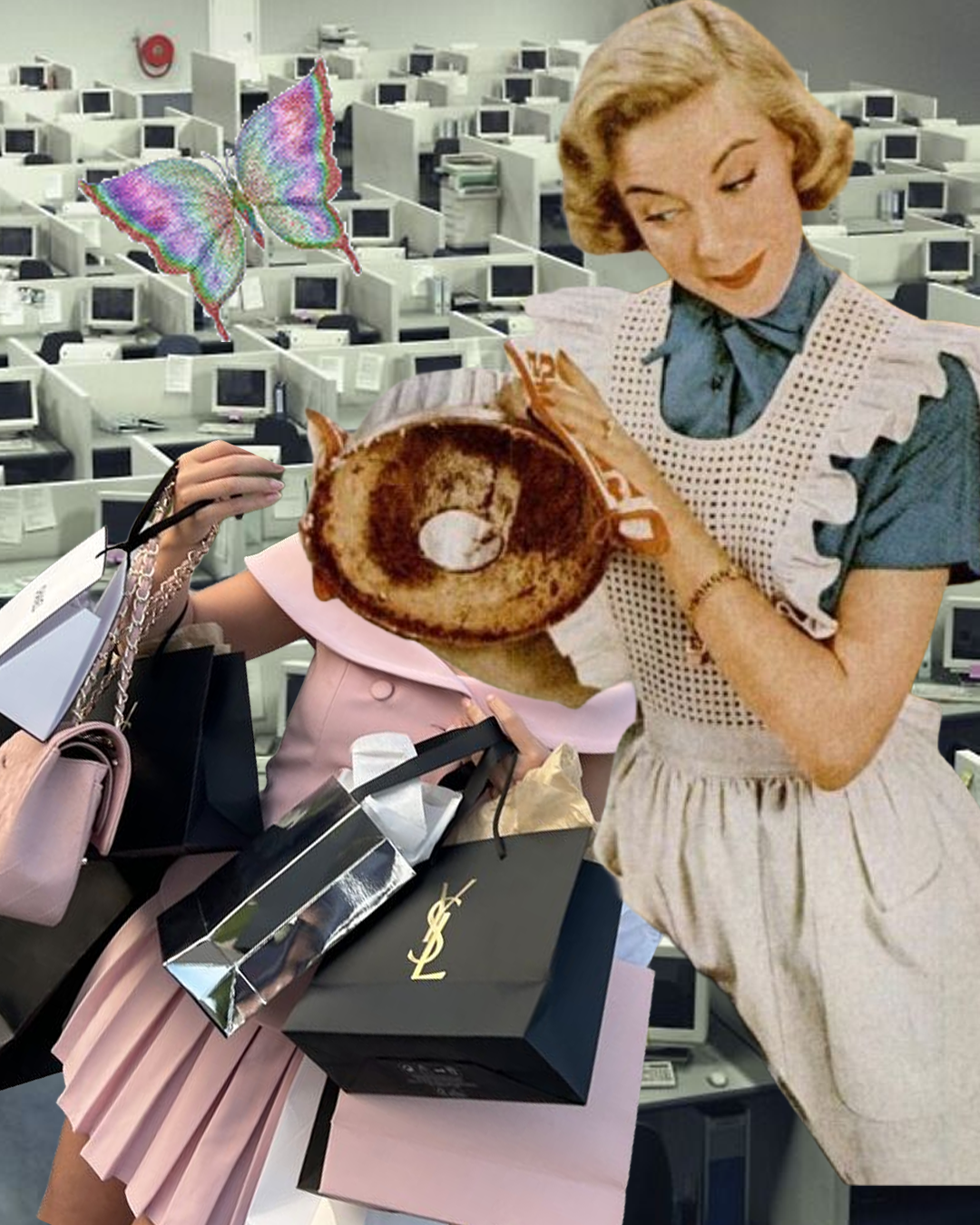
As the fall of the girl boss gave way to the trad wife, the romanticised aesthetics of homemaking seemed to portray the message: this is what would lead to a soft life. Slow cooking fresh bread from scratch, large country homes, 1950-esque puff sleeve dresses, idyllic cute children under 10 who seem to never throw tantrums, undertones of religious conservatism. This nostalgic, highly-idealised performance online presented itself as respite against the corporate hustle and broken dreams of the girl boss. A study by Dr Constance Beaufils, Professor Heejung Chung and Shiyu Yuan, Tradwife: Between Myths & Realities, found that whilst the rise of the trad wife has not yet led to a significant shift towards more traditional gender role attitudes, it is appealing because of glamourised depictions of a “relaxed, calm and affluent lifestyle in the face of dual burnout women are facing from paid work and caring for the family.” In this case, it didn't matter that house work is work (and exhausting), or that influencers associated with the movement like Nara Smith and Ballerina Farm have made it clear that they do work and don’t see themselves as trad wives, or that nearly all of the cast from The Secret Lives of Mormon Wives indicated that their online careers made them the breadwinners of their families. Domesticity has become monetised and lucrative, irrespective of whether or not this was intentional. The cultural moment of the trad wife is rooted in the ease of life that it connotes, rather than the reality of a traditional wife. In this way, the girl boss arguably never really left. It was just thinly veiled and it is now breaking through again.
So where is the second-wave of the girl boss coming from? Whilst the first-wave of girl boss feminism advocated that empowerment for women can be achieved through success in business, this second-wave of girl boss feminism is quieter in its preaching, more diverse in its presentation, but consistent in the aim of accumulation by women as a way to economic and social protection. The second-wave of girl boss feminism is rising precisely because both the first-wave of girl boss feminism and the trad wife did not collectively afford women greater protection. Femicide and domestic abuse rates are still high, and pay for work is still unequal.
For example, Emma Grede’s recent press run can be interpreted as a hark back to the ‘pull your bootstraps up’ mindset to achieve the American dream and ‘work her way out' to escape her working-class origins. Recent investment content geared towards women is thriving on social media, like ‘Investing terms for the girls’, rich girl habits and ‘why women are better investors’, for long-term financial independence. It’s also represented on current television shows like The Art of Sarah Kim, a Korean revenge thriller of an abused luxury store worker turned luxury businesswomen, and Euphoria’s Maddy Perez’s glamourised hustle storyline to support her family.
This second-wave of girl boss feminism is rising in culture as a direct response to the trad wife and first-wave girl boss, as well as the failure of genuine protection for marginalised genders and racialised women. The portrayal of Emma Grede as ‘‘more than the woman behind the Kardashians’ speaks to the real unrecognised labour of Black women. Investment content geared towards women now is seen as cracking the codes to gain the knowledge that seem to be only for finance bros or the wealthy. And fictional characters of badly treated women of colour becoming wealthier, whilst looking amazing, feels cathartic. All of it feels like justice but paradoxically the message still relies on the same oppressive capitalist tools.
This does not mean that financial freedom is not important. Intersectional economic justice is a vital feminist aim, increasing the ability for women to leave abuse and exploitation. However it still cannot be found in individualised success, but through the collective justice of fair labour practices and pay parity, freedom of movement, affordable housing, welfare provisions, stronger community support and a culture of male accountability.
The girl boss is positioned as a way to break the bonds of economic dependency and the trad wife is positioned as freedom from the combined wage labour and domestic labour placed on women. Both do not achieve this in practice. We’ll keep getting ebbs and flows of girl bosses, trad wives, hypergamous messaging, grind culture and soft life aesthetics, etc., in different evolutions as long as the path to women’s ease, protection and happiness is not rooted in calls for real policies and practices that lead to collective justice.