Ugly Betty at 20 and The Great Fashion Magazine Dream
Words: Eleanor Brady
Make it stand out
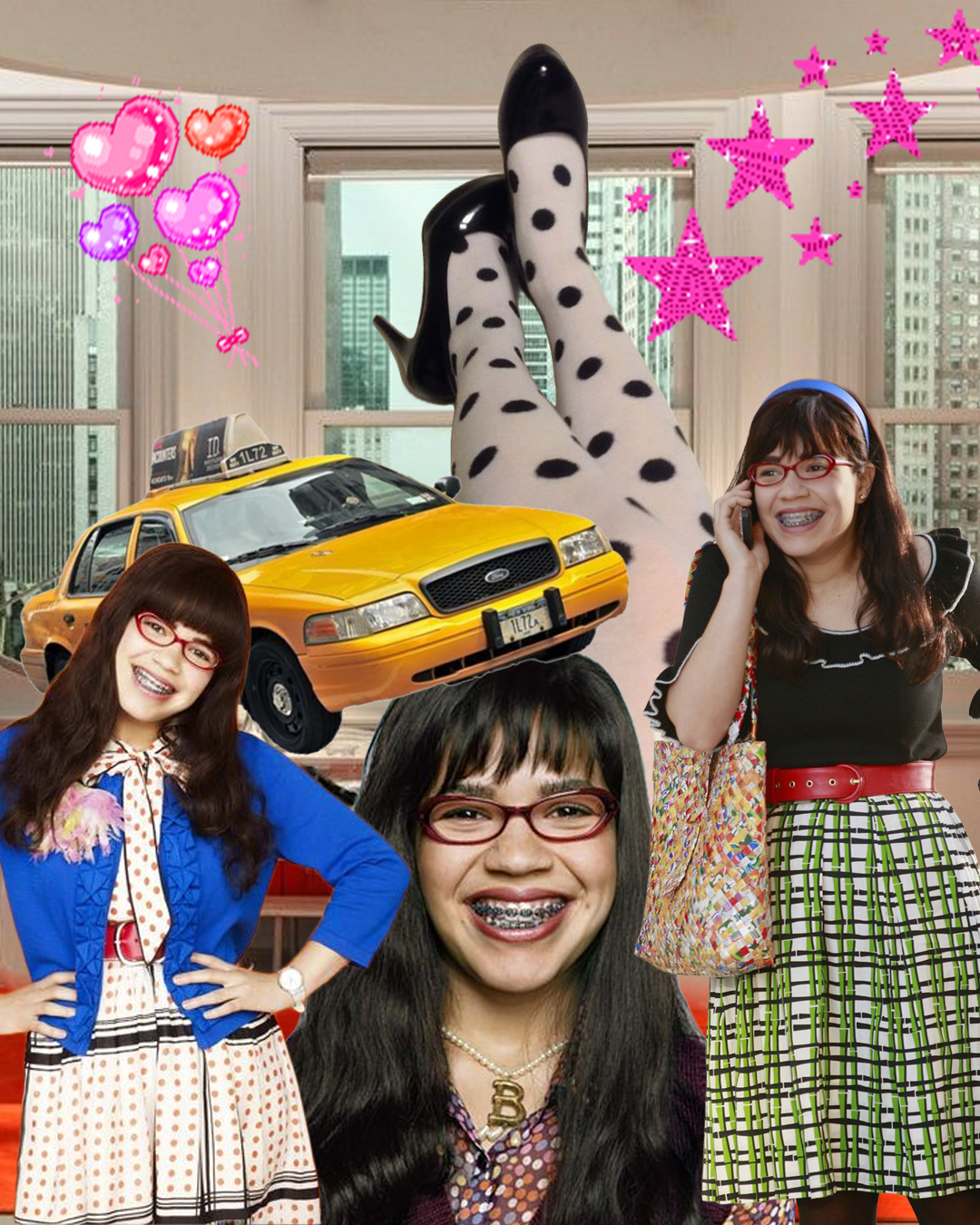
Twenty years ago, sixteen million people tuned in as a young, ambitious fashion writer, Betty Suarez (played by a then-unknown America Ferrera), nervously awaited her job interview at Meade Publications. Wearing adult braces and a colourful Guadalajara poncho, she was immediately rejected for the coveted role of assistant to MODE editor-in-chief Daniel Meade (Eric Mabius) in favour of a thinner model candidate. Undeterred by the rejection, Betty declares that “magazines are my passion…since I was a kid.” For her, MODE isn't simply a workplace to break into, but a cultural institution she believes in.
Created by the late screenwriter Silvio Horta, the ABC series was a re-creation of the Spanish telenovela Yo soy Betty la fea, which translates as I Am Betty, the Ugly One. Although far from “ugly” – the title is, if anything, a nod to the industry's attitudes towards her – Betty is bushy-browed and boldly dressed, decidedly not the early-noughties definition of beauty. Her appearance means she isn’t taken seriously by Daniel, mocked by fashion-snob co-workers Marc (Michael Urie) and Amanda (Becki Newton), and manipulated by MODE's conniving creative director Wilhelmina Slater (Vanessa Williams). The show’s arrival alongside The Devil Wears Prada that same year reflected a public fascination with the glamour and dysfunction of the fashion industry. However, where The Devil Wears Prada offered a portrait of punishing industry hierarchies, Ugly Betty used its telenovela format to demonstrate who gets excluded from the fashion world in the first place.
From the pilot, Betty's unlikely place at MODE is apparent. Unlike Andy (Anne Hathaway) in The Devil Wears Prada, Betty is Mexican-American, comes from a working-class background and lives in an intergenerational household in Queens with her father Ignacio (Tony Plana), sister Hilda (Ana Ortiz) and nephew Justin (Mark Indelicato). Her home, like her clothes, is colourful and eclectic, a visual homage to her Mexican roots. As set designer Rich Divine told The New York Times in 2009, “A lot of it is seen from her point of view, so it’s coloured by who she is.” ___STEADY_PAYWALL___
“Twenty years on, Betty's greatest achievement may not be becoming a fashion insider at all, but helping imagine a world in which you no longer need permission from magazines such as MODE to decide what fashion means to you.”
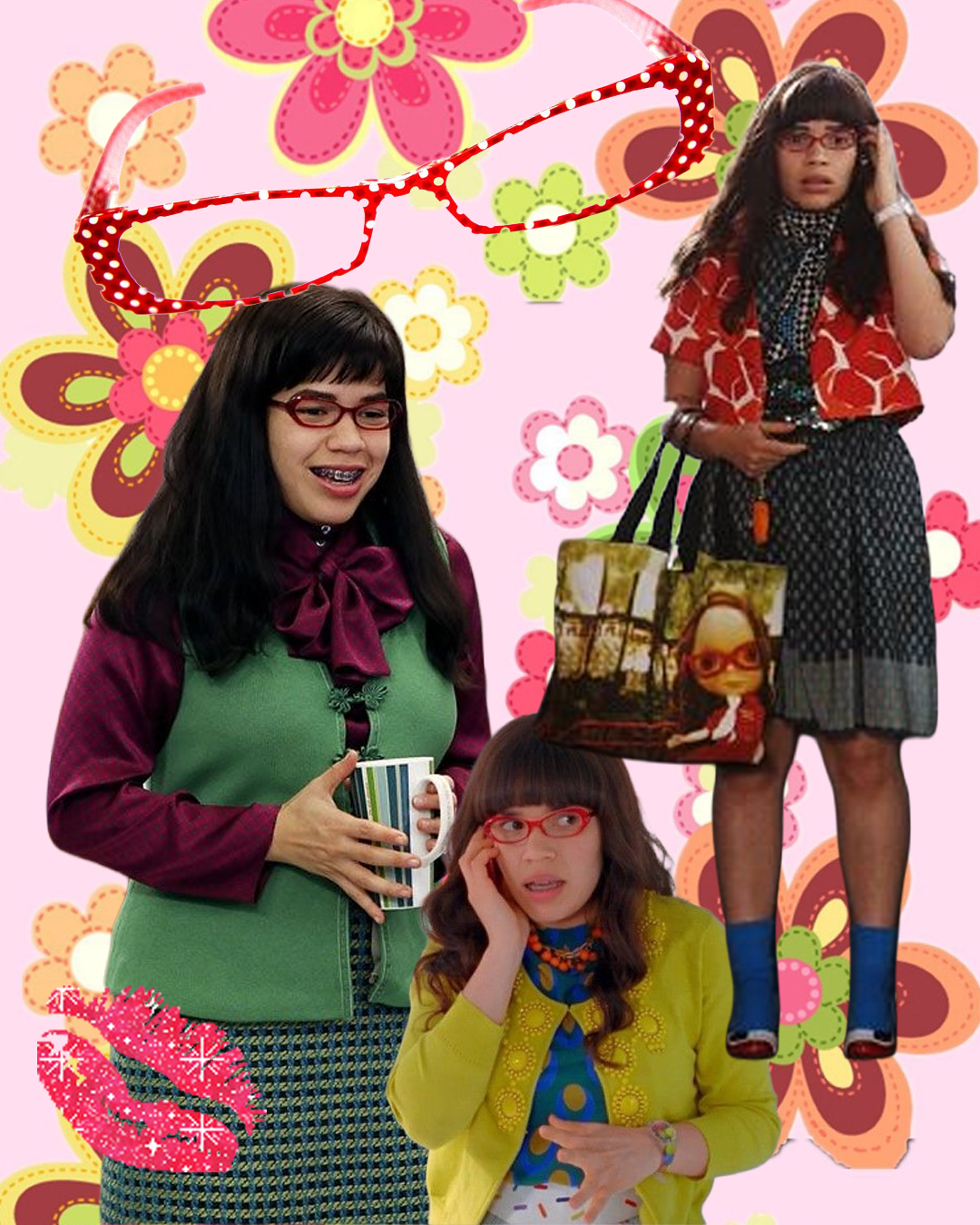
This contrast is also embedded in MODE itself. The magazine's offices are both an aspirational fantasy and a highly exclusionary workplace: employees have their outfits judged by Amanda at reception, designer samples and wardrobes stretch down futuristic corridors, and budding writers are roasted alive by Wilhelmina in pitch meetings every episode. A season three storyline in which Betty applies for a young editors training initiative (YETI) makes the prejudice beneath the glamour explicit, when Marc tells her she only got in because she is Latina and fills a diversity quota. Her outsider status, the show makes clear, is not only about her clothes.
Betty's relationship with MODE is more complicated than simply wanting to work in fashion. In the pilot, she tells Daniel, “I know most of your magazines inside out. I try to devour as much as I can,” explaining that they have introduced her to “stuff so beyond my world”, from the London art scene and international politics to the most romantic resort in Bali.
Magazines, for Betty, offer access to a world beyond her upbringing, so becoming a writer means contributing to that process of discovery. This is at odds with other female characters, notably show-villain Wilhelmina. While Betty sees the magazine as a source of knowledge and possibility, Wilhelmina sees it as an expression of power, taste and status. “All I wanted to do was run a fashion magazine,” she declares in season two, before adding somewhat unconvincingly, “Fashion is our passion!”
Through time, MODE became a backdrop for stories beyond fashion, with storylines on illegal immigration, xenophobia and class, subjects unusual for mainstream US television in 2006. Vanessa Williams later described playing a “strong black woman” who was “articulate, educated, sophisticated and had money” as her proudest achievement. The show was similarly groundbreaking in its queer representation. Marc's flamboyance and his reluctant mentorship of Betty's fashion-obsessed nephew Justin offered a rare depiction of not just queerness within the workplace but a nuanced humanisation of the show’s queer characters. Justin's eventual coming-out storyline was significant for a mainstream network series of its time.
By the fourth season, Betty finally becomes a junior editor and begins to move beyond the markers that once defined her as MODE's outsider. Crucially, the show resists a conventional makeover narrative and her confidence comes from everything she has learnt at MODE, not simply from straightening her hair or removing her braces. When she tires of writing fluff pieces, she starts her own blog. Her first post attracts just three views, but she publishes it anyway, arguably an early version of the independent writer culture that would later flourish through Substack and online medium. By the time she leaves MODE to launch a magazine in London, she is no longer simply trying to enter the fashion-media establishment and has learnt she can create something of her own.
That trajectory feels remarkably prescient twenty years later. The ecosystem of the fashion magazine has weakened, with US magazine revenue projected to decline through to 2027. Readers have migrated online, challenging editorial gatekeeping as now everyone can have their say on social media. In particular, Instagram and Tik Tok have challenged fashion's traditional cabal of designers, editors and stylists, giving people greater freedom to decide what they consider stylish. As Betty puts it in the show's final season, “It doesn’t matter if it’s valuable. It’s about what it means to you.”
She is talking about a necklace, but the sentiment could just as easily describe today's fractured fashion landscape, where influencers feature on front rows at fashion week, are the face of major campaigns and use their personal brands to secure lucrative social media partnerships. In 2026 fashion is less about following editorial consensus and more about constructing an instantly legible identity. This was recognised ironically in 2023 when Vogue published an article declaring Betty a “belated fashion icon.” Twenty years on, Betty's greatest achievement may not be becoming a fashion insider at all, but helping imagine a world in which you no longer need permission from magazines such as MODE to decide what fashion means to you.