
Wasians and the Limits of Representation: Notes from a Blasian in Japan
Words: Leiya Salis

A few weeks ago, I was nibbling on 7-Eleven sushi at a park when I overheard Laufey’s Madwoman playing from behind me. I turned to see a group of college-aged Japanese women gathered on a picnic sheet. Seemingly unaware of my presence, the young women were discussing the cast of the music video and their thoughts on having children with someone who was not ethnically Japanese.
Mixed-race people in Japan – often referred to as hāfus – have been subject to both racial scrutiny and curiosity for time immemorial. But what caught my attention about their conversation though, was that it was unfolding in relation to the cast of Laufey's music video, who have been coined by the internet as the “Wasian Avengers.”
I've been observing the growing fascination surrounding Wasians in Western media as actors like Hudson Williams and Lola Tung hit the mainstream. I could see a genuine excitement, particularly amongst younger mixed-race Asians, of seeing people who shared a core lived experience with them. I get it. My late teenage and early 20s were coloured with the same hunger. That was me, in 2016, sobbing when Ariana Miyamoto became the first half-black half-Japanese woman to win Miss Universe Japan.
What really pulled me into the Republic of Wasia, was the discourse unraveling around them in Western media, and how uncannily similar it was to the racial dynamics of mixed-race people in Japan. On the surface, the positionality of white hāfus in Japan is similar to what we see with Wasians in the West. White hāfus have seen much more representation and assimilation in the Japanese mainstream. Icons like Kiko Mizuhara and Rola, both of white mixed heritage, have become the poster children of mixed-race identity in Japan, while the rest of us were largely elsewhere, relegated to caricature, tokenism, or simply absent.
___STEADY_PAYWALL___
“Representation gets talked about as if visibility is the finish line, but time and time again, we’ve seen certain communities become more ‘visible’, only for that moment to pass as quickly as it came, or hollowed out to the point of tokenisation.”
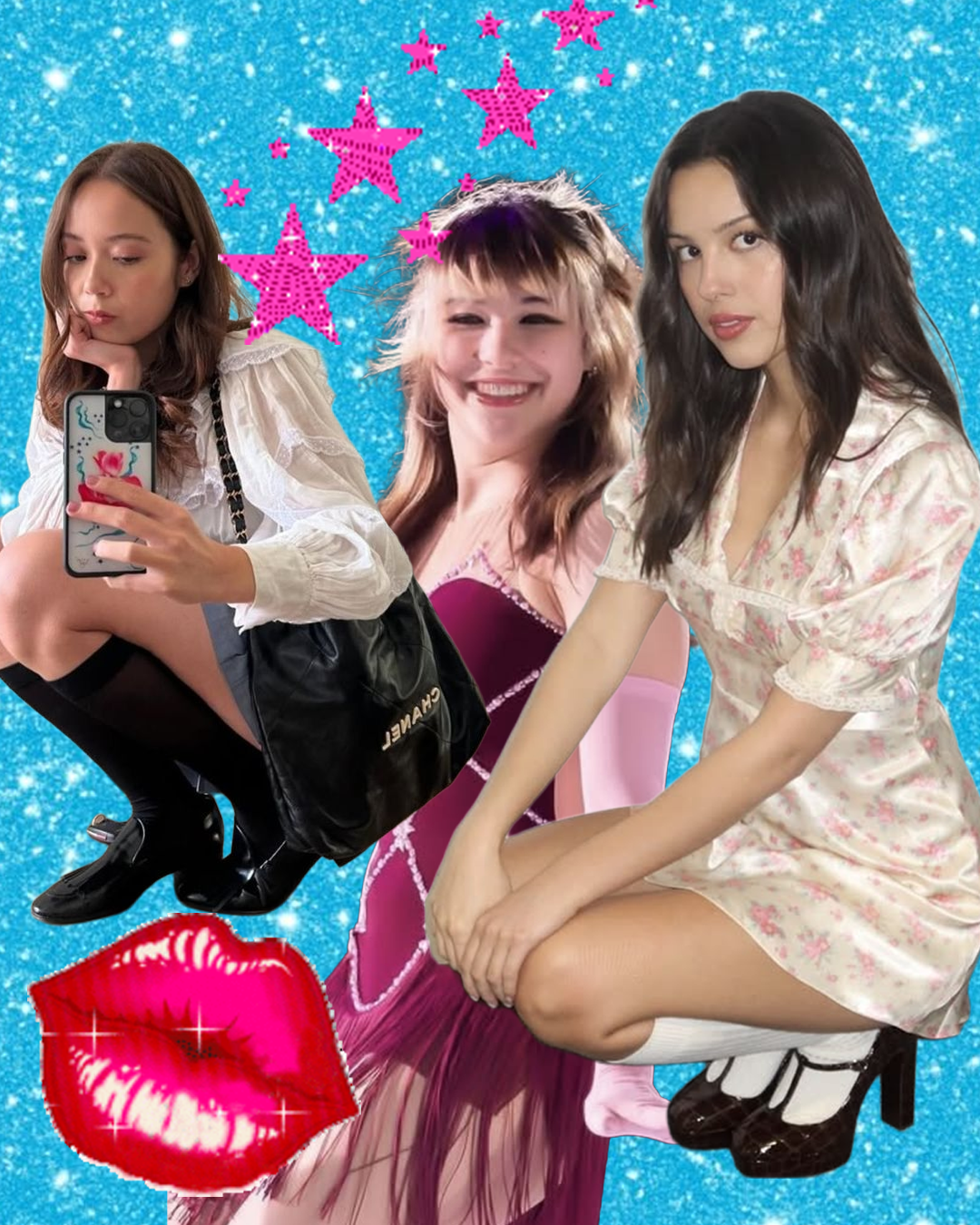
It's easy to argue that this is simply the result of white supremacy having embedded itself into Japan’s racial consciousness. To an extent, this is true, but the parallel is less straightforward. Japan's racial logic was never about centering whiteness. Rooted in Nihonjinron, a body of thought built on the idea of Japanese racial and cultural uniqueness, Japan's self-understanding has operated on an essentialist ethnocentrism long before it encountered the West. Japanese-ness is as much a cultural truth as it is a biological one, a fixed identity that is believed to be baked into one’s genetic makeup. It’s the one-drop rule at scale, naturalized via institutions, politics, art, and war for centuries.
When Japan encountered Western racial science and white supremacy, it strategically positioned itself alongside whiteness — as a civilisational equal — in order to avoid being categorised alongside the races the West had deemed inferior. Whiteness was, in a sense, conscripted as an ally. Post-WWII, and cemented further through globalisation and internet culture, this alignment hardened quietly without ever being interrogated, because Japan's underlying logic had always been essentialist.
White-hāfu people, like Wasians in the West, were eventually folded into Japanese mainstream representation for this very reason. Although they deviate from the jun-nihonjin — “pure” Japanese — ideal it's a deviation that doesn't threaten the boundary, because whiteness is a difference that adds to Japan's supremacist self-image. In both contexts, difference is tolerated, and in some cases, celebrated, insofar as it benefits the continuation of the existing status quo.
All this reminds me of Ariana Miyamoto again. When she won Miss Universe Japan, the response in Japan was heartbreaking. She grew up here, spoke the language, held citizenship, and shared the cultural reference points of every other Japanese person her age, yet she was publicly ripped to shreds for not being “Japanese enough.” And more notably, the fanfare around her win didn't translate into the kind of sustained mainstream presence her white hāfu counterparts have enjoyed. She became a moment, whereas they became fixtures in Japanese culture.
I know this firsthand. When I joined the modelling industry in 2021, it was at the height of diversity-forward branding campaigns. For a few years, I booked real, recognisable work. But nowadays, that window seems to be closing. Late last year, I received a casting call for a local eyewear brand — $2,000, which was exactly what I had left on my student loans. But when I got to the casting categories, there were only two: Japanese or Asian presenting, and mixed-race with white. I didn't fit either. A few months later, I saw the campaign on a billboard in my neighborhood. Japanese models I've walked shows with, Chinese and Korean models temporarily in town, the usual white hāfu models I’ve known for years. And that was that.
So, what should we be demanding then? More seats at the table? The door to be cracked wide open? As a Blasian in Japan, I’ve always been a fierce believer that representation can help chip away at the hegemonic values and hierarchies embedded in our communities. I see value in what Laufey attempted to do in her music video, and the celebration of increasing Wasian visibility in media and entertainment.
But I'm not sure if this is enough anymore, or if it ever was. Representation gets talked about as if visibility is the finish line, but time and time again, we’ve seen certain communities become more “visible,” only for that moment to pass as quickly as it came, or hollowed out to the point of tokenisation.
We’re seeing less racial and gender diversity in Hollywood films. LGBTQ representation has seen a decrease for two-years in a row. We're back to thinness as aspirational. In Japan, diversity in local media remains limited — pale and delicate continues to be the default, with diversity in the industry still teetering on the edge of “norm” and “trend.” The rubber band stretched wide open, only for it to snap back into place, because the material and structural realities never changed.
Yes, we've gotten good at asking for more representation. Better at noticing when it's missing. But I worry that we’re placing far too much weight on representation alone. Be it Wasians in the West or white-hāfus in Japan, if we want to see true material, structural transformation, the question we ought to be asking isn’t who gets their foot in the door, but what it would take to tear down the house altogether.