
The Second Girlhood: Millennial Women Are Growing Back Down Again
Words: Jess Bacon
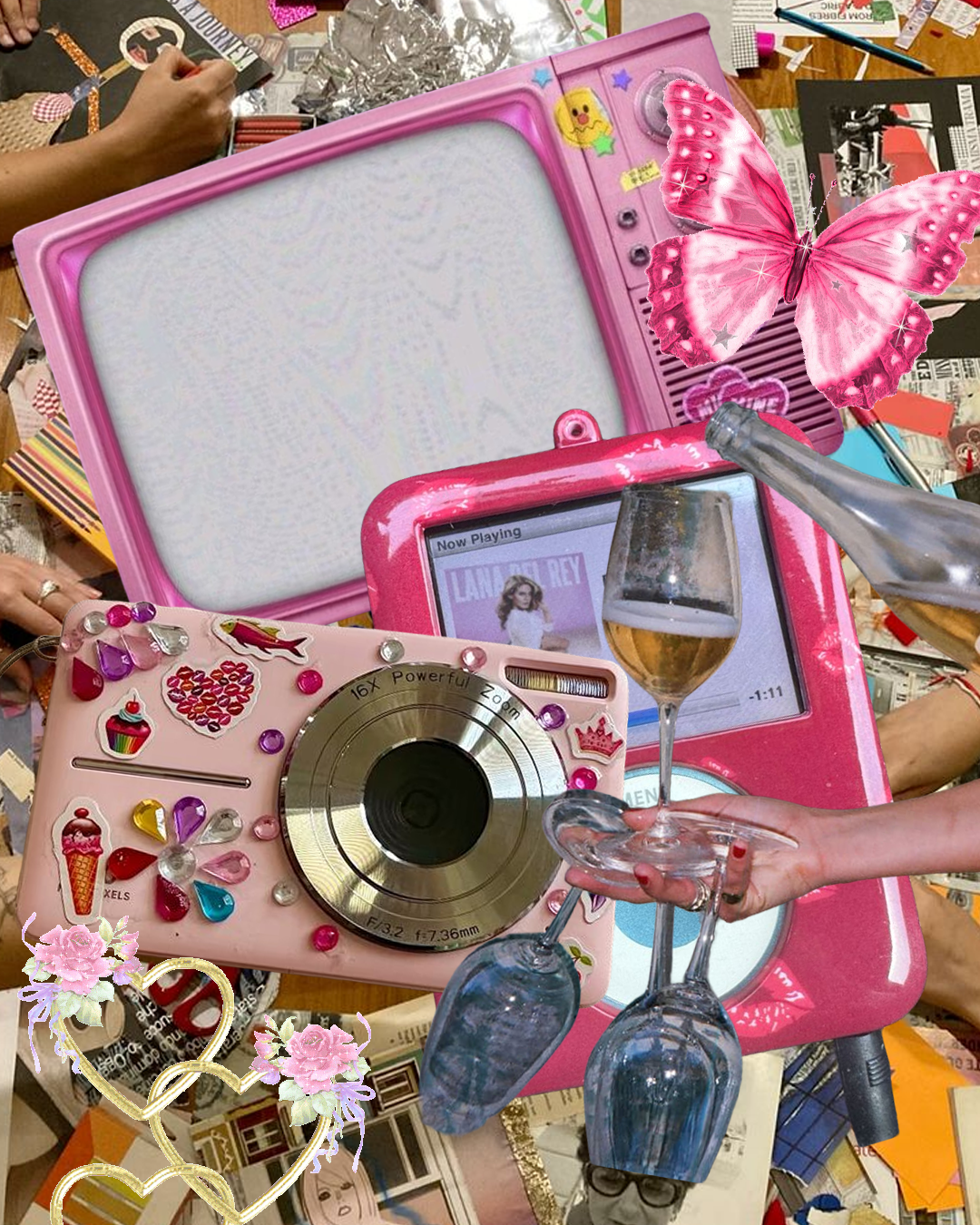
It’s no secret that the patriarchy has always had an obsession with women ageing. Any sign or semblance of the laughs they’ve shared, children they’ve birthed or any hint of a life well lived etched into their skin is swiftly encouraged to be smoothed, blurred and edited out to revert back to their baby smooth beginnings.
Yet, simultaneously, girls are pushed out of childhood and told to aspire to be grown up, so they can be seen as attractive to boys, forced to adopt responsibility for anything and everything, including how anyone perceives them and to be taken seriously as a woman, as opposed to a little girl.
No one tells girls that once they’re out of this carefree safety bubble, the one where your only worries are feeding your Tamagotchi and what to watch on Disney Channel that evening, you can never truly go back. Those wild, exploratory years of girlhood, where you have a lack of self-consciousness, confidence in your body’s ability, feel safe and comfortable to be curious about your random interests, is lost as you become immensely aware of how you’re perceived. That constant self-assessment to condition your behaviour, language, appearance and interests to be more palatable is exhausting.
Thankfully, women are now refusing to perform womanhood to please and care for others, at the expense of themselves, by crafting a second girlhood, a term I coined in my book, I’m Just a Girl. This extended adolescence that women are experiencing also comes as research from the University of Cambridge found that adolescence lasts until the age of 32, as opposed to when your frontal lobe forms by 25. Even in your early 30s, your brain is still developing before a distinct new phase of adulthood begins at 32, scientists found. It’s a natural response to keep developing, evolving and redefining your identity well into your 30s, as opposed to knowing exactly what you’re doing in adulthood, when it hasn’t really begun yet.
___STEADY_PAYWALL___
“The second girlhood taps into the collectivism that is needed to make real change such as calls for affordable housing, economic security, reproductive rights, fighting against medical misogyny and an end to violence against women.”
In the past few years, women have noticeably grown back down again by reconnecting with the interests, passions and aesthetics that they loved as a girl, this time with the autonomy and wealth that they have as an adult. To an extent, men have always retained small anchors to their boyhood, without it impacting their perceived success in adulthood or reputation in the office, as they hold onto their boyhood hobbies of Lego, trading Pokémon cards, playing video games and football.
But now women are living out a girl-like fantasy of what we thought womanhood would be like: having sleepovers with our best friends in matching pyjamas, wearing dopamine-boosting bright colours, clashing patterns and feminine styles they’d previously denied themselves. After work they’re spending their evenings painting pottery, reading or watching their favourite teen movies, going to concerts in cowboy hats, all while they usually share these experiences with likeminded women in communities and spaces predominantly made by and for the girlies (girls, gays, theys and thems, the girlies know who they are).
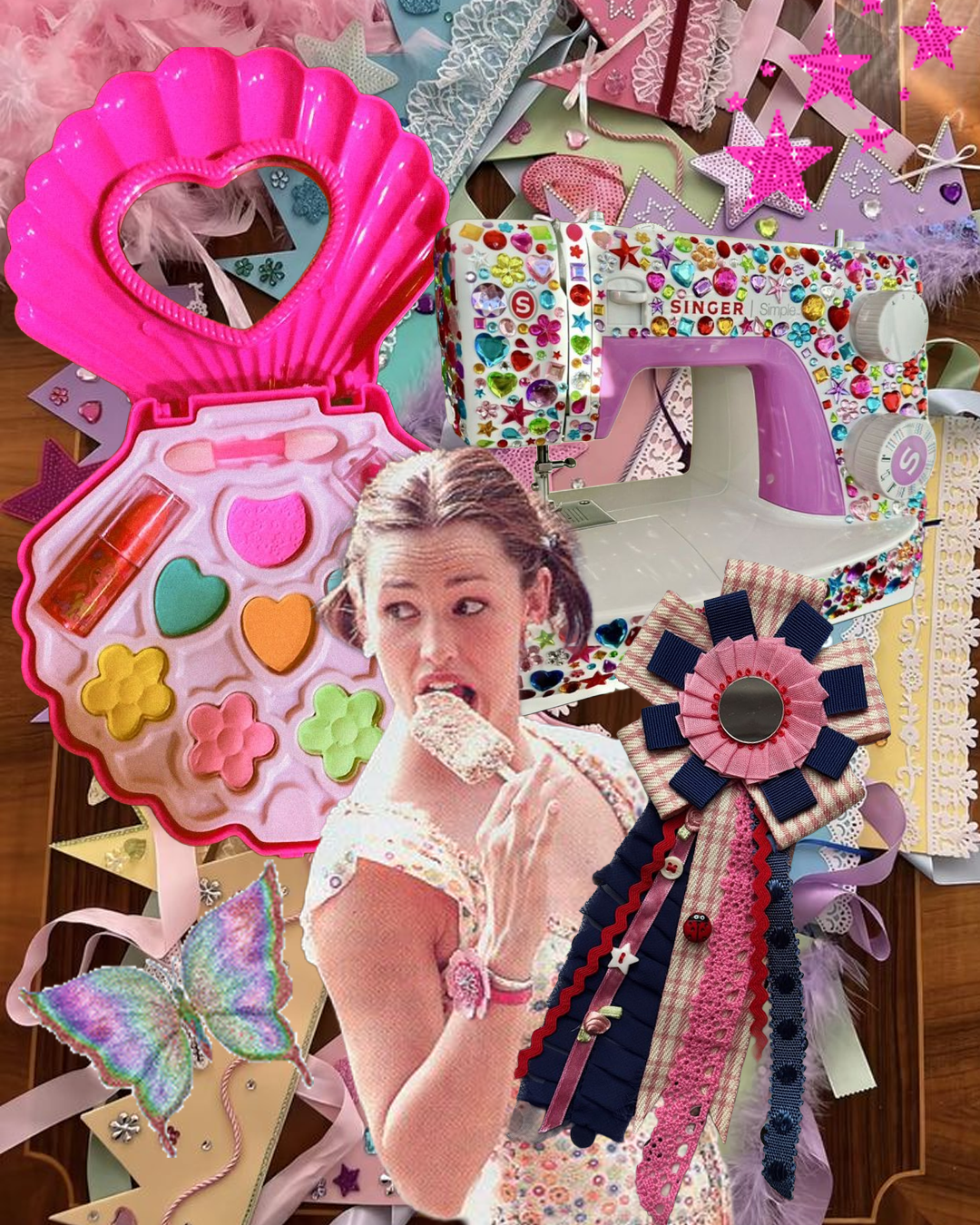
Though some call it a frivolous regression – and it is a complicated identity to oscillate between as to be a woman is a political entity, which can’t be infantilised or forgotten about by shrugging ‘I’m just a girl’ – it’s also a bold revolution to re-prioritise women’s entire existence around rest, pleasure, connection and play.
I didn’t expect that at the ripe age of 29, I’d still be living at home with my mum, listening to Taylor Swift and tuning into the 20th anniversary special of Hannah Montana from my childhood bedroom. As a teenager, I had visions of living in London, wearing corporate two-piece grey co-ords from H&M and probably being married with a house and a baby to my name, by now. Yet, this is the new era of modern womanhood, one where we’re reprioritising ourselves, without feeling guilty, ashamed or embarrassed by our interests, is something I’m definitely not alone in.
Tasha Bailey, integrative psychotherapist, author and content creator tells me: “I think previously many of us would have carried a bit of shame (thank you childhood trauma and grow up culture) seeing it as indulgent to centre ourselves in this way and sit in our younger selves in this way. But seeing each other embracing this openly and publicly online is a lovely nod of encouragement.”
After a global pandemic, a cost-of-living crisis, a housing crisis, a regression in women’s rights and during an epidemic of violence against women, it’s understandable that women are looking for small pockets of sanctuary and safety in an unstable world. It’s also near impossible to replicate our parents or grandparents’ milestones of adulthood (mortgage, marriage, children) in our twenties or thirties, as it’s become unaffordable or inaccessible. So, the markers of successfully transitioning from a half-baked human to a ‘got their life together’ adult have evolved as well, as we’ve seen reflected in the birth rates dropping to historic lows for women under 30s, as they pursue higher education and settle down later in life.
Women are embracing the freedom that comes with the second girlhood to try and fail at new things, spend time discovering or following their curiosities (including their sexuality), and shedding some of the immense pressure they’ve felt to be perfect and live up to the impossible body and beauty standards they’ve been held to. This reimagining of adulthood gives women permission to be messy, playful and take on side quests alongside their 9-to-5 to reduce their anxiety, live in the moment and find ways to feel fulfilment outside of work and romantic relationships.
“So many women are raised to be “good girls” and so we end up shrinking parts of ourselves in the process, losing touch with our authenticity and individuality,” Bailey adds. But a lot of what we call “maturity” is actually just disconnection from joy.”
The social shift has seen women decentre men and romantic love from the epitome of success in adulthood, not only as dating in the digital age is littered with disappointment (ghosting, unsolicited pictures and boring matches, to name a few) but also as the far right continues to rise. From the overwhelming response to Vogue’s ‘Is having a boyfriend embarrassing?’ to over1.4 million people quitting dating apps in recent years from both fatigue of swiping and arising number of sexual harassment and assault cases, and with the knowledge thatunmarried women live longer, happier lives, women are redefining what the epitome of success in adulthood looks like. Marriages, mortgages and babies aren’t the defining markers of womanhood, as the birth rate continues to decline, and houses remain unaffordable in a cost-of-living-crisis, women are championing their platonic loves, female friendships and adorning their homes as ‘girl museums’. Misogyny has re-written relationships, to revert to more archaic models as seen in the Trad Wife boom, and the manosphere’s strict double standards about women and men’s rights for autonomy over their body.
One of the responses to this conservatism that encourages women to shrink every facet of themselves has been women’s self-reliance on each other to create peer-to-peer support in spaces - predominantly occupied by girlies, theys, thems, gays - that provide comfort and reassurance that women can be their authentic selves and find safety in a destabilising time.
“Reconnecting with your inner child is really about giving yourself permission to bring those parts back in, and seeing them as grounding, human, and deeply healing rather than childish,” Bailey adds. “Reconnecting with our inner child can help up feel more grounded, more willing to be brave and take risks and also build self-compassion for our softer, more vulnerable side.”
Bailey calls this inner child work “life changing for any woman” as not only do they confront their childhood trauma that may be holding them back in adulthood, but this period of unlearning can also unlock new levels of “self-compassion, learning and emotional resilience” in adulthood. She adds: “Essentially, addressing our inner child helps us function better and freer as grown-ups.”
Ultimately, women’s desire to reclaim their girlhood is not a retreat from adulthood but a rejection of the prescriptive conditions that have made womanhood impossible to reach. Women find sanctuary in friendship, play and self-expression as the world has too often failed to offer them the stability and equality they crave. The second girlhood taps into the collectivism that is needed to make real change such as calls for affordable housing, economic security, reproductive rights, fighting against medical misogyny and an end to violence against women. The second girlhood may in itself not be inherently a political movement that begins with reclaiming joy, but its most powerful legacy could be that it inspires a generation of women to refuse to settle for less than the future that they deserve. One filled with a girl-like rebellious optimism that if we work together, we actually can make a difference not just for our own circumstances, but for all women.