
Wuthering Heights: The Best Versions From Around the World
Words: Rachel Ulangkaya

Whether you’re cursing the day the film released, or you got your opening day compact mirror, tote bag, tea blend, Charli XCX vinyl etc…, you are bound to have an opinion on or know someone else’s opinion on Emerald Fennell’s “Wuthering Heights”. The cheeky quotation marks in the title are a tacit admission of the radical departures from Emily Brontë’s novel Wuthering Heights, but Fennell is merely the most forthcoming of the myriad adaptations.
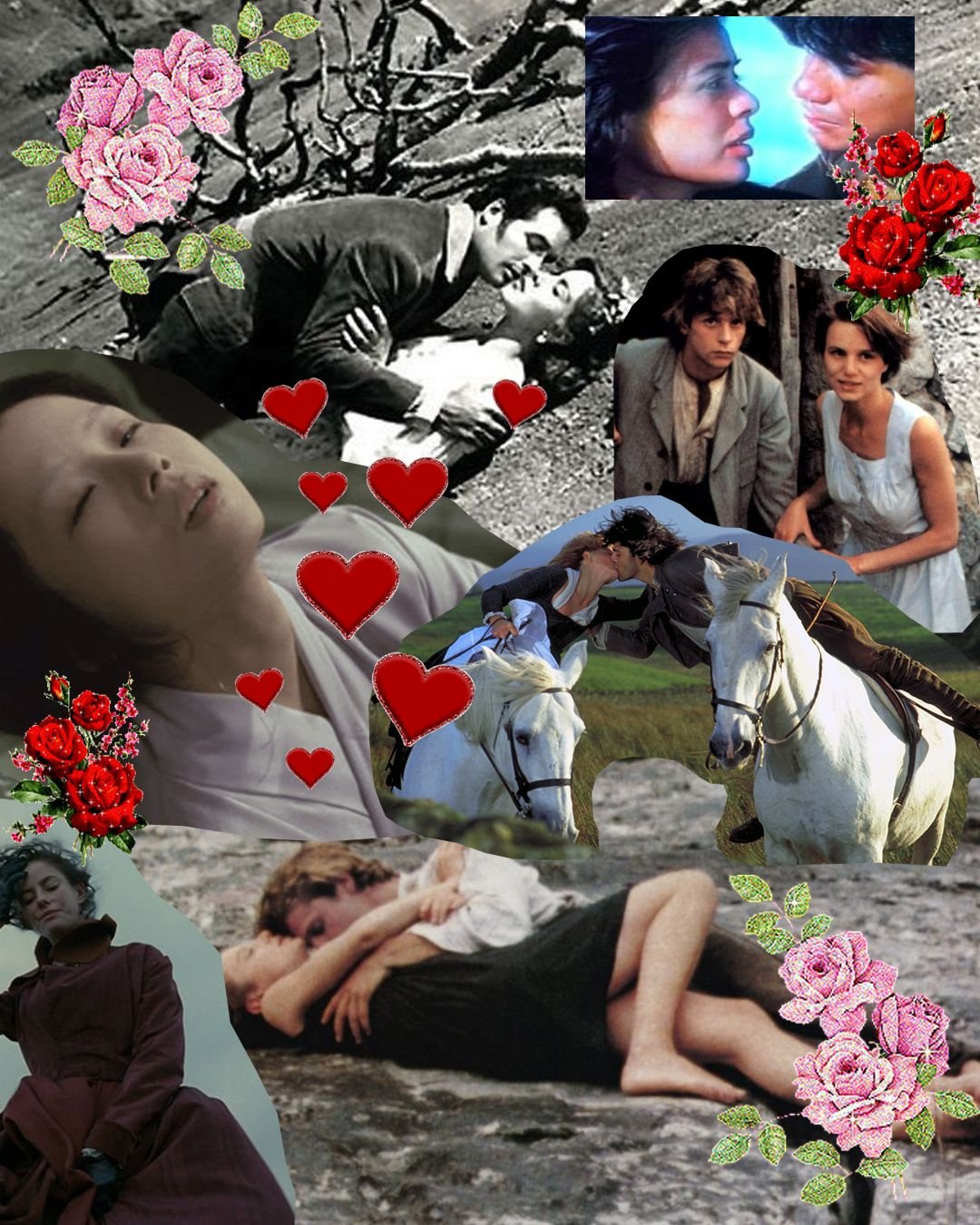
Her film is in the grand tradition of Wuthering Heights adaptations that take radical departures from the novel. Between the pages, directors of the big and small screen have all put their own spin on the story. Below, we track the best and worst of Brontë takes all the way up to Fennell.
Wuthering Heights (1939), directed by William Wyler
The popular perception of Wuthering Heights as a romance is in no small part due to William Wyler’s 1939 film. Like many adaptations after it, only the first part of the book is adapted, and the romance between Cathy and Heathcliff is its primary focus. Laurence Olivier’s Heathcliff is less capital-R Romantic, more lowercase-r romantic. And yet, it is not without its own capital-G Gothic charms, the bookends easily standing with any of its horror contemporaries. On-set tensions between Merle Oberon and Laurence Olivier create a strange chemistry between the two, a piercing fury behind each declaration of love-hatred. This strange chemistry is exemplified in Cathy’s death at the end of the film. They declare how much they hate the other, want the other to die, tears welling up in their eyes while they smile and hug and kiss. As she dies in Heathcliff’s arms, a vampiric image begins to form, her bed robes flowing as he carries her limp figure, he declares, “She’s mine! She’s mine!” For a film that spends most of its runtime as a period drama, her death is an eerie coda to the melodrama that unfolded before.
___STEADY_PAYWALL___
Abismos de Pasión (1954), directed by Luis Buñuel
Buñuel’s adaptation is condensed and jarring, beginning with Heathcliff’s return to Wuthering Heights and ending with Cathy’s death. He trades the Yorkshire moors for the Mexican desert, bathing the characters in oppressive sun rather than dreary fog. In true surrealist fashion, the emotions require no logical justification for existing, they just are. Without the romantic fluff of Cathy and Heathcliff’s childhood together, we are left in a whirlwind of pure emotion. Heathcliff's physicality around Isabella is vampiric, only shown kissing her on the neck, as if he is draining her with every tepid flirtation, recalling Nelly’s words from the novel, “Is he a ghoul or a vampire?” Cathy’s cruelty is also highlighted, and she is far more childish and petty than in any other adaptation, seemingly enjoying his violence. Though the words “I am Heathcliff” are never uttered in this version, the spaces in the film give the sense that their hearts are so aligned that they transform their environments to mirror each other, trapping themselves together.
Hurlevent (1985), directed by Jacques Rivette
Rivette’s 1985 adaptation transposes the story to the 1930s French countryside. Though its French New Wave stylings are not necessarily “Gothic,” elliptical dream sequences punctuate its emotional arcs, adding an air of death to a more humbly constructed version of the tale. With the encroachment of urban culture on the periphery, Linton’s wealth now includes cars and record players, his wooing of Cathy far beyond Heathcliff’s meagre means. The Earnshaws can only dream of wealth, haphazardly placing a green billiard table in an abandoned servants’ quarters, while Linton’s estate has walls painted in green. Heathcliff's revenge, then, is primarily because of Hindley and Linton’s hatred for his class and pursuit of a relationship with Cathy regardless of it, not because of an inherently evil nature, exacerbated by this abuse.
Arashi ga Oka (1988), directed by Yoshida Yoshishige
Yoshida delivers a dreamy and dreary take, more in the vein of Japanese ghost stories and Georges Bataille than Victorian literature. Rather than copy the book exactly, certain images were reiterated: Heathcliff with Cathy’s corpse, a hidden room for Heathcliff and Cathy to enact their desires, a stable for pregnant women to be held like animals. The fear of female sexuality echoes Cathy’s words in the novel, “I wish I were a girl again, half savage and hardy, and free.” Much of the film is focused on her negotiating the unwinnable social mores of feudal Japan, attempting to escape her fate as a mountain priestess. Heathcliff is not someone with control over Cathy, but an expression of her Id, asserting itself even after her death. His defilement of her grave is not only a reflection of his love for her, but Cathy’s need to be free from societal constraints.
Hihintayin Kita sa Langit (1991), directed by Carlos Siguion-Reyna
The most fascinating of Wyler’s imitators is Hihintayin Kita sa Langit (“I Will Wait for You in Heaven” in English). It lifts heavily from Wyler’s version, with some scenes being nearly shot-for-shot recreations. It also brings the Hays Code tensions between Brontë’s text and Wyler’s film to the forefront, misconstruing the story into a Catholic morality tale. This message gets muddled as it revels in the beauty of its young stars Richard Gomez and Dawn Zulueta, adding love scenes, murder schemes, and poolside courtship into the script. When transposed to modern Philippines, Cathy and Heathcliff’s biggest sin is not of racial mixing, or of incest, or of inter-class relationships, but of premarital sex, suicide, and abortion (by way of suicide). Yet their love somehow allows them to be delivered to heaven together, and the film ends with their ghosts gleefully frolicking through the Filipino coast, the final frame a text panel reading “ang lahat ng ito ay para sa iyo panginoong Jesus” (All this is for you, Lord Jesus).
Wuthering Heights (2011), directed by Andrea Arnold
Arnold is not so interested in ghosts, but how the belief in them causes abuse. Her adaptation is by far the least romantic and flowery, blunting Brontë’s language and filming in a style between cinema verite and half-formed childhood memories. Her blunt style foregrounds the social conditions that bring about “Heathcliff,” especially in her decision to bring the issue of Heathcliff's origins to the forefront by taking Brontë's description of him as “black” to what our modern racial terminology means. Rather than Heathcliff’s cruelty being an innate part of his personality, it’s closer to Charlotte Brontë's writing about him: “Carefully trained and kindly treated, the black gypsey-cub might possibly have been reared into a human being, but tyranny and ignorance made of him a mere demon.”
With such a broad, multifaceted, multicultural spread, Brontë’s Wuthering Heights may be unable to be captured in a single film, but perhaps it has been done justice in this kaleidoscopic array of adaptations. As every experience of reading Wuthering Heights is different, so should every film, offering a new way to see the classic story.