
Avalon Fast on CAMP, Witchcraft and Finding Connection in the Face of Grief
Words: Gina Tonic
Make it stand out
Summer has been especially unbearable this year as cities across the world swelter in non-stop heatwaves and in European cities, without even a single air conditioning unit to offer salvation. It’s no wonder, under these extreme circumstances, that many are turning to horror films to offer them some sweet release - in particular, Summerween movies, aka, scary stories set under the sweltering sun rather than spotlighted by eerie moonlight.
A realm ripe for a Summerween setting is, obviously, summer camp. Our minds immediately run to Sleepaway Camp and Addams Family Values as campy (get it) playgrounds for over the top japes and jumpscares. When going into CAMP by Avalon Fast, I wasn’t expecting a direct resemblance to these movies but perhaps a potential pastiche. What I received was the opposite: A dreamy interpretation of the space that offers a completely new take of the setting. CAMP presents a story that emphasises the revolutionary catharsis that friendship can offer in the face of grief and self hate.
For Avalon, the summer camp setting inherently lends itself to seeking something new for oneself. They describe attending lots of different summer camps as a kid, hoping to find deep connections that would last a lifetime. While they didn’t make any long lasting relationships, Avalon learned to understand how camp could be that for others.
“I would see that with the counselors, they were making friends in a real way. In camp, the kids are kind of just having a shitty time, you know? Their parents sent them there and they're watching these older versions of themselves shut the door at the end of the night, and hear them laughing about how annoying you are.” They tell me over Zoom. “I remember that specifically, hearing the older girls in the back of the cabin, just giggling and talking shit about us, and I was like. ‘Oh, I hate myself.’”
They laugh, “Like I want to be you. I want to go down to the lake with you, even though they didn't think that we knew. I don't know if anyone else paid attention to that, but I was hyper focused on wanting to grow up and get out of being a child, I guess.”
CAMP follows Emily, a teenager who has been at the centre of two major traumas in her life and is struggling to cope, who takes on a counselor role at a camp for troubled youth in order to get more structure in her life and escape the town where everyone knows her business. Immediately, she is welcomed with open arms by the other counselors - some who are there for similar reasons, others who used to go to the camp themselves. This immediate belonging is a revelation.
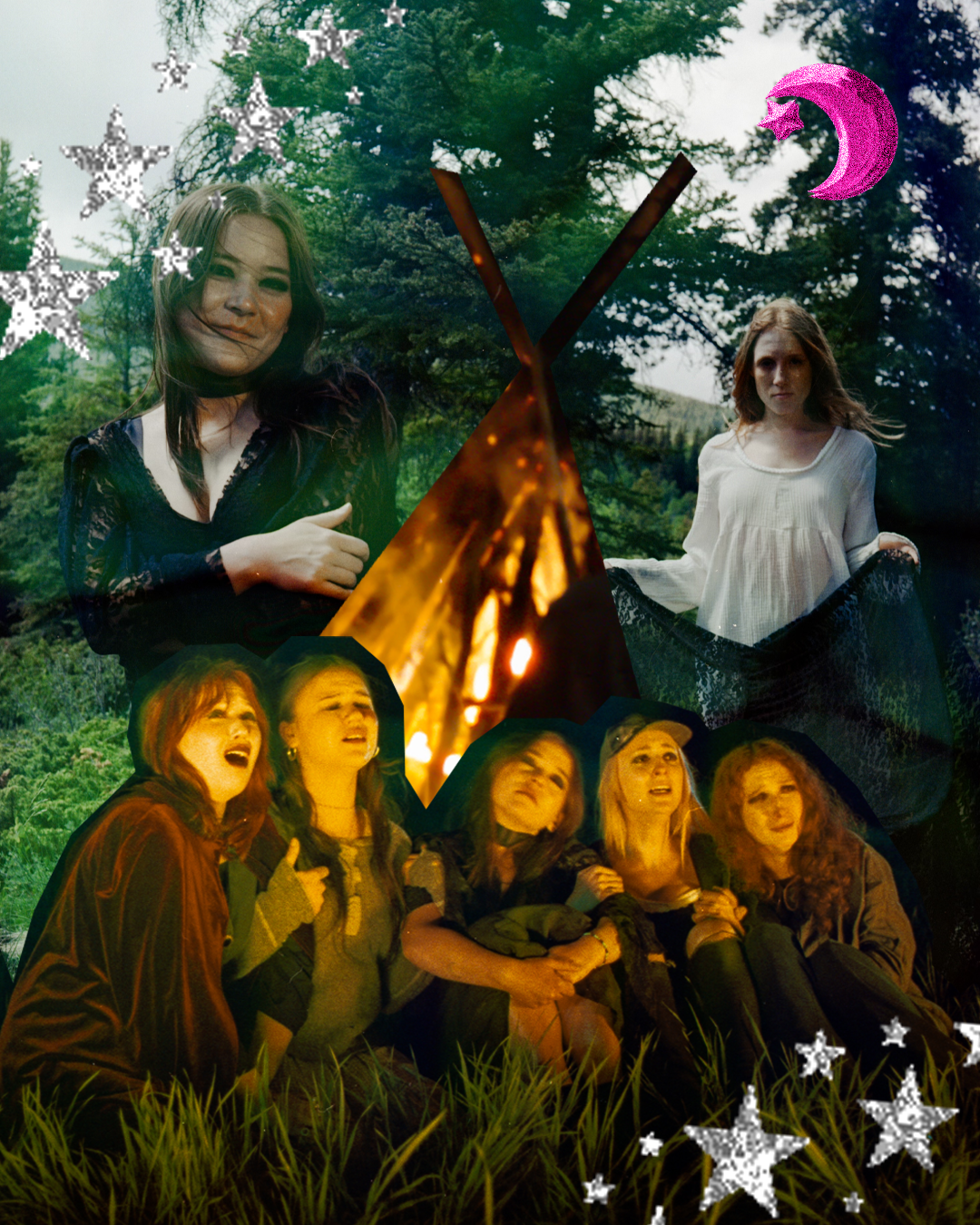
“People reference this film being like The Craft or something and I'm like, sure, there's like five girls, and there's this witchy kind of coven aspect. But for me, films like that, where an outcast shows up or a new person on the scene, and the girls take her in but with some kind of ulterior motive, it's all a little nasty and toxic. That hasn't been my experience with women or the people that I've found in my life that have really made me feel safe, secure, supported.” Avalon explains. “I have found real connection in my life, and that's what CAMP was about. I knew there's not going to be any trial period for her. As soon as she is present with them, as soon as she exists in their space, they're going to recognise that they want to be her friend. These girls are also looking for more connection in their lives too. I think anyone could have shown up, and they would have been interested and curious about making a new friend. I think it's how I interact as well. It's kind of how I show up in the world. I'm very excited to meet new people and always very open. I've rarely ever had that experience of being hesitant to let a new person in.”
“I have such amazing friends and and community, but I do feel like I am constantly searching for people that understand me on a deeper level, or even as I change, I just feel that it doesn't stop.”
The Canadian auteur recognises friendship and connection as a thorough thread of their work, noting that it is definitely a theme in their newer film Drinking and Driving too.
Avalon continues, “There are things that I'm looking for that I continue to look for, and it's interesting because I have such amazing friends and community, but I do feel like I am constantly searching for people that understand me on a deeper level, or even as I change, I just feel that it doesn't stop. I notice sometimes it seems like people make their friends, they have their thing going on, and then it becomes that for the rest of their lives. Those people become their bridesmaids or whatever. I definitely have those people, but I'm always on the search even within those friendships for it to get deeper and move into a new space of understanding. So it definitely shows up in the work.”
Moving deftly through the conflicting cohabitation of current joys alongside navigating loss, CAMP takes a large swathe of the film to acknowledging the spiritual journey of grief. Witchcraft is a central plot point, bonding the counselors while letting them acknowledge their deepest needs and desires. Through speaking openly about their feelings, the group is able to access some unknown power that liberates them of their troubled pasts.
Speaking candidly, Avalon acknowledges the real life loss that inspired them to make this movie as well as the ongoing after effects of their friend’s death. Childhood friends who used to play magic in the woods, it wasn’t until after she passed that Avalon was able to engage with the mystical as an adult. The loss led them to abandon cynicism and lean into the spiritual, which in turn helped to make CAMP a movie about witches.
“Me, her, and her sister would would you know go out into the woods and make stick wands and come up with rituals and passages and names for things and names for each other and there's been moments it feels like my memories with them that specifically feel enchanted or magical, like we opened some kind of portal and we just exist there.” They smile. “It's interesting because I feel like going into the movie, sometimes things happen when I'm writing and I don't look too heavily into what it is, and then after the fact, it starts to make sense. Since making the movie, I’ve connected more to the witchcraft and woo woo side of it. Whereas before it was almost just a part of the story to make it a movie and now it means something more to me.”
Although I had specific reasons to relate to the film, CAMP succeeds in finding notes throughout the narrative that can ring true to anyone who has ever felt like an outsider, or alone, or damaged by their past. There’s a tangible connection from Avalon’s voice as an auteur to their audience, rewarding us in recognition and understanding rather than straightforward answers. The film is a siren call to keep going, not because it necessarily gets easier, but because what other option do we have?