
Cinecism: Backrooms’ Internet of Too Many Things
Words: Maia Wyman
Backrooms is a populist film. It’s also an internet film. Its director, Kane Parsons, is a twenty-year-old creator plucked from the niche corners of YouTube and almost incubated into this position by A24. Prior to making Backrooms, his back-catalogue had been a series of Blender-generated videos that realised a Creepypasta myth of eerie liminal spaces, dreamed up by the very-online masses.
Unlike his counterpart, Curry Barker of Obsession, who was similarly plucked from the internet to infuse studios with some Gen Z internet magic, Parsons has stated he does not intend to continue to helm major studio projects but instead return to creating videos for his audience of millions.
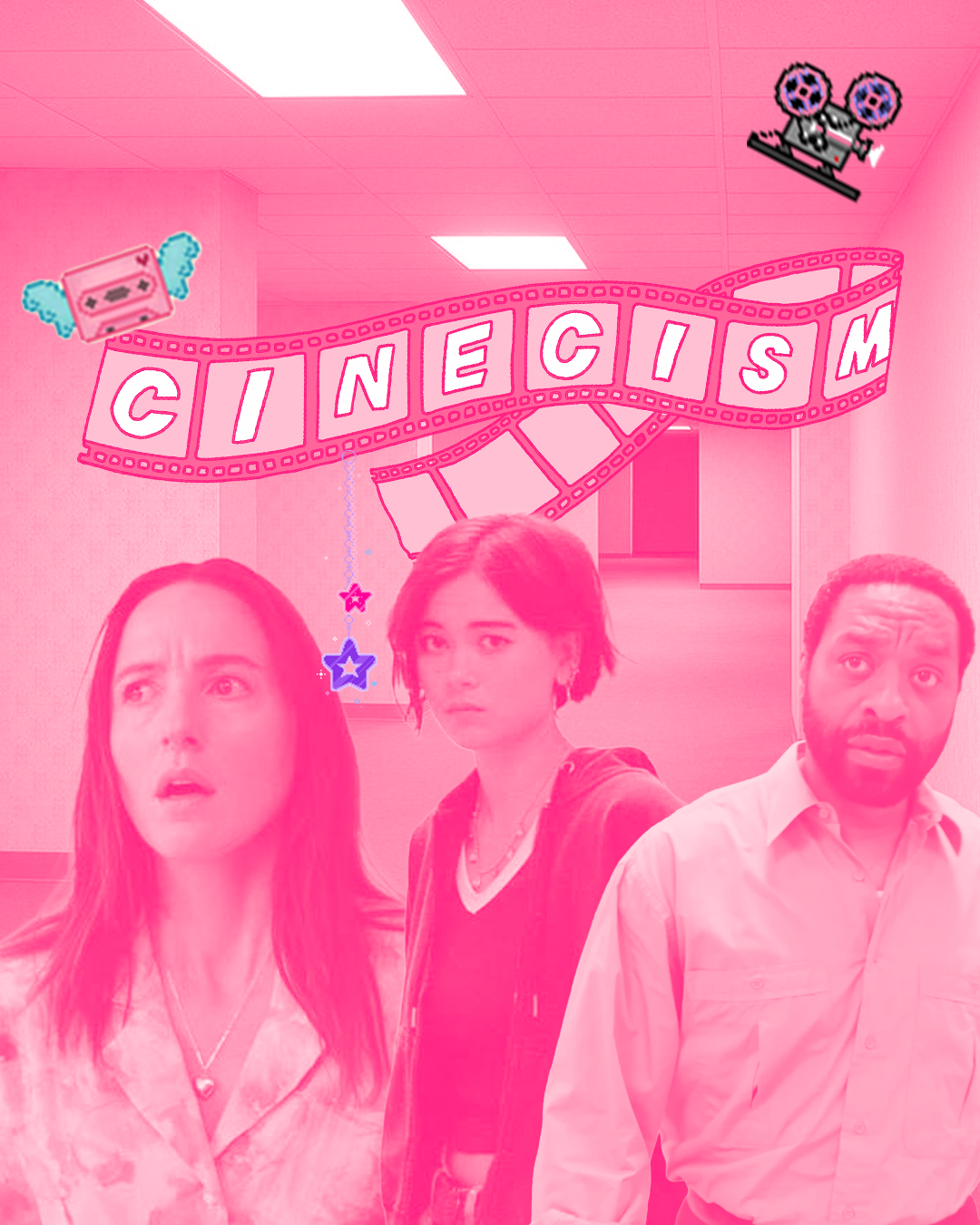
Backrooms is an impressive feat for someone so green, and has drawn significant numbers at the box office. It stars serious capital “A” Actors like Chiwetel Ejiofor and Renate Reinsve as a disgruntled furniture store owner, Clark, and his therapist, Dr. Mary Cline, whose years of repressed traumas and “built walls” have made them unfortunate prey to an uncanny office space, wallpapered in a strange yellow and full of eerily distorted everyday objects, occupied by a collective unconscious which threatens to wipe out those who lose their way inside. Parsons and his screenwriter Will Soodnik manage to create meaning out of the near-meaningless. But the question is whether meaning should be the objective. ___STEADY_PAYWALL___
“But in the move to capitalise on the populism of the internet, A24, like the researchers in the film, attempted to render this internet mythology into something more whole.”
While Backrooms delivers some genuine scares and incredible performances (Ejiofor’s sometimes too-polished West End acting style had me skeptical at first, but turned out to be its own clever form of foreshadowing), it feels overwrought. The fear sourced from the crowds on Creepypasta forums towards liminal spaces is borne of fears towards futility, towards the anti-human spaces we’ve built up around us, and misplaced nostalgia for a time that never was.
It’s that very feeling evoked to me by the movies of Stanley Kubrick and Tarkovsky, which use slow zooms on benign subjects to veer very subtly towards the uncanny.
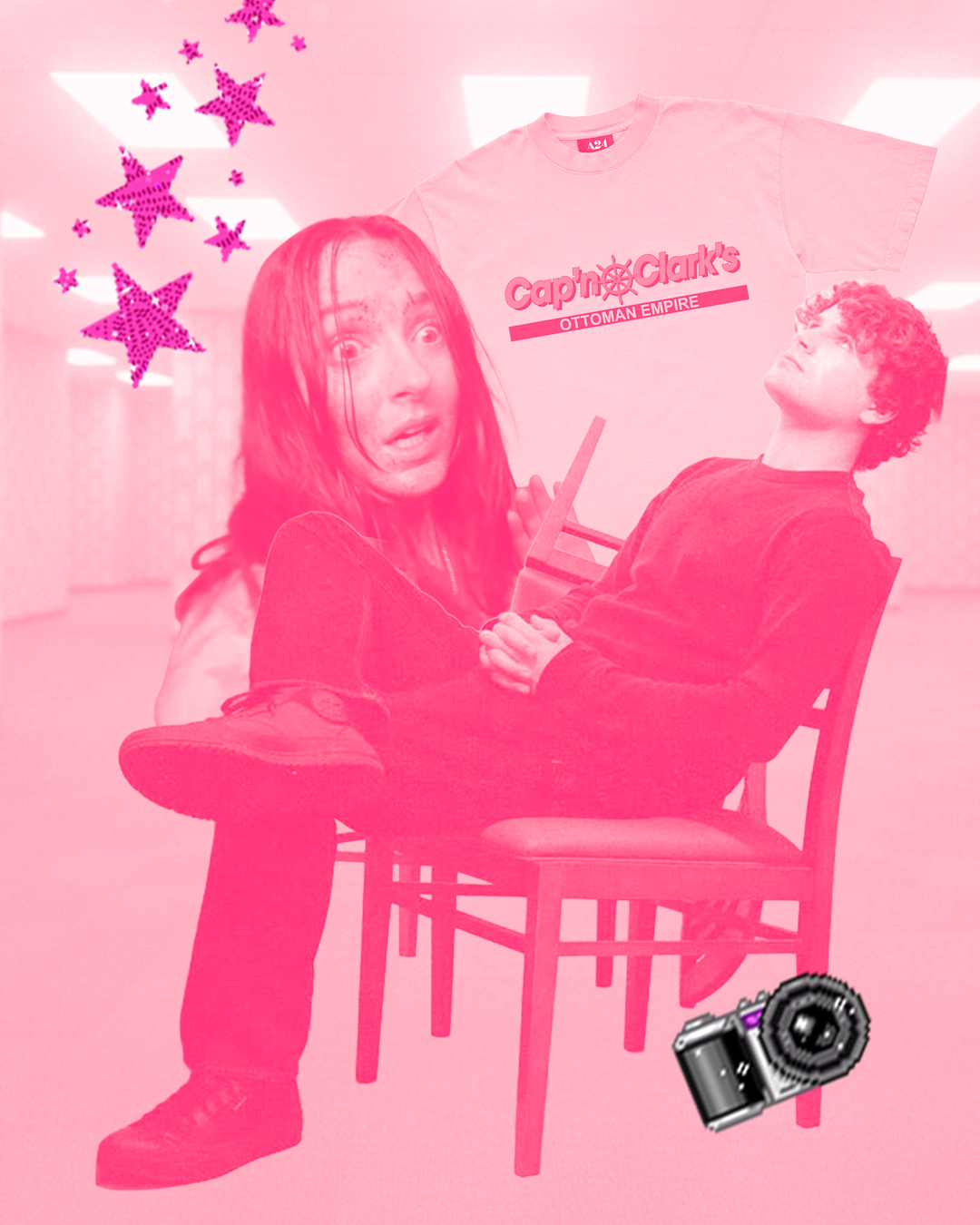
The first half of Backrooms strikes directly at that amorphous feeling, as our characters wind around beneath the fluorescence, with no daylight to be seen, all the while being stalked by a faceless beast. But the wheels of Parsons’ movie fall off when he attempts to explain the rooms. Clark, having stayed in the rooms a little too long and either lost his mind or unleashed a violence that was there all along, drags Mary into a pseudo-dining room resembling the house he was recently kicked out of, and forces her to reenact a therapy exercise they had done during their sessions.
Here, he explains that the half-formed beings around them are products of half-remembered memories buried deep within his psyche. This happens alongside flashbacks to Mary’s childhood traumas, which inform her own experience in the rooms. Parsons then throws in a series of cheap scares, like Clark cutting the beings open and eating their stuffing, before revealing to us the face of the beast - a deformed version of Clark in his furniture mascot costume. This is when the movie is no longer frightening.
Liminal spaces are liminal because they teeter on the in-between - real and unreal, place and non-place, forgotten but discovered. Their power lies in an unknown, an inexplicable sensibility of stagnation and claustrophobia and displacement. But in the move to capitalise on the populism of the internet, A24, like the researchers in the film, attempted to render this internet mythology into something more whole.
The original short film, which is nine minutes of a faceless voice wandering through the same yellow spaces before being apprehended by a mysterious being, is minimalist by both design and necessity, which makes it such a powerful artefact of the internet we love. As one of its first captions dictates, the backrooms “nothing but the stink of old moist carpet, the madness of mono-yellow, the endless background noise of fluorescent lights at maximum hum-buzz…” as well as “something wandering around.” “Nothing” is arguably the most vital ingredient.
The absence of a “somethingness” that we attach ourselves to as we go barrelling through life. Thus, while Parsons’ success story is a welcome one, A24’s co-optation of crowd-sourced mythologies results in a movie that is only half-rendered.