Queen K on the Space Between Genres, the Dance Floor and Stating Your Existence
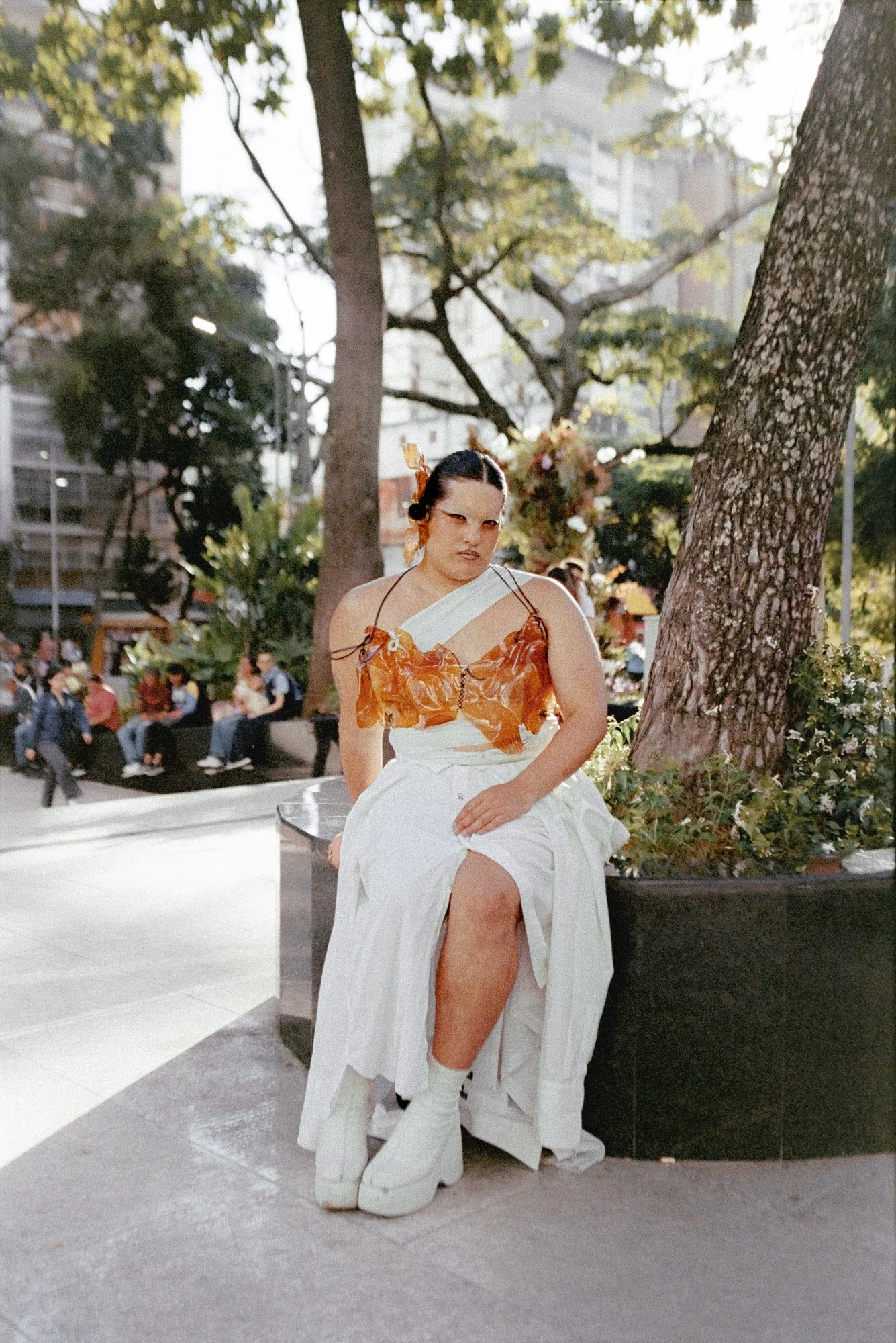
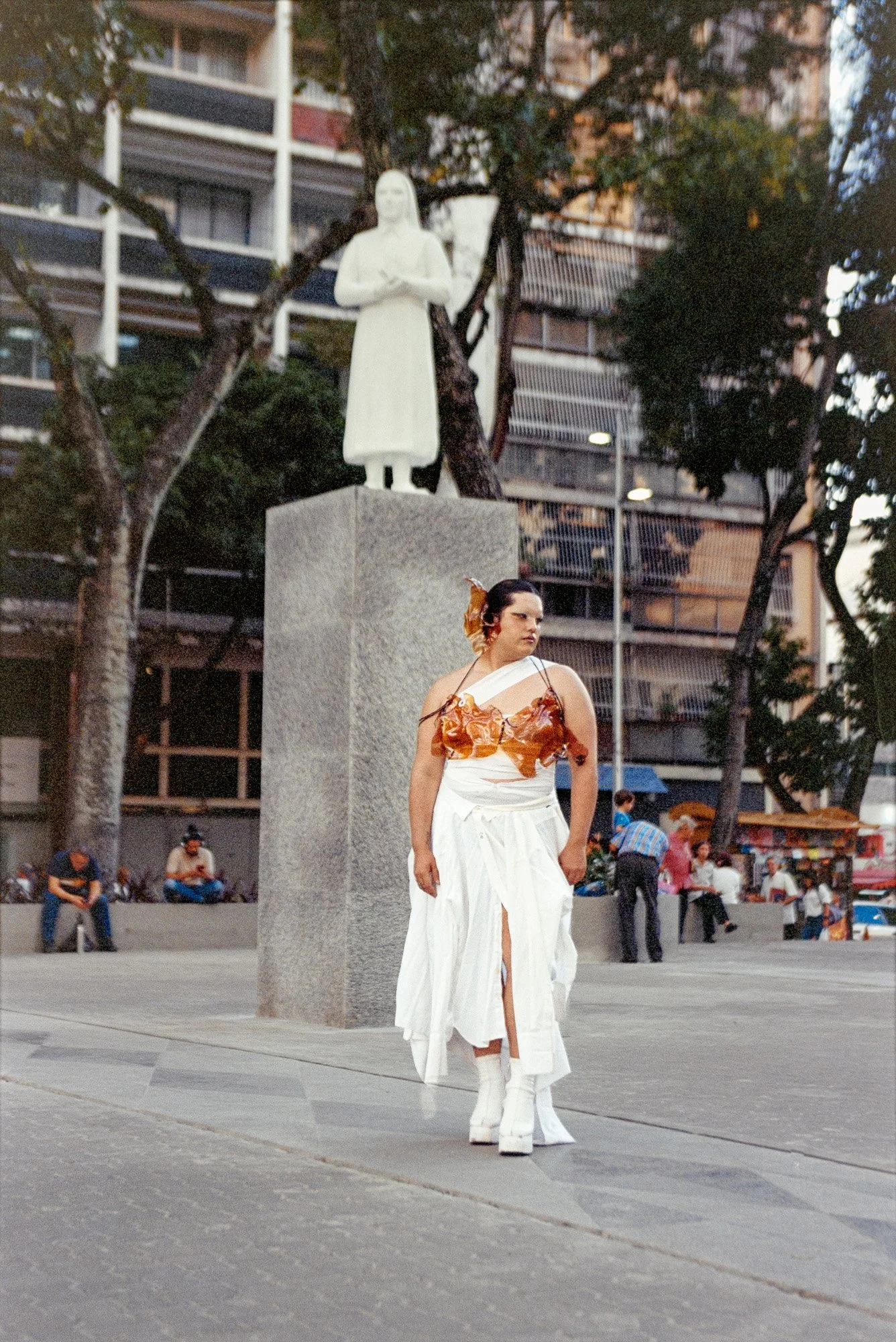
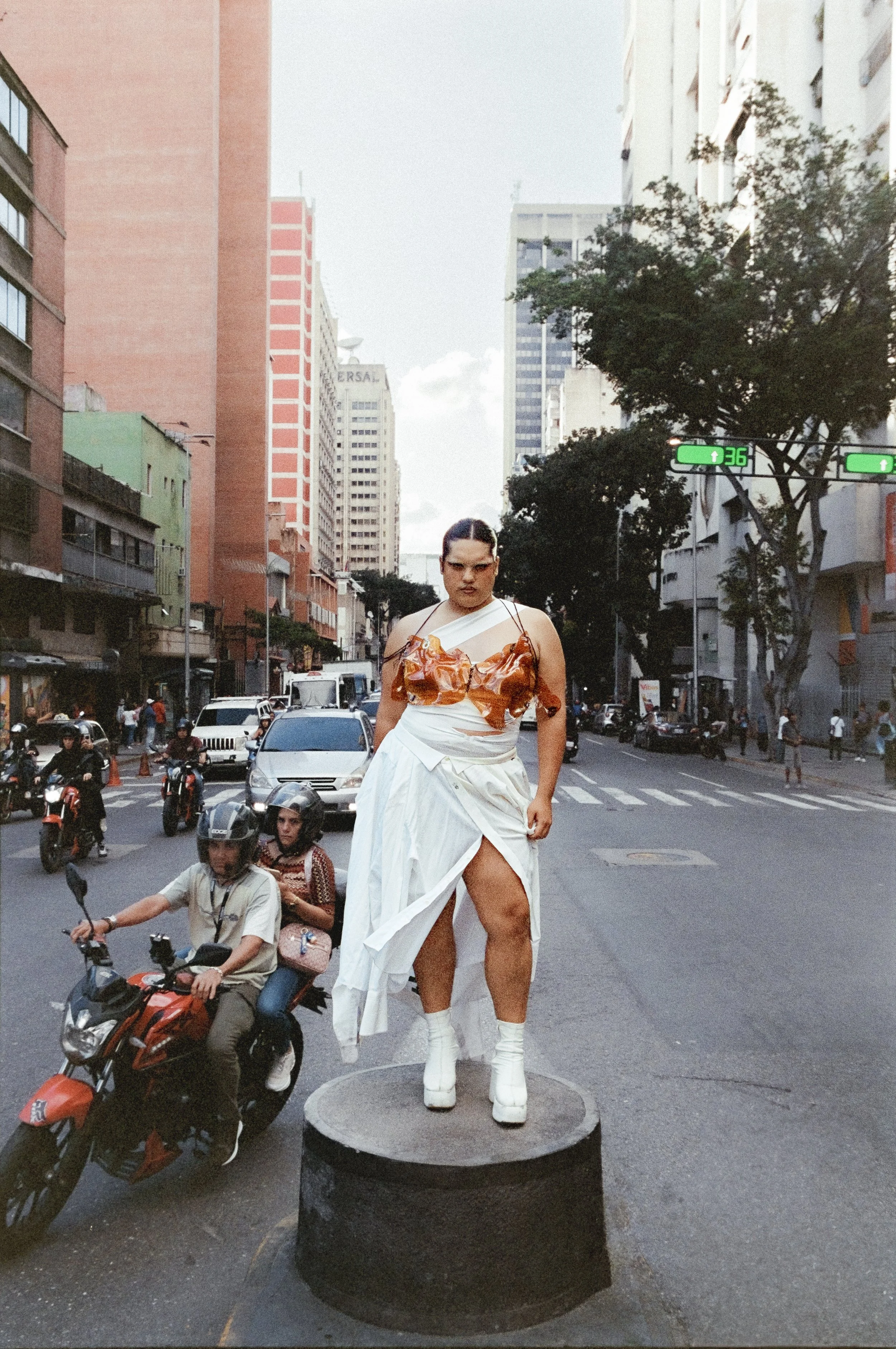
Artist / DJ / Producer: Carmela Wallis | Photography: Santiago Méndez | Styling: Elaiza Wallis | Styling Assistant: Santiago Melendez | Makeup & Hair: Ender Colina | Synthetic Art Pieces: Aldrin Bacadare | Video / VHS Footage: Roger Guarisma | Location: Casino CCS, La Candelaria
Make it stand out
Despite what some laconic popstars might say, the dancefloor never dies. It is in a constant state of creative flux and rebirth, producing some of the most exciting and vital personalities of the age. QUEENK is a DJ, producer and cultural organiser from Caracas and she is as alive and kicking as it is possible to be. Co-director of Venezuelan queer party Machete, she creates space for dissident voices on the dancefloor and pushes our mainstream club sounds into more experimental territory.
Last year QUEENK released Morphotika, their debut album, coproduced by TRU, exploring themes around emotional, memory and emotion, and now we finally get the follow up: a remix collection. QUEENK’s work has always been focused on identity and latinidad storytelling, building sonic narratives that exist outside of the confines of genre and exploring the emotional and political spaces we occupy as queer people. Morphotika is made up of dense, dark, shadowy rhythms, a tunnel through the creators' conflicts, hardships and desires which opens up into the rich exciting world of raw punk poetry in the Buenos Aires clubworld. The new remix collection brings together seven queer FLINTA artists from around the world to reinterpret and rebirth QUEENK’s magnum opus.
How do you start your night?
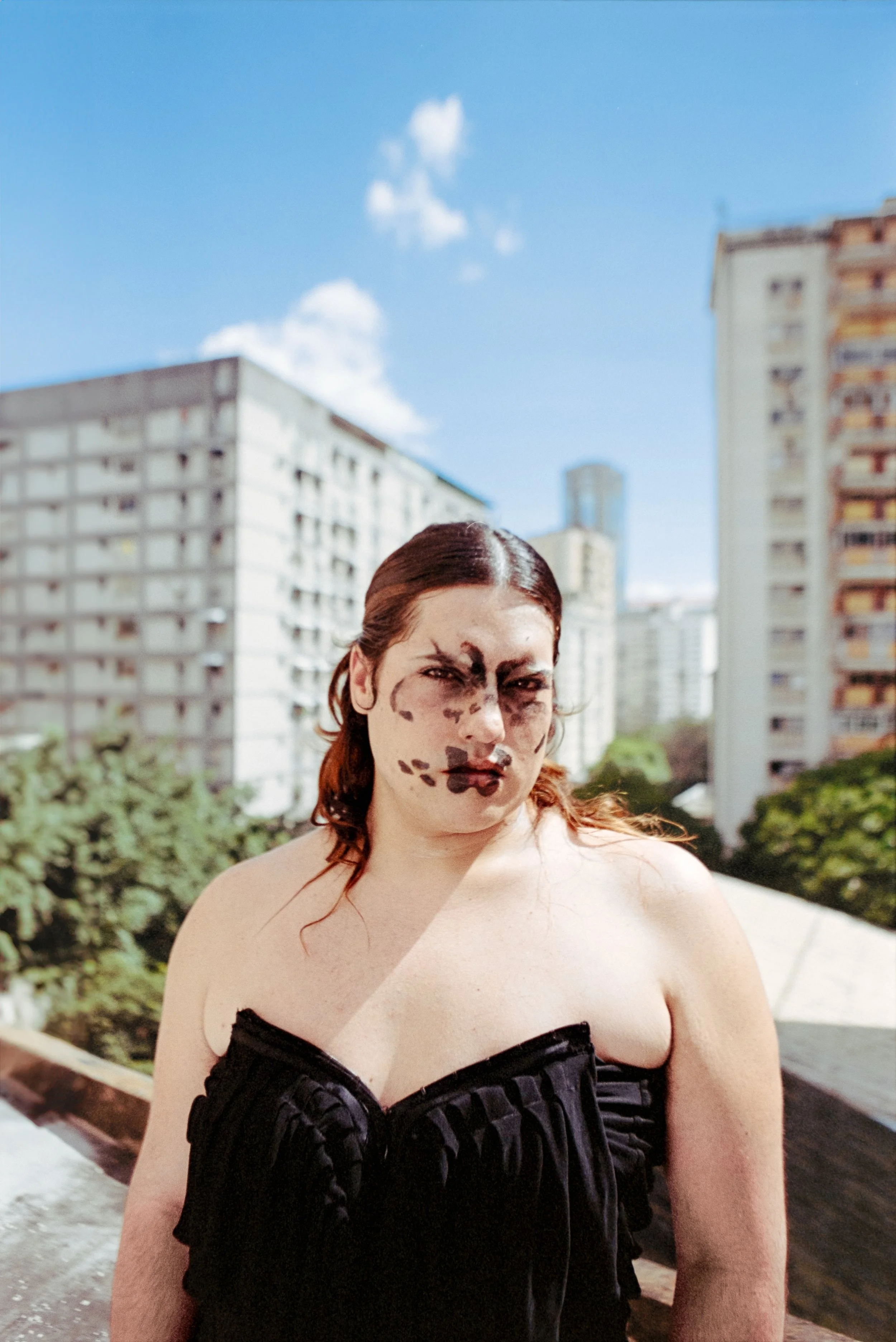
I always start my night with a drastic black eyeliner.
What has been your best moment in nightlife?
One of my best moments in nightlife was sharing a lineup with Babatr, Raptor Venezuelan legend, and playing Travesti Trifásica from my debut album Morphotika live for the first time. There were 1,300 people in the crowd losing their minds over a song that TRU and I made together. Watching that many people connect with something so personal was surreal. That night felt bigger than me.
What would be your dream party? Guest list, acts, venue, outfit?
My fantasy party is always a Machete, would be somewhere decadent, somewhere with history. The lineup Umru B2B ESTOC, Parchito (Machete's founder), Slim Soledad, Safety Trance, Animistic Beliefs, and Maldita Veneka (TRU) performing live. Guest list? a mix, friends, collaborators, queer elders, and the people who made me believe I could do this in the first place. The look? decadent chic, held together by sheer willpower.
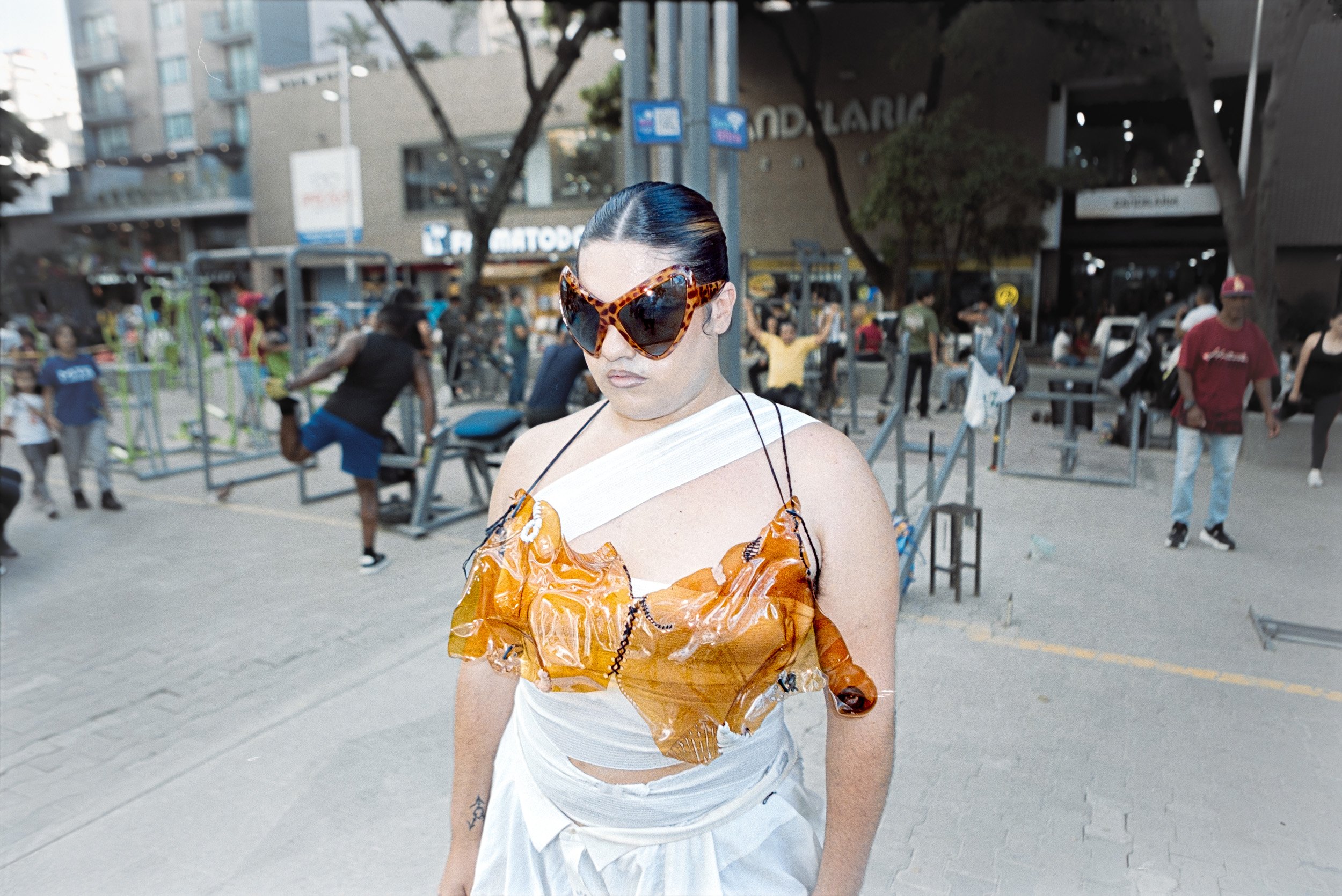
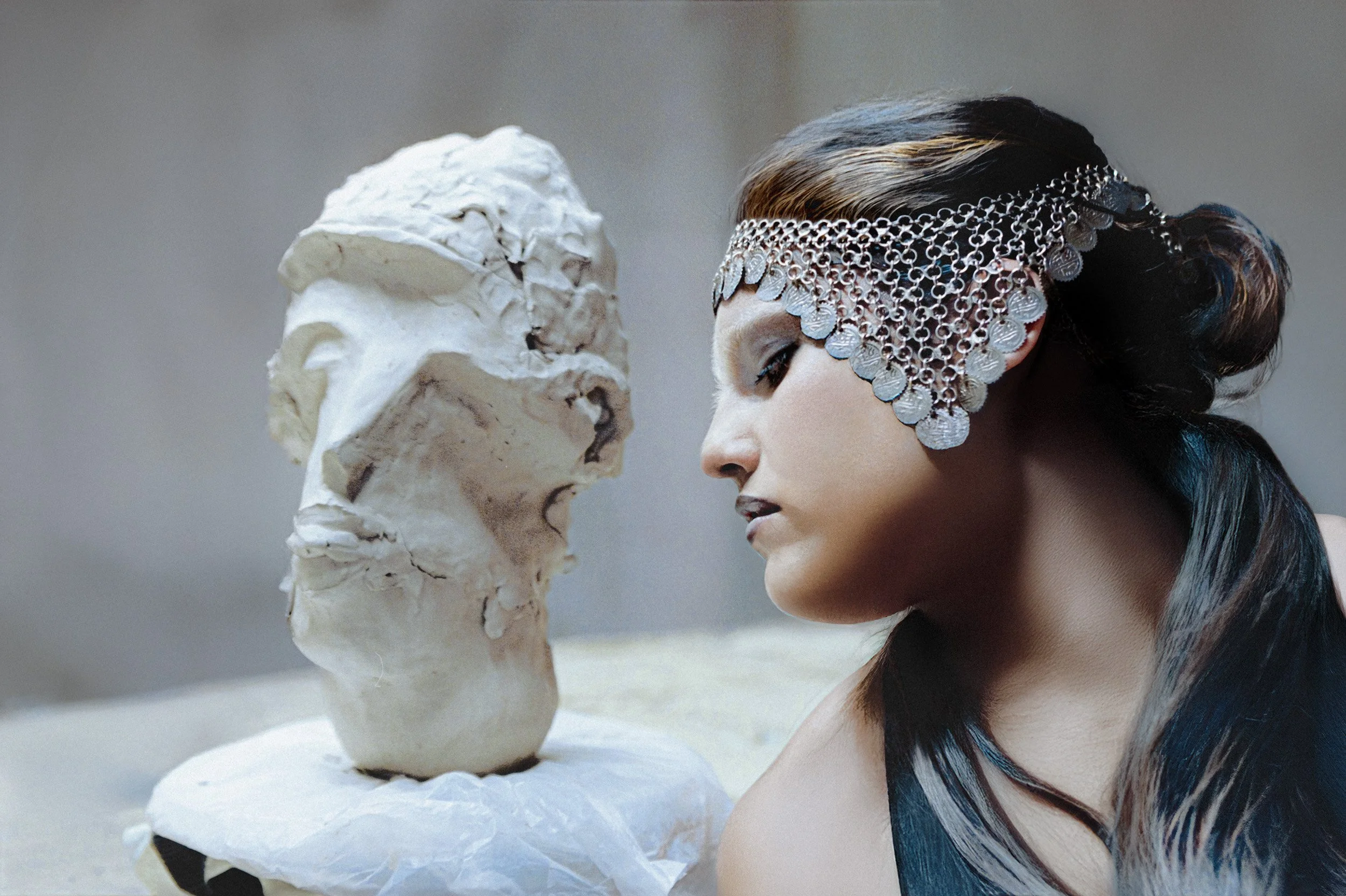
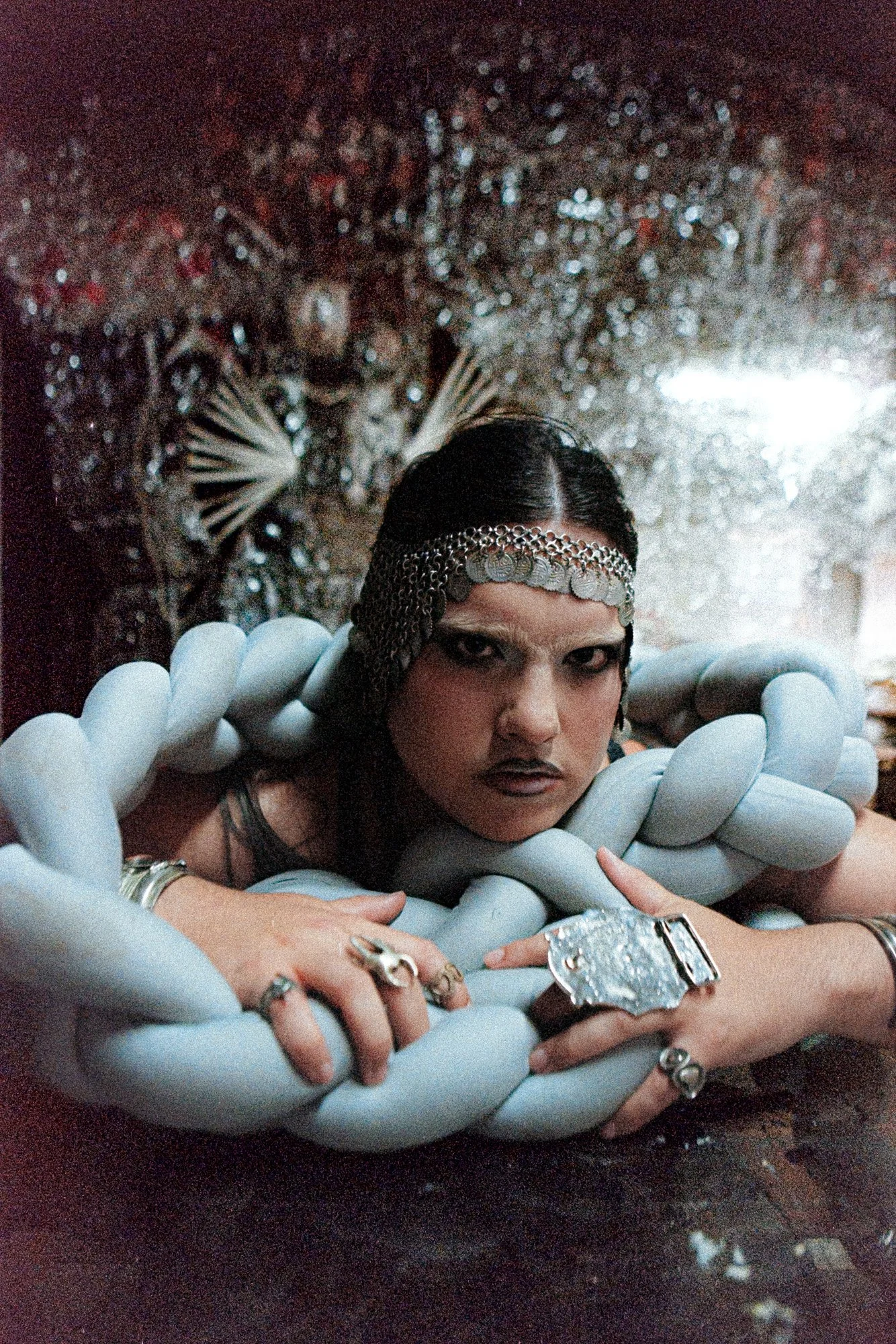
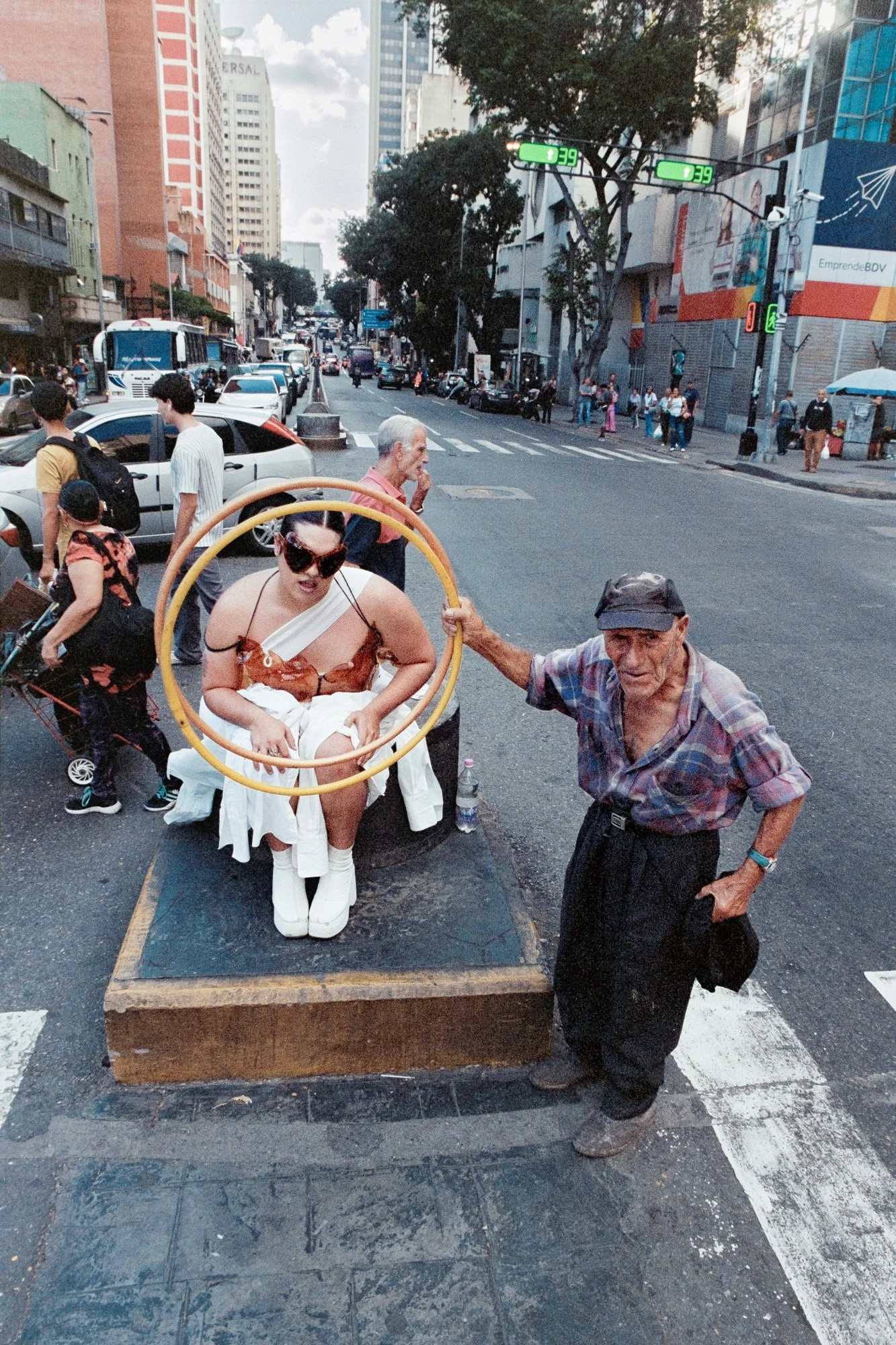
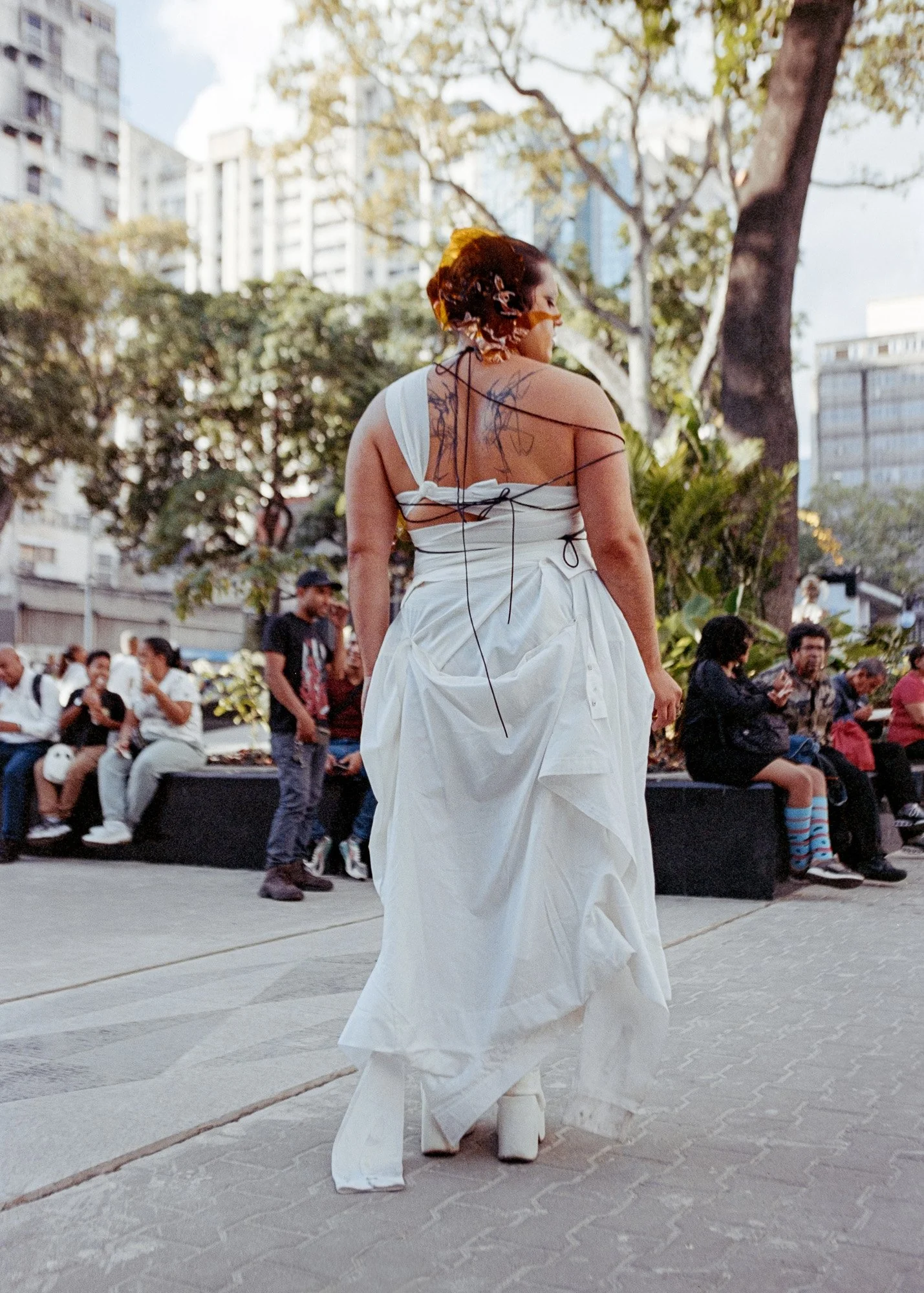
Skirt: Casa Payasa | Peto & Ear Piece: Aldrin Bacadare | Top: Custom | Glasses: Collina Strada
“Sometimes you arrive carrying grief, rage, desire, nostalgia, or hope, and suddenly you're surrounded by people doing the same thing. The dance floor becomes a place where private emotions become collective experiences.”
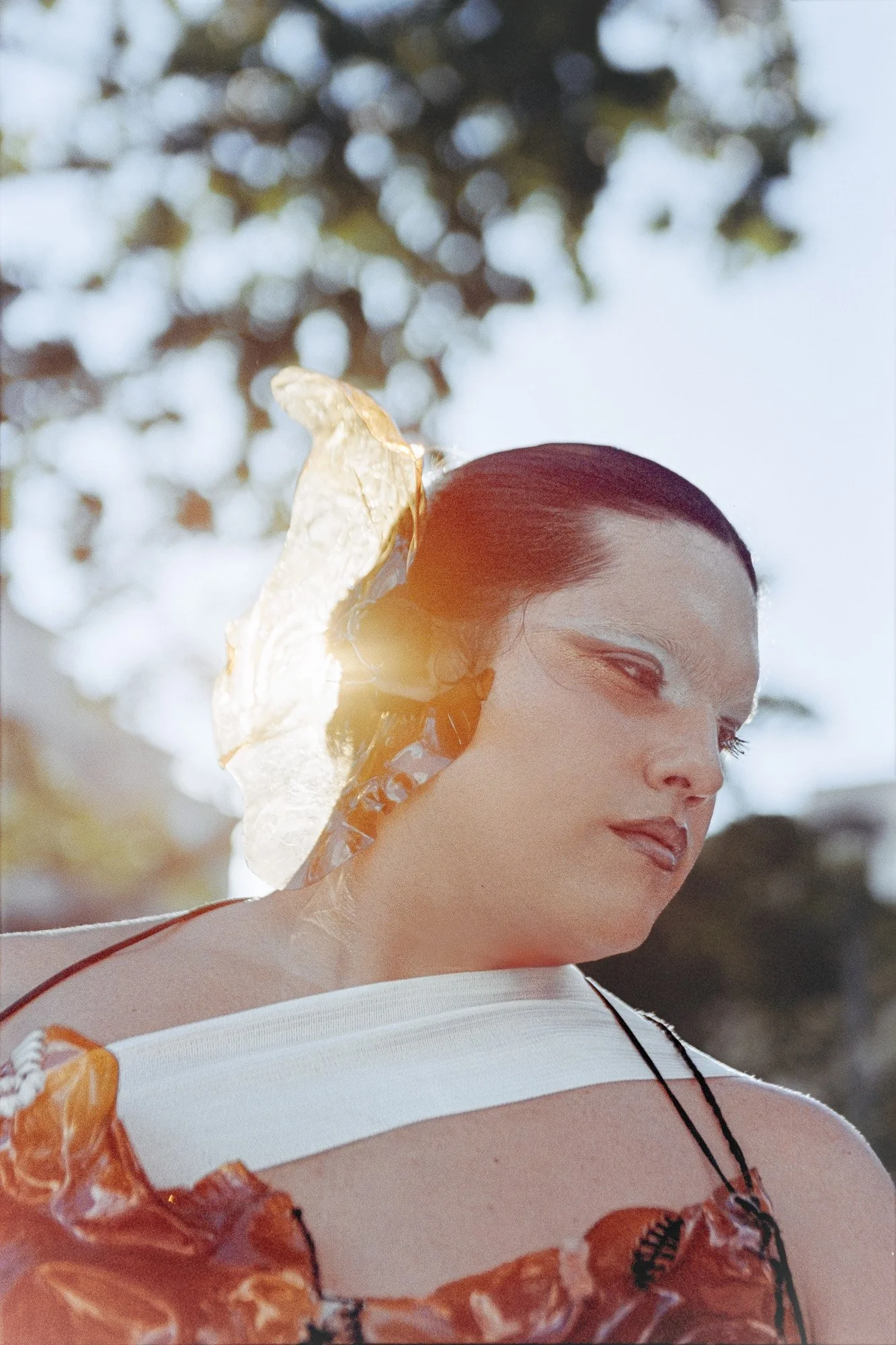
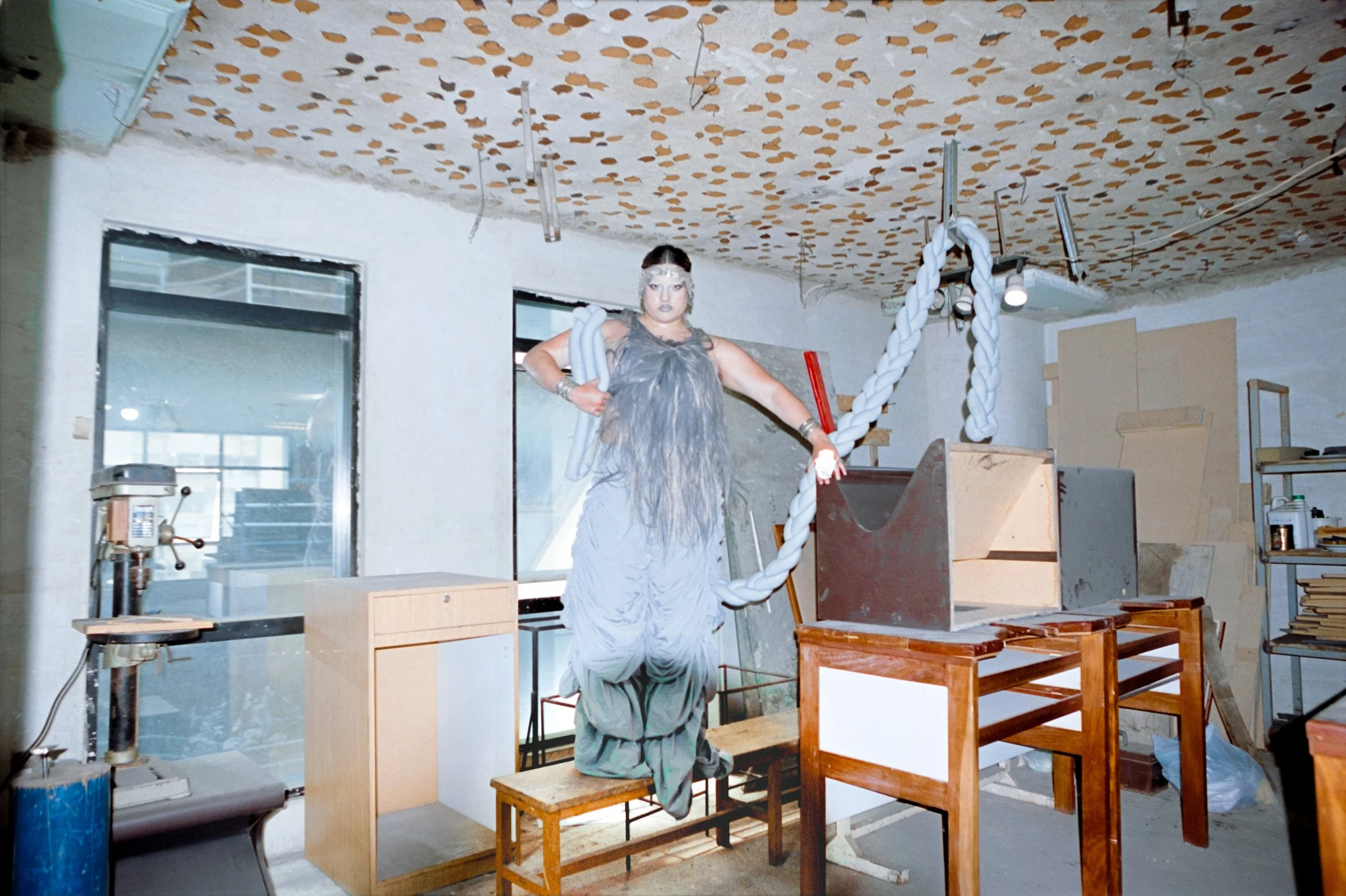
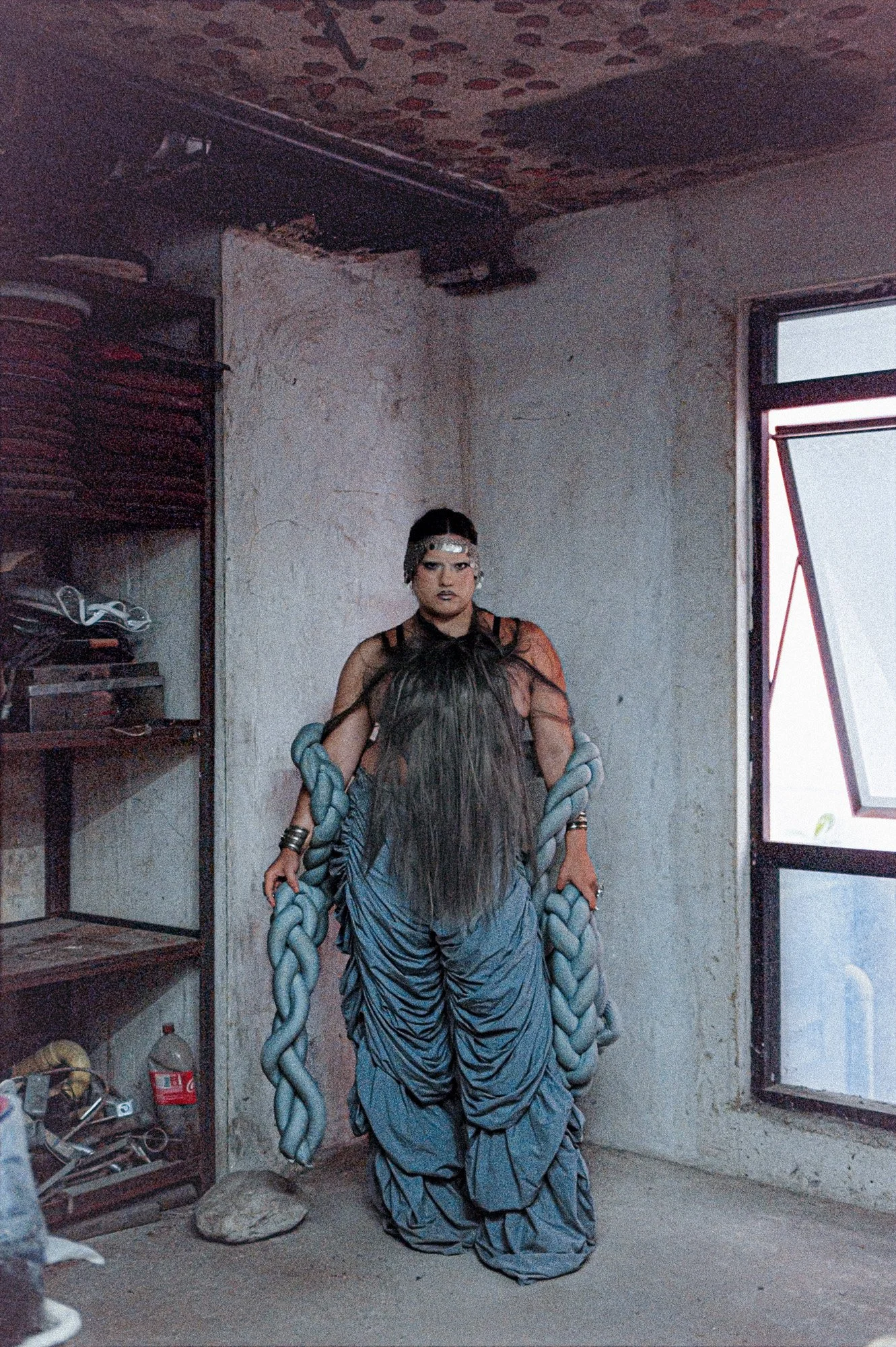
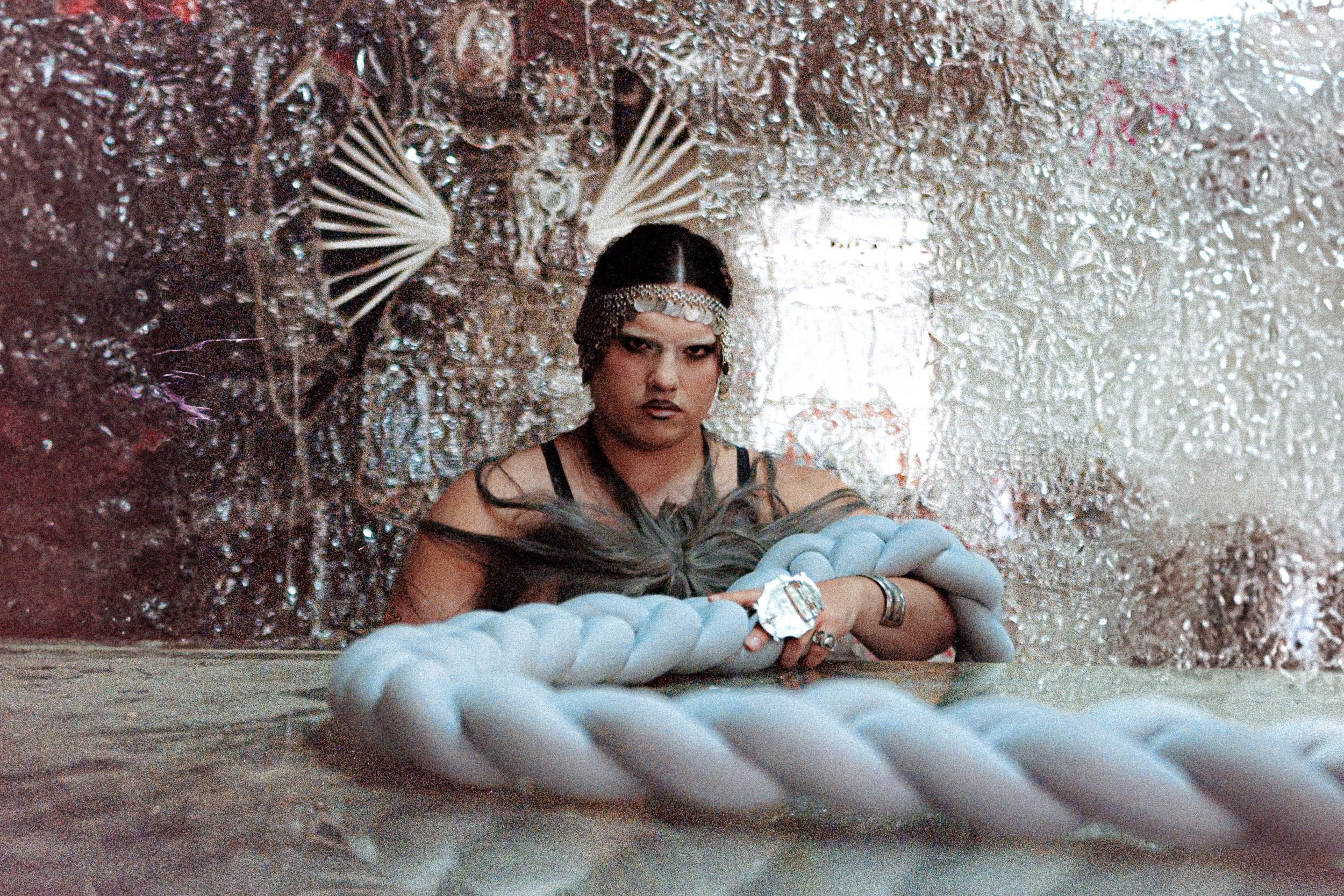
Pants: Casa Payasa | Braid Accessory: Vintage
What is the statement you choose to make by being creatively authentic?
My statement is my existence. In a world that's constantly deciding things for us, what I choose to say is mine. You don't have to like it, and I'm not going anywhere. Venezuelan trans voices have been erased from history. I struggle to reconcile with the queer history that was taken from us. A lot of Morphotika is about that reconciliation: finding myself again after leaving the place that watched me become the painting I was, only to realize it no longer knew me either. I also believe that creating spaces can help heal some of the generational dissonance that exists within the Venezuelan diaspora. So many of us are carrying different versions of loss, displacement, nostalgia, and survival. As immigrants, there's often a gap between who we were, who we became, and who were expected to be. By creating spaces where people can gather, celebrate, grieve, and see themselves reflected in one another, I hope to help close that gap, even if only for a moment. Travesti Trifásica is a hymn of liberation and a battle cry.
In what ways do nightlife and activism cross over?
Nightlife has always been a safe haven for queer people. It's where we meet ourselves and where we get to show up exactly as we are, no questions asked. As a cultural producer, being able to create those spaces I believe can deeply help to heal the Venezuelan queer diaspora. Protecting those spaces isn't always easy, but it's always worth fighting for our piece/peace in this world. That's where activism begins for me. But it can't end on the dance floor. Nightlife will always be political for us, but real change happens in the streets, in community, and in showing up for one another.
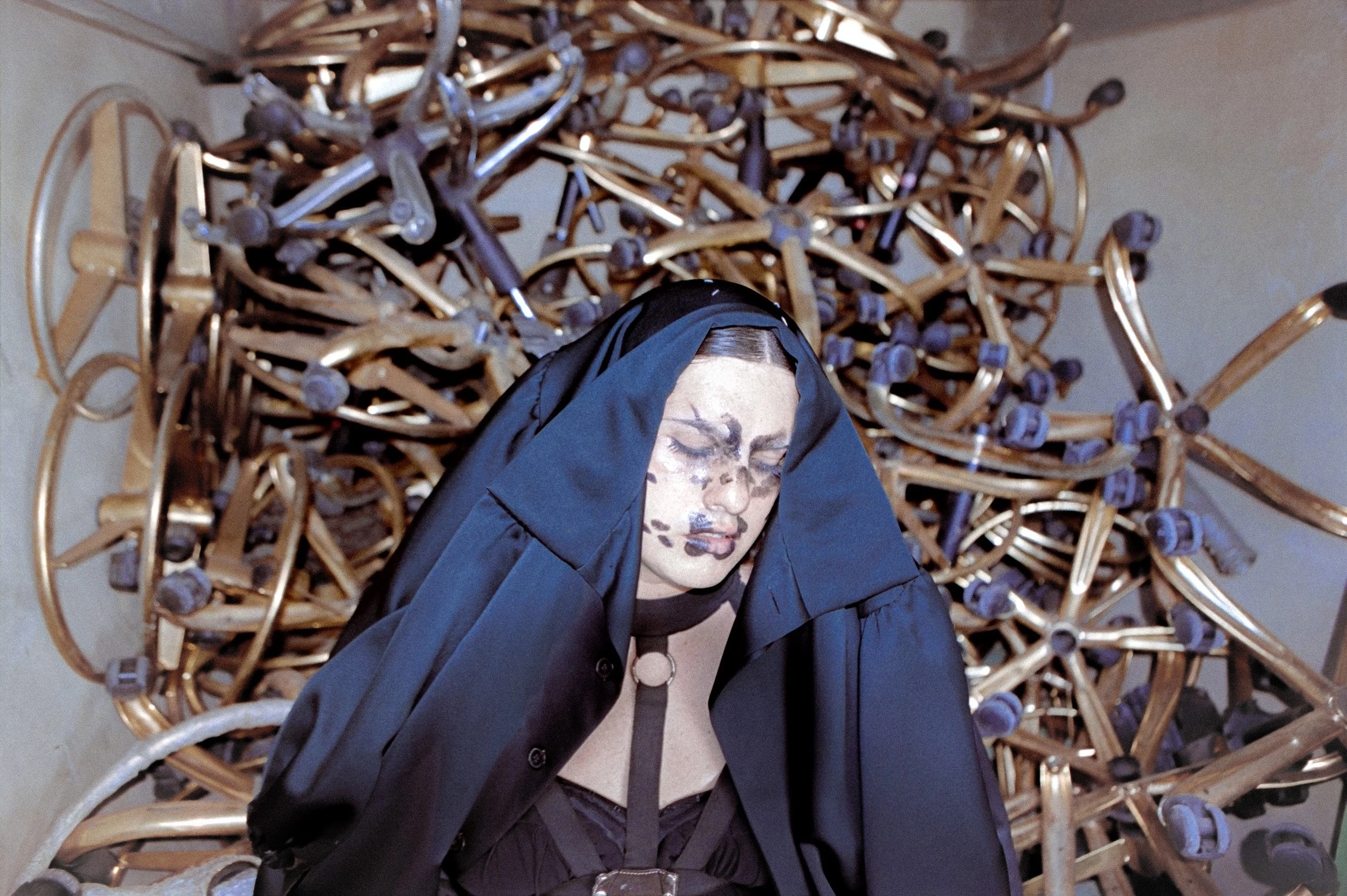
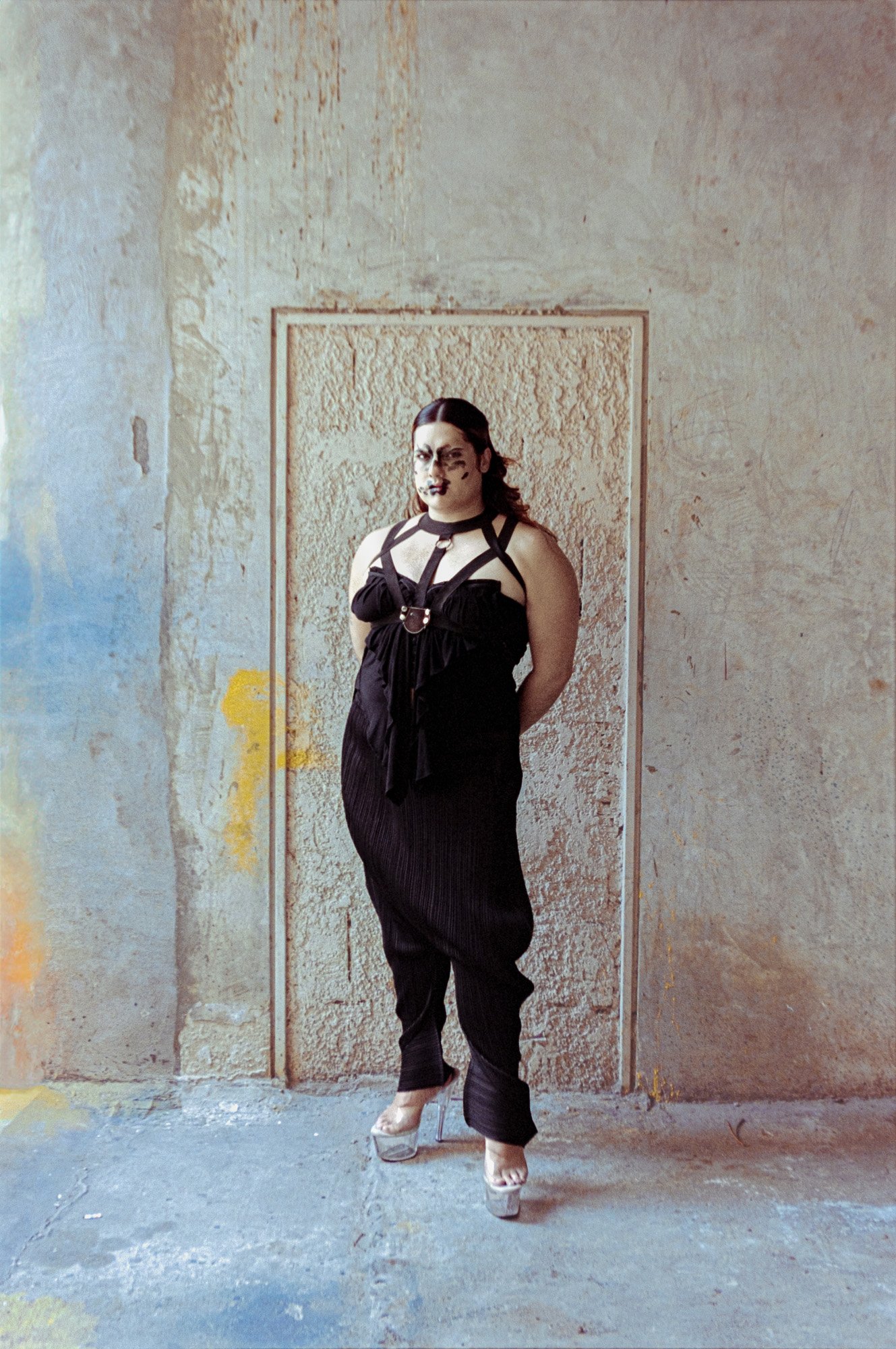
Pants: Issey Miyake | Top: Jean Paul Gaultier | Coat: Maison Margiela | Harness: Vintage
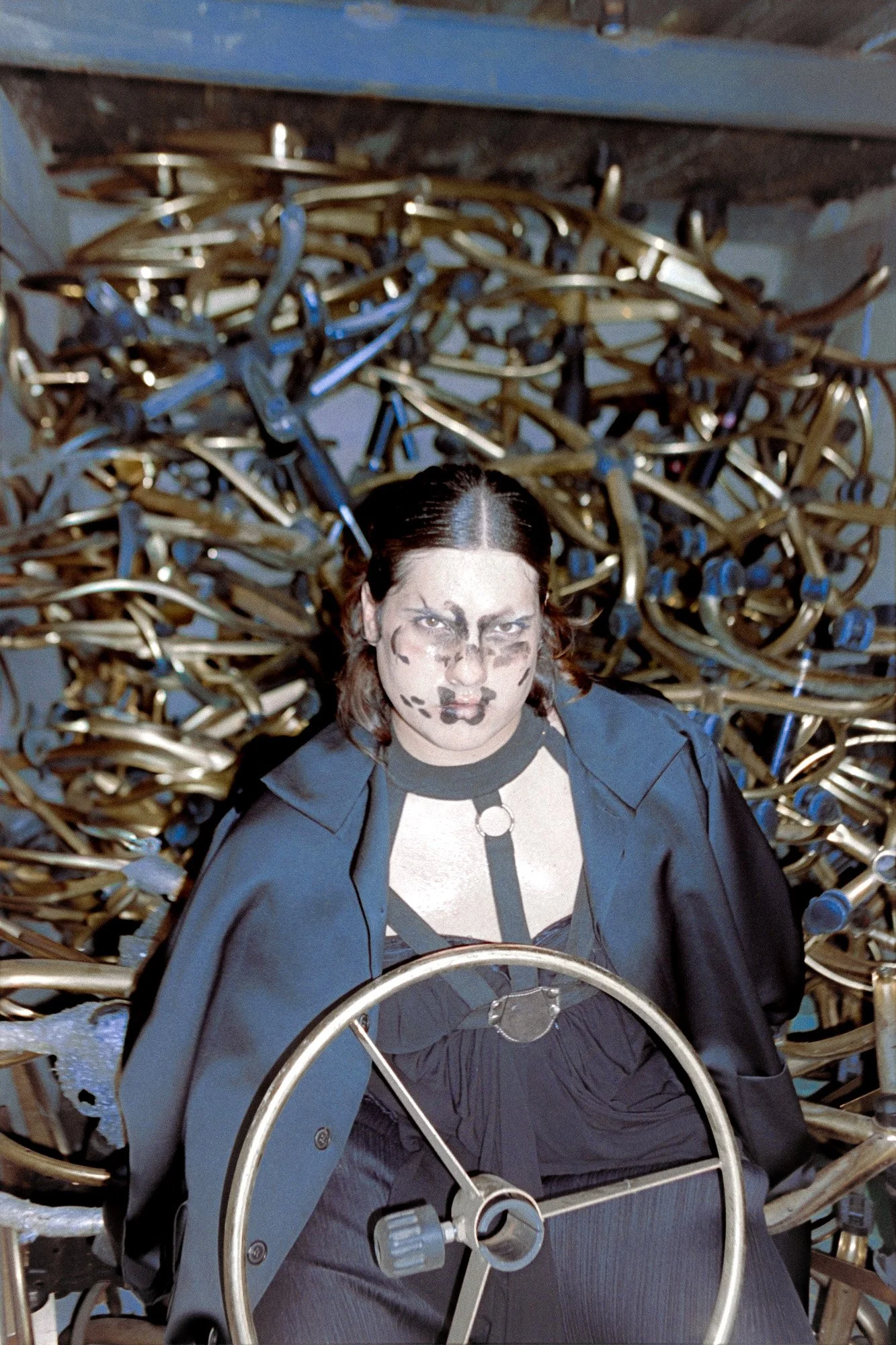
“I grew up surrounded by Venezuelan music, but I also fell in love with electronic music, experimental sounds, club music, pop, and everything in between. I like music that refuses to stay in one place.“
How can we explore our own emotional and political spaces through nightlife?
Nightlife gives us permission to rehearse other versions of ourselves. Sometimes you arrive carrying grief, rage, desire, nostalgia, or hope, and suddenly you're surrounded by people doing the same thing. The dance floor becomes a place where private emotions become collective experiences. For queer people especially, that can be deeply political. Every time we gather, celebrate, mourn, or imagine different futures together, we're creating space for possibilities that don't always exist outside the club.
How was it creating your initial project? And then revisiting it through the remix lens?
Morphotika, as my first record, became a rite of passage. It holds my story, many of the things I've lived through, and even some of the things I used to tell myself. It's an ode to the person I became in Buenos Aires' underground scene, and to the person that emerged once my career as a DJ started taking off. Like all cycles, it eventually came to a conclusion, death and a rebirth. The record is about transformation in the spotlight, smoke and mirrors, and the difficult truths of being a travesti in the diaspora. Revisiting it through the remix project felt like allowing other artists to enter that universe and reflect it back through their own lens. It showed me parts of the record I couldn't see on my own.
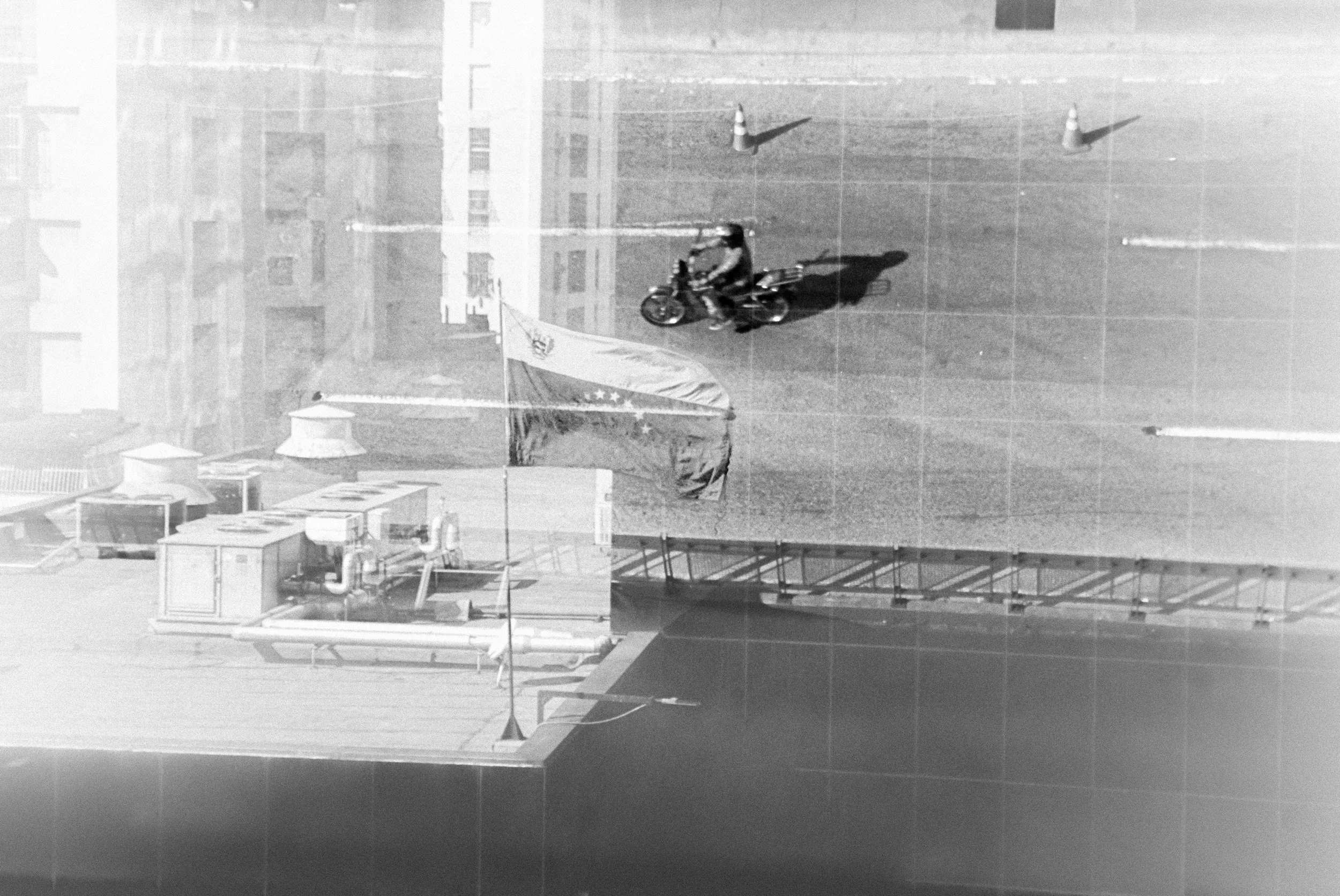
What are your favourite music genres/space between genres?
I'm most interested in what happens between genres. That's where things get weird, and that's usually where the magic is for me. I grew up surrounded by Venezuelan music, but I also fell in love with electronic music, experimental sounds, club music, pop, and everything in between. I like music that refuses to stay in one place.
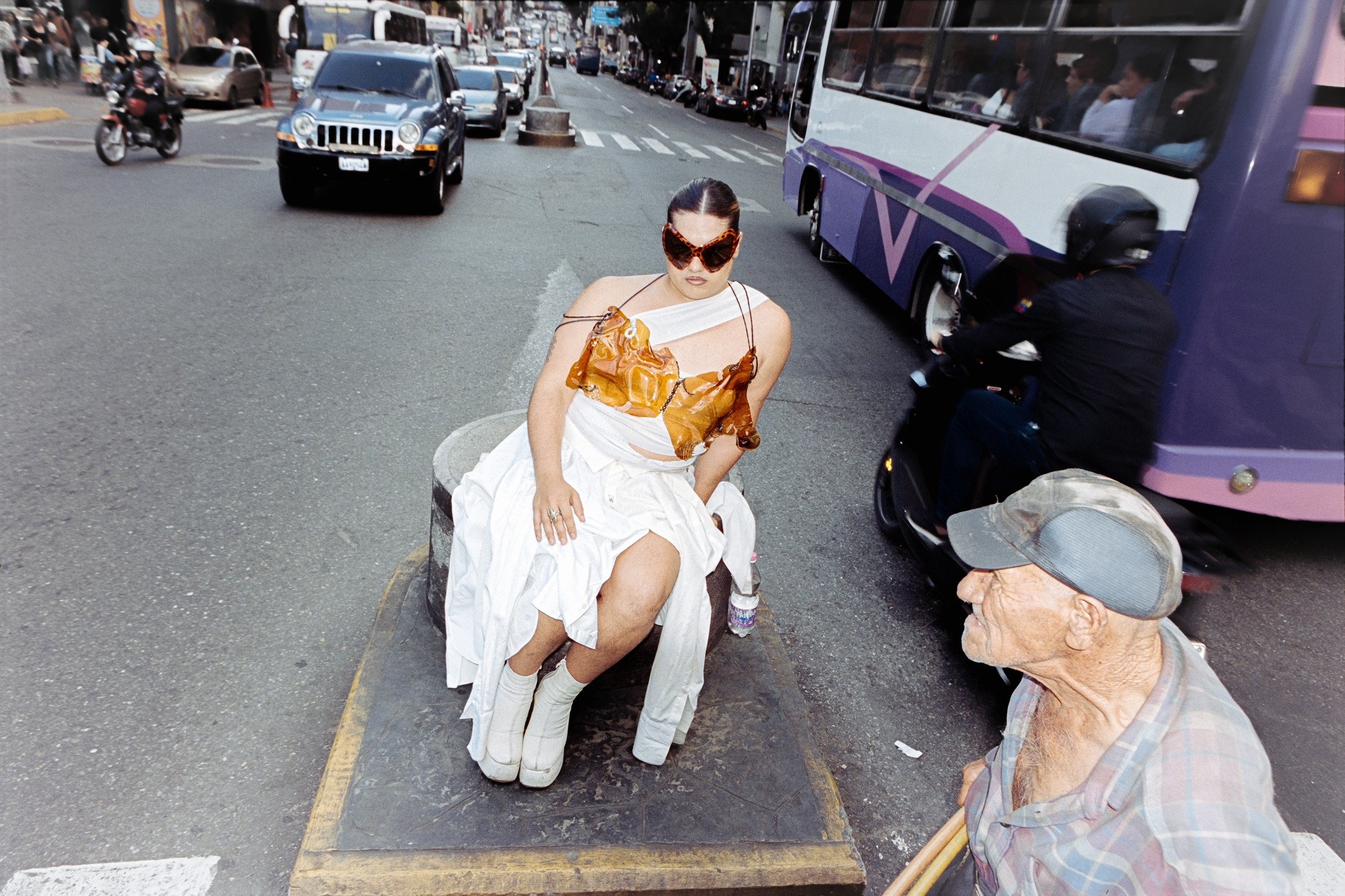
What other nightlife do you recommend, local or international?
Some of my favourite nightlife experiences have come from spaces built by queer communities for queer communities. The underground has always been where I've felt most at home. In Buenos Aires, I'd recommend Hiedrah, Kioskera, and NeoMarik. Each of them has contributed something important to the city's queer nightlife ecosystem and represents different ways of imagining community through music, performance, and collective care. Buenos Aires has an incredibly rich nightlife culture, and I think some of the most exciting things happening right now are being created by independent collectives and artists who are building their own worlds. Machete couldn't be what it is today without those who came before us.
What's the best way to express political dissidence through nightlife?
Book the doll, baby.