
Cinecism: Maddie’s Secret and the Art of Humorous Melodrama
Words: Maia Wyman

Make it stand out
A few years ago, when Todd Haynes’ May December was nominated in the comedy category at the Golden Globes and everyone was enraged, I argued that the film was melodrama and that, yes, melodrama could be funny. This did not go over well. But recently, finally, John Early proved me right.
Early’s debut film, Maddie’s Secret, which he wrote, directed, and starred in, promised belly busting laughs but instead delivered unexpected tears. Early is indeed a comedian and in this film he is serving full drag and saccharine drawl as a woman named Maddie, a dishwasher turned social media chef whose constant proximity to food and narcissistic mother trigger a years-dormant bulimia. Maddie’s status as a social media personality, her blonde hair and cheery affect, make her ripe for parody. But Early is not playing that game. Rather, he prostrates himself at the mantle of women’s media, brows highest of high and lowest of low, to explore the woman’s body as a site of politics, disclosure, and contradiction.
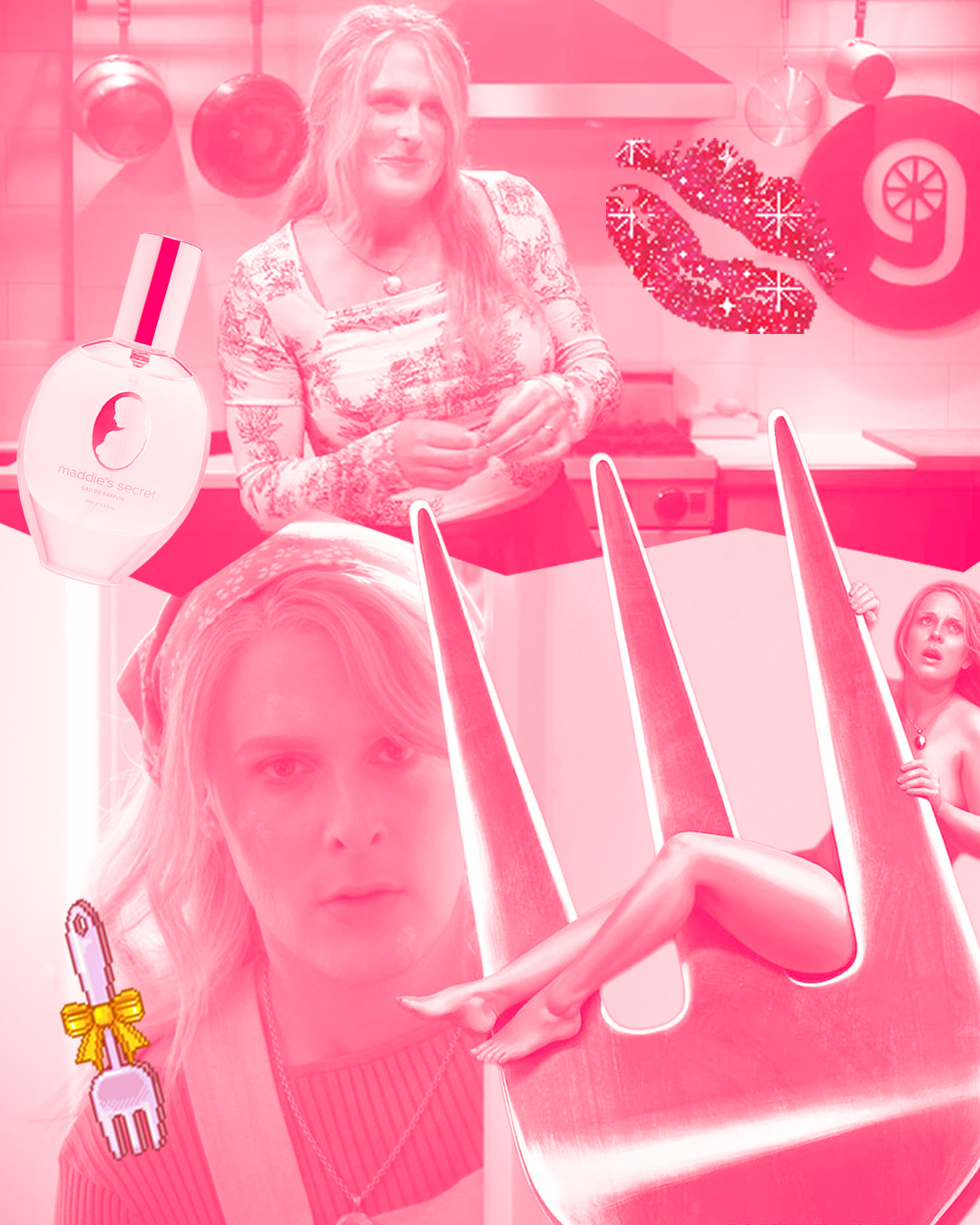
“Early, by inhabiting this body so thoroughly in his portrayal of Maddie, is not poking fun at it, but searching for that tragic kernel of truth which will have every woman in the theatre laughing in spite of themselves. “
In his seminal work on melodrama, Peter Brooks writes that the form “comes into being in a world where the traditional imperative of truth and ethics have been violently thrown into question.” In the films of Douglas Sirk, it was racial segregation and female immanence. In May December, it was the slow and damning conflation of prestige television and tabloid true crime. In Maddie’s Secret, Early takes this social angle even further by directly referencing trashy “problem of the day” soaps. The problem here is as “today” as can be: the hyper-mediation of women’s bodies in the age of social media. An era of internet that has been so commodified that even something as simple and vital as food has become its own new bastardised, multimillion dollar religion.
Melodrama requires a deft and subtle use of satire. While Early plays a woman, the target of his scorn is not us, but an online world that force feeds contradictory messages of restriction and excess. An internet where salacious ASMR mukbangs somehow coexist with and complement ads for GLP-1s and weight loss peptides. Maddie’s body plays host to these contradictions. She uses it to exact a skilled precision that makes her both a stellar chef and enticing social media presence, and also to wantonly purge whatever enters it. Early, by inhabiting this body so thoroughly in his portrayal of Maddie, is not poking fun at it, but searching for that tragic kernel of truth which will have every woman in the theatre laughing in spite of themselves.
Like the best melodramaticians before him, Early finds pathos in truth, and humour in pathos. In a particularly devastating moment in the third act, Maddie, who has wreaked havoc on her body leading up to the point, collapses onto the floor in anguish and lets out a great cry. As you watch, you find yourself startled by your own tears. You also feel a sense of release.
Melodrama, with its sugary sweet leitmotifs, unflinching emotionality, and searing social commentary, is the perfect exorcist. With Maddie’s Secret, Early is uncompromising in his vision and has thus allowed his audience to sit on the floor of the proverbial hospital, hold hands, and, hopefully, release the demon.