
What Brazilcore Means When You’re Actually Brazilian
Make it stand out
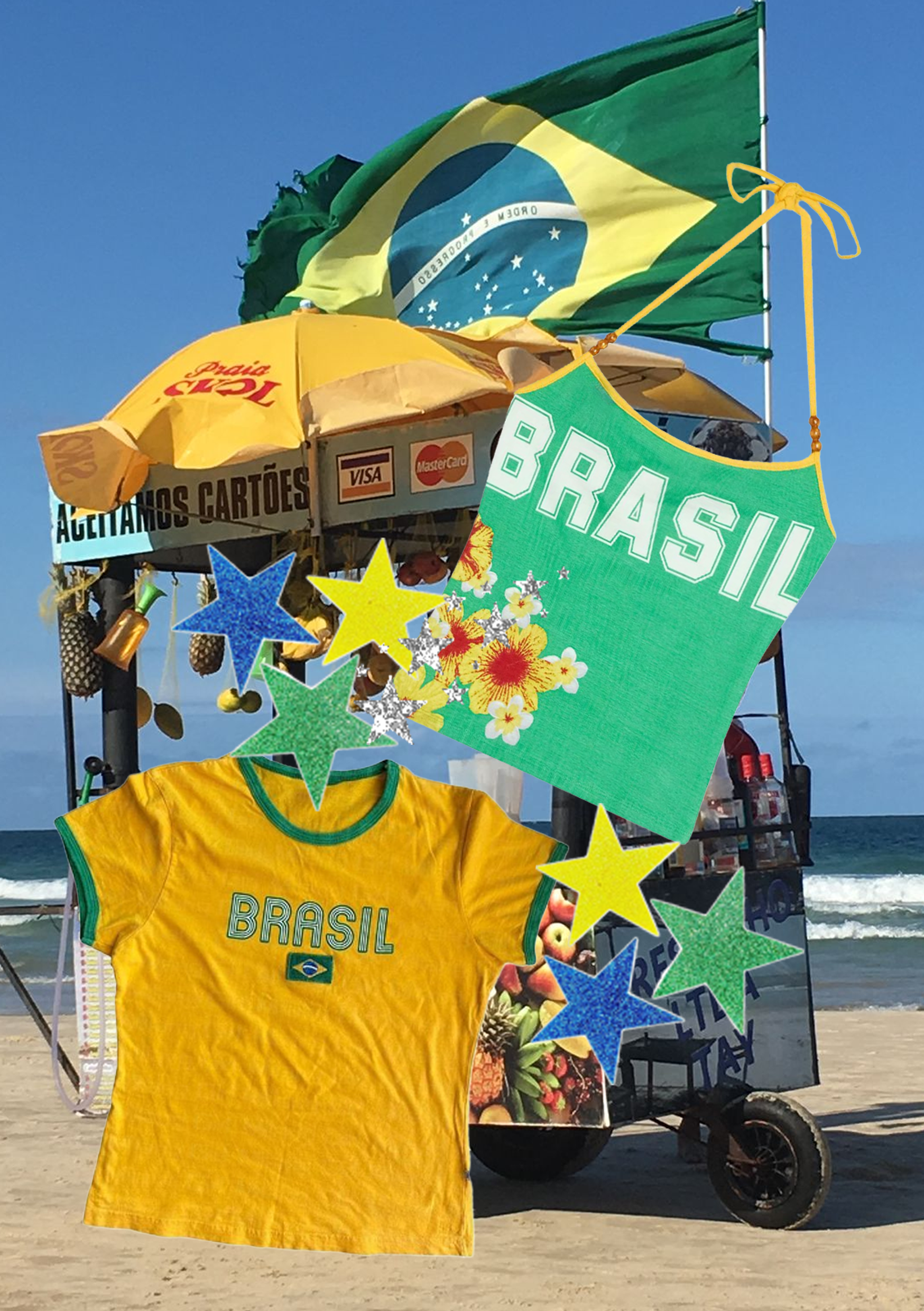
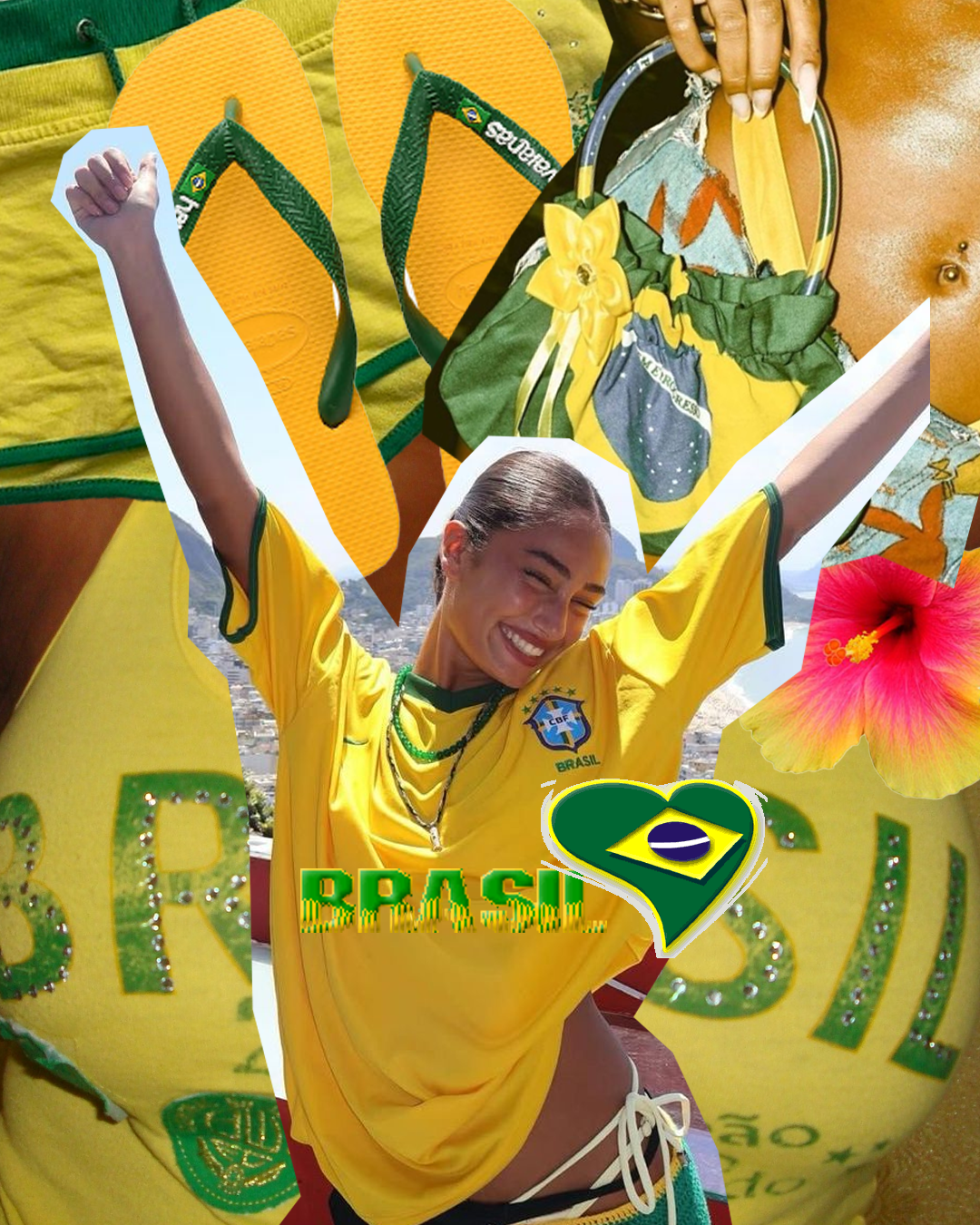
Before this year’s World Cup even kicked off, a look was already flooding feeds and stores across the U.S. and Europe: baby tees and T-shirts in shades of yellow, blue, and green; Juliet mirrored sunglasses; the unmistakable rubber flip-flop Havaianas; and thick gold or silver chains swinging with crucifixes. Around 2022, fashion folk first crowned it ‘‘Brazilcore’’ — a bold distillation of everything the collective imagination projects onto Brazil, usually reappearing every summer season and, as you might expect, during soccer championships.
Celebrities like Dua Lipa, Hailey Bieber, Tyla, and Alex Consani have all been spotted in the national team's iconic yellow and green. Online, the hashtag #brazilcore has already amassed 42.9K posts on Instagram, while the broader #brazil tag sits at 12.3M posts on TikTok. And even though the national team was knocked out by Norway on the 5th, the look shows no signs of slowing down — not with labels like PatBo, MISCI, Mirror Palais, and Dendezeiro already on fashion's radar, revolutionizing the industry one season at a time. But how do Brazilians actually feel about the aesthetic that’s taken over fashion? ___STEADY_PAYWALL___
Fih Oliveira e Edu Camargo, Diva Depressão
‘‘It’s really cool to see our colors and our culture reaching more people all over the world. As part of the LGBTQIAPN+ community, we distanced ourselves from it because it’s used as a “uniform” by conservatives. But with the political shift, our community has begun to reconnect with Brazilcore. A very symbolic moment was Madonna’s concert in Copacabana, with the drag queen and singer Pabllo Vittar wearing Brazilian jerseys, celebrating our country in this spirit of freedom and fun. It was a milestone, and it reminded us that Brazil is also made of love!’
Gabby Silva, Brazilian model
“Brazilcore goes far beyond an aesthetic trend. It’s a way of transforming Brazilian identity into a visual language. It revives symbols that are part of our culture and reimagines them within fashion, showing that Brazil can be viewed through the lens of creativity. As a model, I love the way this aesthetic celebrates our roots without losing the ability to reinvent itself. It paves the way for a richer representation, creating opportunities for Brazilian models, photographers, fashion designers, and artists to take on increasingly important roles in the fashion industry.”
Marcelo Gaia, Brazilian-American designer and founder of Mirror Palais
‘‘With Mirror Palais, I’ve always tried to create a world that feels connected to Brazil because I don’t think its beauty and richness have been represented in fashion as much as they deserve. Seeing more people embrace Brazil feels long overdue, and I’m excited to be part of the conversation. More than anything, it makes me feel lucky and proud to be Brazilian. I think Brazil’s global appeal comes from the fact that it’s one of the world’s most unique cultural blends. Indigenous, African, European, and many immigrant influences have come together over centuries to create something that feels both familiar and completely distinct. People from different parts of the world recognize pieces of themselves in Brazil while experiencing a culture unlike anywhere else. But social media can flatten Brazil into beaches, bikinis, and Ipanema. The country is far more diverse than that, with every region offering its own history, traditions, and identity. My hope is that this growing interest encourages people to look beyond the familiar images of Rio and discover the richness of Brazil as a whole.’’
Kiki Miozzo, editor-in-chief of @checkthetag
‘‘Brazilcore has incredible aesthetic value for Brazil, because it sparks desire and interest, while also providing a source of revenue for the domestic market (like Havaianas, FARM, and similar brands). But for this trend to translate into lasting benefits, we need investment and care to protect and promote national talent, without letting foreign giants like Zara and H&M appropriate something that belongs to us.’’
Miriam Spritzer, Brazilian reporter and board member of the Golden Globe Foundation
‘‘Brazil is a cultural powerhouse. It’s a country that captivates people with its natural beauty and energy. People want to embody that feeling. There’s a certain admiration for the captivating way Brazilians are. Our country’s image conveys something positive, happy, and creative, and Brazilcore translates that into a physical form. We notice this whenever someone who isn’t Brazilian talks about Brazil. Those who know it love it, and those who don’t want to get to know it, so it’s wonderful to see this translate into fashion in some way.’’
Airon Martin Misci, designer and founder of MISCI
‘‘The cap, the soccer jersey, the colors, the way people take to the streets and build their identity have never depended on external validation to exist. What’s happening now is that this repertoire is also coming to be understood as a language of fashion.’’
André Tajra, Brazilian stylist and editor of The Men Style Magazine
“Brazilcore represents a shift, where the country isn’t just a tourist destination but also becomes a creative powerhouse capable of influencing international trends. But this phenomenon also opens the door to important discussions. When an international campaign uses Brazilian references respectfully, involving professionals, artists, and creatives from the country, it increases the visibility of our culture. But when these elements appear merely as an aesthetic device, disconnected from their origin, an inevitable sense of discomfort arises. Perhaps the most interesting aspect of Brazilcore is precisely that it isn't limited to fashion alone, speaking to identity, belonging, and recognition. If for decades, Brazil consumed imported trends, now, it’s the world that seeks inspiration in our colors, our spontaneity, and our way of dressing.”