
The Summer of the Jelly: What Our Obsession with Transparency Really Reveals
Words: Isobel Slocombe
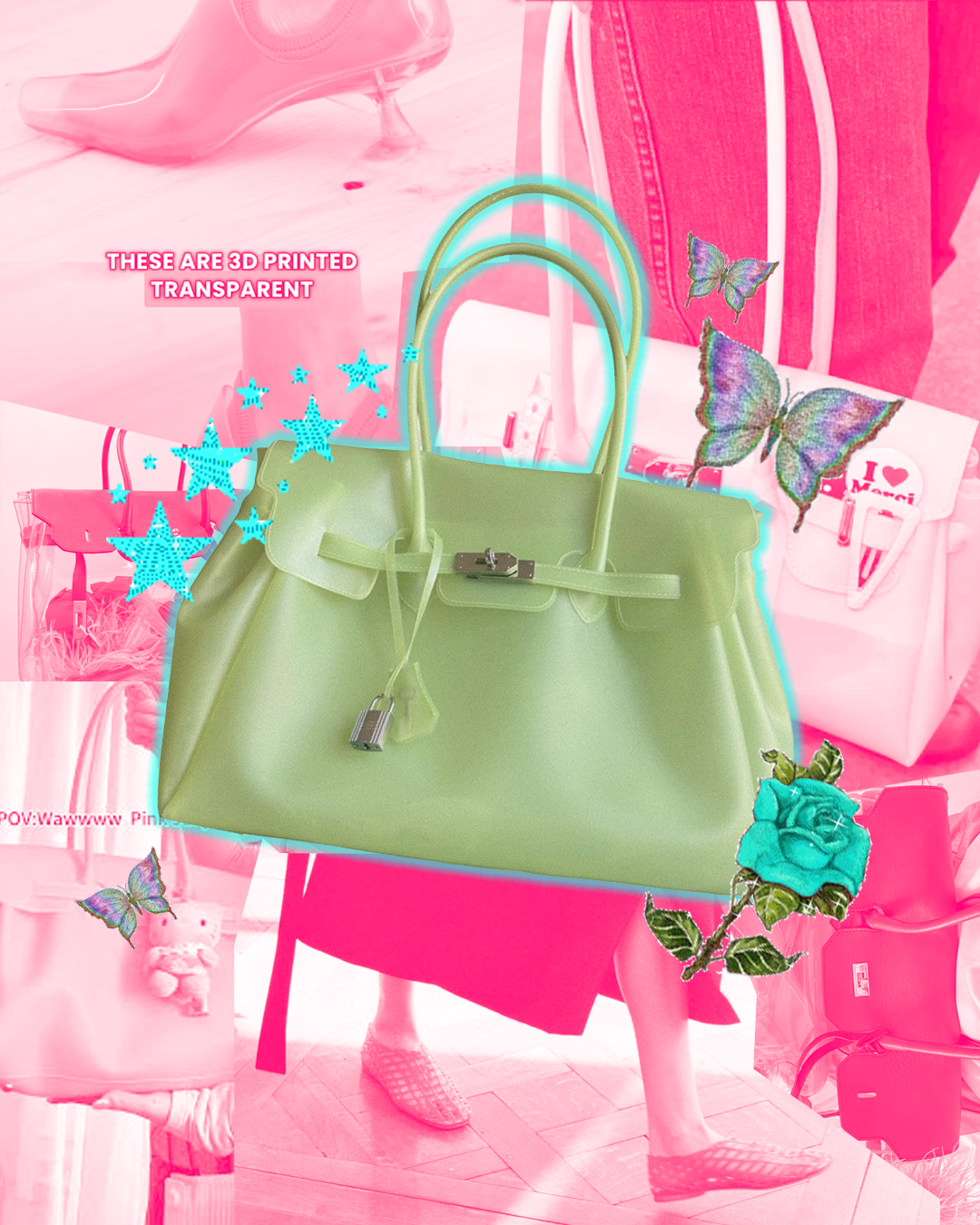
Vinted is teeming with translucent firkins. Loewe unveiled clear PVC booties at Paris Fashion Week. The Met Gala carpet saw a plethora of sheer dresses. The trend forecasters have dubbed 2026 the 'Summer of the Jelly'.
Evidently, see-through is in. But what does our cultural fascination with the transparent actually reveal?
A chance to see inside has always sold. MTV Cribs aired for ten years. Architectural Digest's 'Open Door' videos accumulate millions of views. Curiosity garners an audience. Voyeurism, resold to us as content, becomes something we no longer have to be ashamed of. The internet has democratised the tour, feeds flooded with 'what's in my bag', 'move in', and haul videos.
What was once the occasional stolen side eye through a neighbour's lit window is now a playlist, a series, a subscribe button. The desire did not change; only its social acceptability did. For years now, we have consumed other people's interiors as content. Transparent fashion and accessories are the physical conclusion of this logic. We are so accustomed to seeing inside and through that fashion mirrors the sentiment. Jelly shoes, in their first iteration, were cheap PVC and vaguely futuristic. They return now, doused in nostalgia, yet shaped by a contemporary sense of entitlement to the interior.
___STEADY_PAYWALL___
“Perhaps what the transparent object promises is a shortcut to intimacy. Rather than the slow, uncertain work of being understood, the clear phone case, the opaque bag, the sheer dress, the visible interior offers itself as evidence.”
In late medieval devotional culture, transparency was presented as a spiritual condition. To be luminous, translucent, see-through, was to be pure and closer to the divine light associated with heaven. Dan Creel, writing in 1992, traces how artists evoked the sacred through translucent materials, portraying holiness through material by allowing light to pass through things. Objects used as a vessel to filter the divine. In the visions of Gertrude of Helfta, Mary's womb is described as being transparent as the purest crystal. An image that renders the divine visible and the maternal body a kind of vessel for that visibility.
Sarah Elliott Novacich's 2017 essay 'Transparent Mary: Visible Interiors and the Maternal Body in the Middle Ages' builds from these representations carefully, and she finds a tension. The desire to see inside the female body is framed as devotional, even reverential. But it is also invasive, a desire that truly belongs to the viewer. Mary's transparency is not self-expression. It is something done to her, on behalf of a theological project that needed her body to be legible. The risk Novacich identifies is the erasure that comes alongside it. When the container becomes interesting only for what it contains, the container is discarded or disappears entirely.
‘The Summer of the Jelly’, by contrast, is on the surface, largely self-curated. We are choosing to be seen through. Wearing it on purpose. We have internalised the logic so completely that it now reads as fashion, and as freedom. But just as in Novacich's Mary, the transparency is still conferred from outside, moulded by a gaze that predates and exceeds any individual choice.
The difference is that we have absorbed that rationale so thoroughly we experience it as our own desire. We are not being made visible. We are trying to make a handpicked version of ourselves legible, a physical curation of what we want others to see of us. The objects we want them to think of are the sum of our mess, of our insides.
In addition, a sheer dress requires another thirty minutes of deciding what underwear will look the best peeking through. See-through takes a little more work. Contributing to Naomi Wolf’s concept of the ‘third shift’. Outside of the work shift and the unpaid home shift, social pressures construct a beauty shift, the time that is lost to obsession over appearance, for women. While the transparency may be chosen; the labour behind it, less so. To be seen through still requires, first, the work of deciding what is worth seeing.
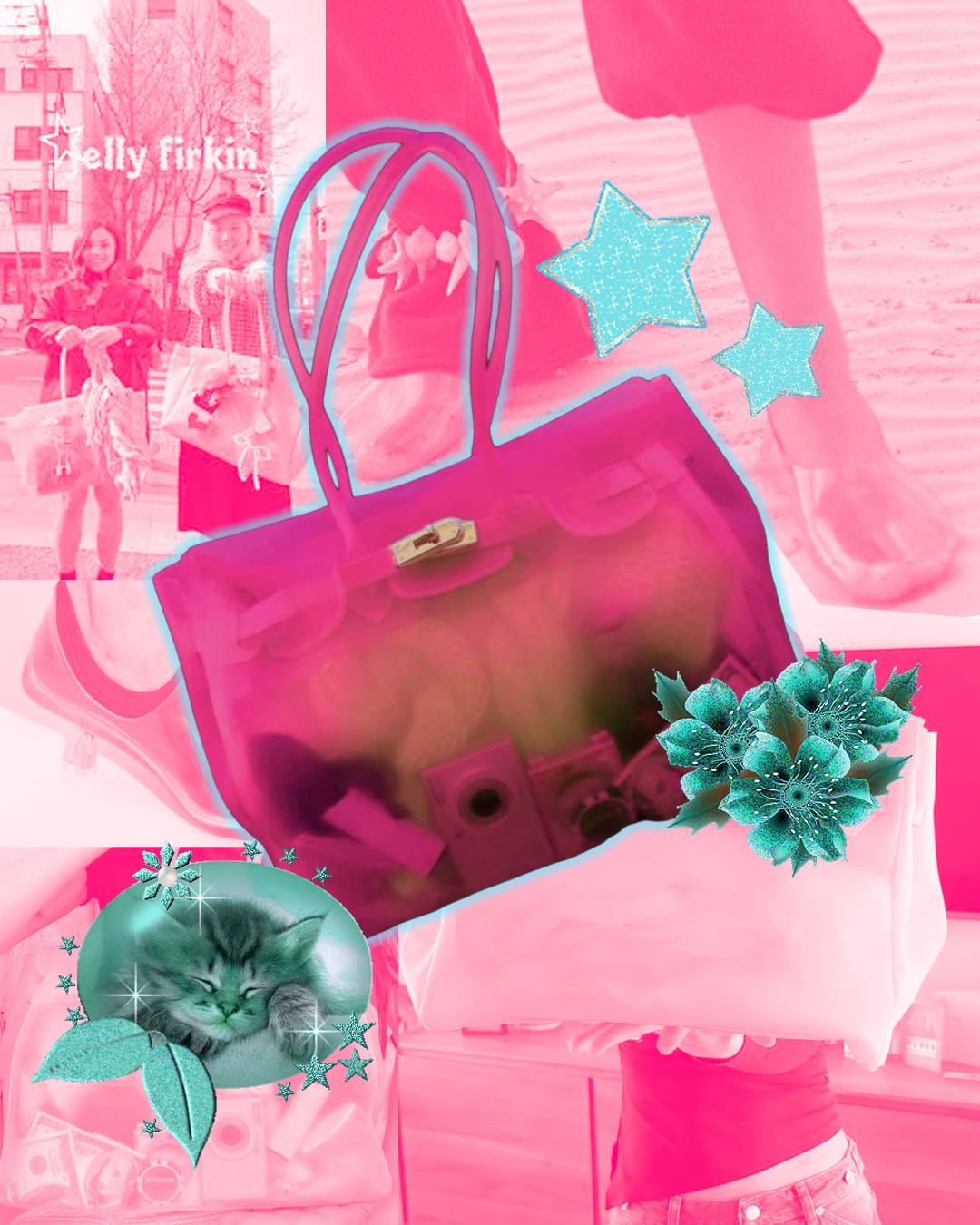
That said, there is something genuinely endearing about a clear case full of mementos. Bus tickets, coupons, charms and handwritten notes pressed up against plastic, whispering tiny stories for anyone close enough to see. It is personal and specific, a miniature portable archive of small experiences, the detritus of a life that is happening. Perhaps it teases a realness that many crave. In an age defined by dramatic and often dangerous aesthetic perfection-hunting, maybe we just want to see a bit of mess, some evidence, some proof that a person exists behind the image. A crumpled receipt. A photo booth strip. But this ‘realness’ depends on how much thought has gone into what is showcased. Whether the mess is contrived or not.
That act of selection is meaningful; it is, in its way, a form of self-authorship. But the display still presupposes a viewer. It still organises the self around its own legibility. The curation performs as candour, and candour has become its own aesthetic. One that can be just as constructed as anything it claims to replace.
The impulse is not new. It runs back through the devotional image to the crystal womb of medieval vision. The desire to see through has always carried a charge. But so has its counterpart; the desire to be seen through, to volunteer the interior before it can be imposed on. Perhaps what the transparent object promises is a shortcut to intimacy. Rather than the slow, uncertain work of being understood, the clear phone case, the opaque bag, the sheer dress, the visible interior offers itself as evidence. Look inside, it says. This is me. As if seeing were the same as knowing.
What changes, across centuries, is who bears the cost of that visibility and how much choice they have in offering it. What stays the same is the structure underneath. A body made transparent, a gaze that finds meaning in the seeing. These are not just trends. They are the latest iteration of a very old question about what it means to be seen through, and why it is something craved by so many.