Is Lesbian Media Representation Getting Worse? From Dyke Tv To Now
Words: Sophie Howe
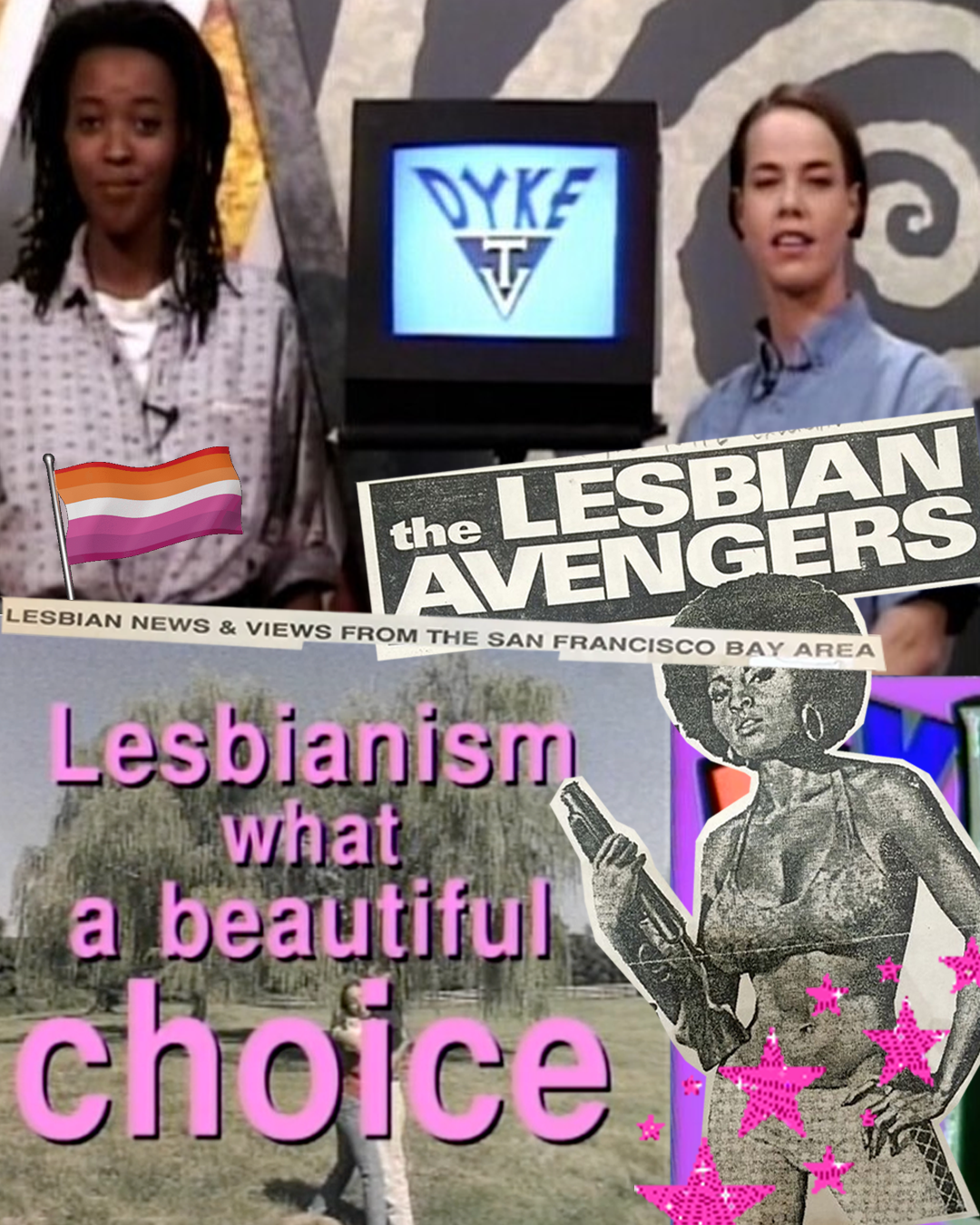
Dyke TV, a half-hour public access cable program that ran in the United States from 1993 to 2005, was a lesbian counter-cultural touchstone. Founded by Mary Patierno, Ana Marie Simo, and Linda Chapman, this alternative media source was born from a need for the activism group The Lesbian Avengers to enter a virtual dimension.
In the more than twenty years since the final episode, social media has allowed for the diffusion of knowledge about queer life and queer theory. The proliferation of media sources provide abundant community while simultaneously atomising our attention, making it difficult to find a central source for lesbian issues. It seems we are still starved for content by and for lesbians that aims to incorporate ideas of anti-capitalism and intersectionality while maintaining the raw earnestness of Dyke TV. Media that challenges viewers to sit through longer form content as our literacy and attention spans diminish by the millisecond is revolutionary in its own right. Could a resurgence of episodic community activism be possible?
Episodes of Dyke TV began with a striking purple background behind cut outs of letters spelling the words ‘Dyke TV’ in a nod to the DIY nature of pamphlets and zines. Viewers were reminded that they were watching “...television to incite, subvert, provoke, and organize.” Functioning as both an information database and a harbinger of connection, the shows moved in quick succession between segments that encompass the human experience. A typical episode contained sections like “The Arts,” “Lesbian Health,” and “I Was a Lesbian Child,” as well as current events that would not be shared on traditional news channels. This lesbian visibility provided a chance for isolated people to feel validated from the comfort of home, while allowing the general public a chance to learn and empathise.
___STEADY_PAYWALL___
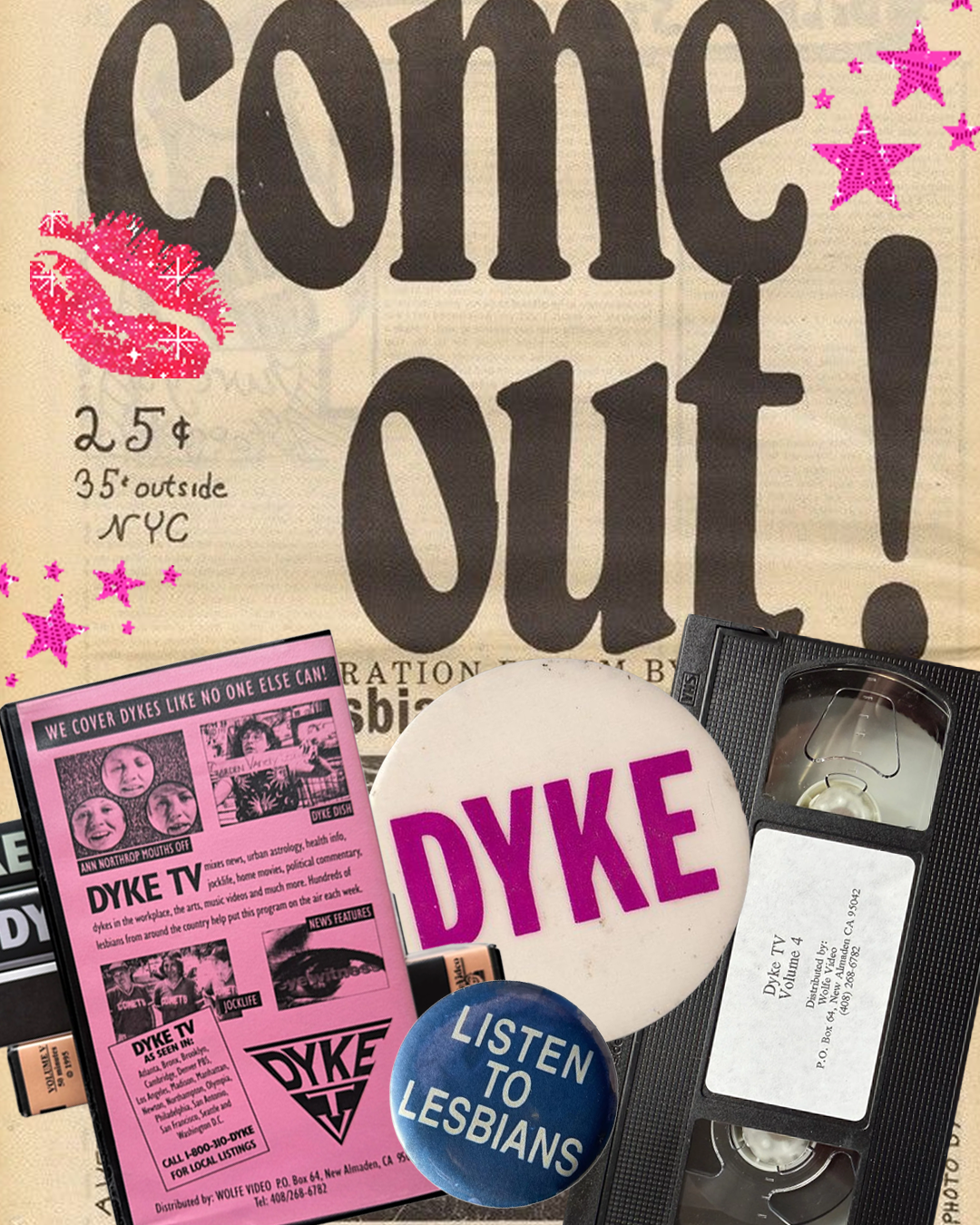
The Lesbian Herstory Archives in New York City, which since 1974 has held the world’s largest collection of lesbian-centered materials, contains extensive footage of Dyke TV. There are also a few volumes available on YouTube, thanks to those who are furthering the goal of Dyke TV’s mission of access for all. This presents a picture of a recent past that can feel so unattainable and unrelatable because of the rapid progression of technology. When I watched my first episode of Dyke TV, I was astounded when within thirty seconds, host Mary Edwards mentioned my hometown, Portsmouth, New Hampshire as a town that voted against basic human rights for gays and lesbians in a 60-40 vote in 1993. Instead of feeling surprised or disappointed, I was overwhelmingly grateful that someone had documented this vote. I wondered what vital histories have been preserved thanks to this program?
“The power in Dyke TV was its ambition to generate care. It was lesbians benefiting other lesbians by telling their stories, not a media outlet sharing click-bait or fulfilling a diversity quota for Pride month.”
It serves as a reminder of how recent the AIDS crisis was, as well as bans of same-sex marriage and same-sex adoption. In one clip from an episode from 1993, an activist speaks of the spread of HIV when medicine and research were imbued with false information and purposeful exclusion. She says “... My sisters are gonna die. They don’t think they can get this disease because you’re not counting us. Change the definition. I want to be counted.”
In another episode from 1994, the struggle of same sex-adoption is explored, allowing audiences insight into the legal hoops couples had to jump through to both be considered mothers in the eyes of the government. A third segment shows the members of “Camp Sister Spirit” an feminist education center and off-grid community in Ovett, Mississippi, that was brutally harassed by white supremacists.
Guests on a segment about softball, colloquially called “dyke ball” talked about the difficulties of meeting women at bars even in New York City. In a pre-dating app, hetero world, Dyke TV also played matchmaker. There is a beauty in thinking about lesbians sitting down at the same time across the United States to watch the same show. This is another sanctity lost to contemporary times: the routine of watching a show at a designated time, honoring it for that temporal period because it couldn’t be easily accessed again.
An integral aspect of Dyke TV’s mission was to empower women by teaching technical skills of video production so they could learn to tell their own stories. This makes Dyke TV have the potential for longevity beyond the eight years that it ran. The lesbian couples I follow on social media who share their lives and families to the public with ease can trace their lineage back to Dyke TV. Akin to Diane Souhami’s 2020 book, ‘No Modernism Without Lesbians’, there would be no gay TikTok without Dyke TV.
There is no lack of queer news that can be easily accessed but much like all contemporary media, it can be focused on trend cycles and pop culture. That’s not to say that there isn’t value in influencer breakups and engaging with queer films, but having autonomy over the narrative is essential for the safety of queer people. The power in Dyke TV was its ambition to generate care. It was lesbians benefiting other lesbians by telling their stories, not a media outlet sharing click-bait or fulfilling a diversity quota for Pride month.
Beyond a desire to fill the nostalgia of a public access show on a shoe-string budget, Dyke TV gave a voice to people who were systematically forgotten, overlooked, and disavowed. Their non-profit, volunteer-run model allowed them to maintain authenticity. At a time in the United States during the convergence of defunding the Public Broadcasting Service (PBS) and the normalization of abuse towards LGBT folks under Trump’s administration, it seems now more than ever we could benefit from an ode to Dyke TV.