
Nia Archives on Emotional Junglism, Tall Poppy Syndrome and Being Shy
Words: Ayan Artan | Photography: Lewis Vorn | Styling: Jessica Skeete-Cross | Makeup: Iliana Mavroeidakou | Hair: Karla Q Leon | Set Design: Juliette Najman | Social Video: Jenn Lehwald | Movement Director: Angelica Wolanska
The Spring/Summer issue is out soon - you can pre-order your copy here.
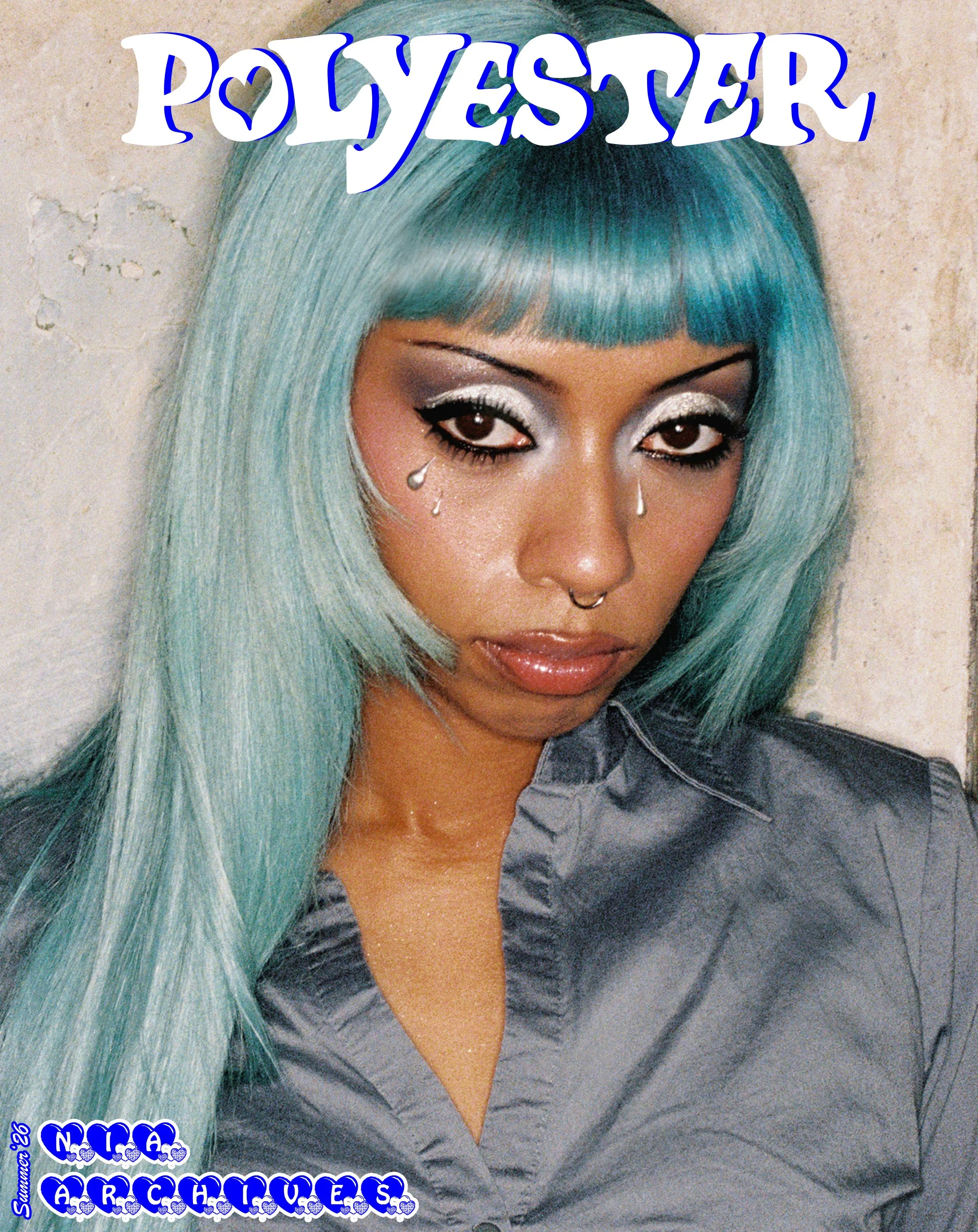
The word sensation reads often as a lazy comfort phrase we journalists reach for to force notoriety upon the subjects of our profiles. It is, though, the only descriptor that feels apt for the British jungle scene’s prodigal daughter, Nia Archives.
Nia released a debut album so iconic, it launched the then-22 year old into the sights of Beyoncé, the Brit Awards (who nominated the Bradford-born, Leeds-raised star thrice for Silence is Loud) and dance music powerhouse Watch the Ride. Her MOBO sits in her home beside the trophy she scored at the NME Awards for Best Producer. The intimate warehouse shows she’d been playing in the UK were soon switched out for packed sets at Sonic Mania in Tokyo, and thousands of gleeful, sweaty festival ravers delighting in her sparky, tumbling breakbeats at Coachella.
All of this with an album written, ideated and brought to life in her bedroom. It is the very best kind of cendrillon, the punk origins young artists dream of and are told to lock away in their minds as delusional. “Sensation” is right - and Nia herself seems to be grappling with the weight of her own come up and the project that entrenched her name in the D&B hall of fame.
“I was quite harsh on Silence is Loud for a lot of last year but as I finish the second album, I’m a little kinder to it because it’s where I was at the time,” she reflects.
We’re over Zoom, both our cameras off: I have spent the better half of the morning braiding my hair; Nia has only just gotten up, having squeezed us into an impossible schedule for the day - which includes playing two shows, at two different New York venues. She’s eloquent despite the early start though, and polite enough to pretend like my question about how she feels ahead of her new album, Emotional Junglist, dropping is a good one.
“Making a second album is stressful. The pressure, the lack of innocence…I made Silence is Loud in two weeks. This album took me a year. It’s a really different process. What I really like about both is I was going for a particular sound and with Emotional Junglist, I doubled down on it.”
Her fear of the sophomore slump is a valid one; the second albums of so many artists have been cast away as failures by the culture, punished for veering too far off their more famous older sibling. It is a limitation that breeds risk averse musicians, genre used to offset experimentation or too much individuality like a cane.
“I hope people allow me the grace to be an artist and experiment and not be bound by the restraints of what dance music should be because I’ve never wanted to be bound by that,” she says. “I’ve always wanted to try stuff and make stuff for fun. As I get further into my career, I feel like everyone just expects the same thing but I don’t want to do that. It’s boring!”
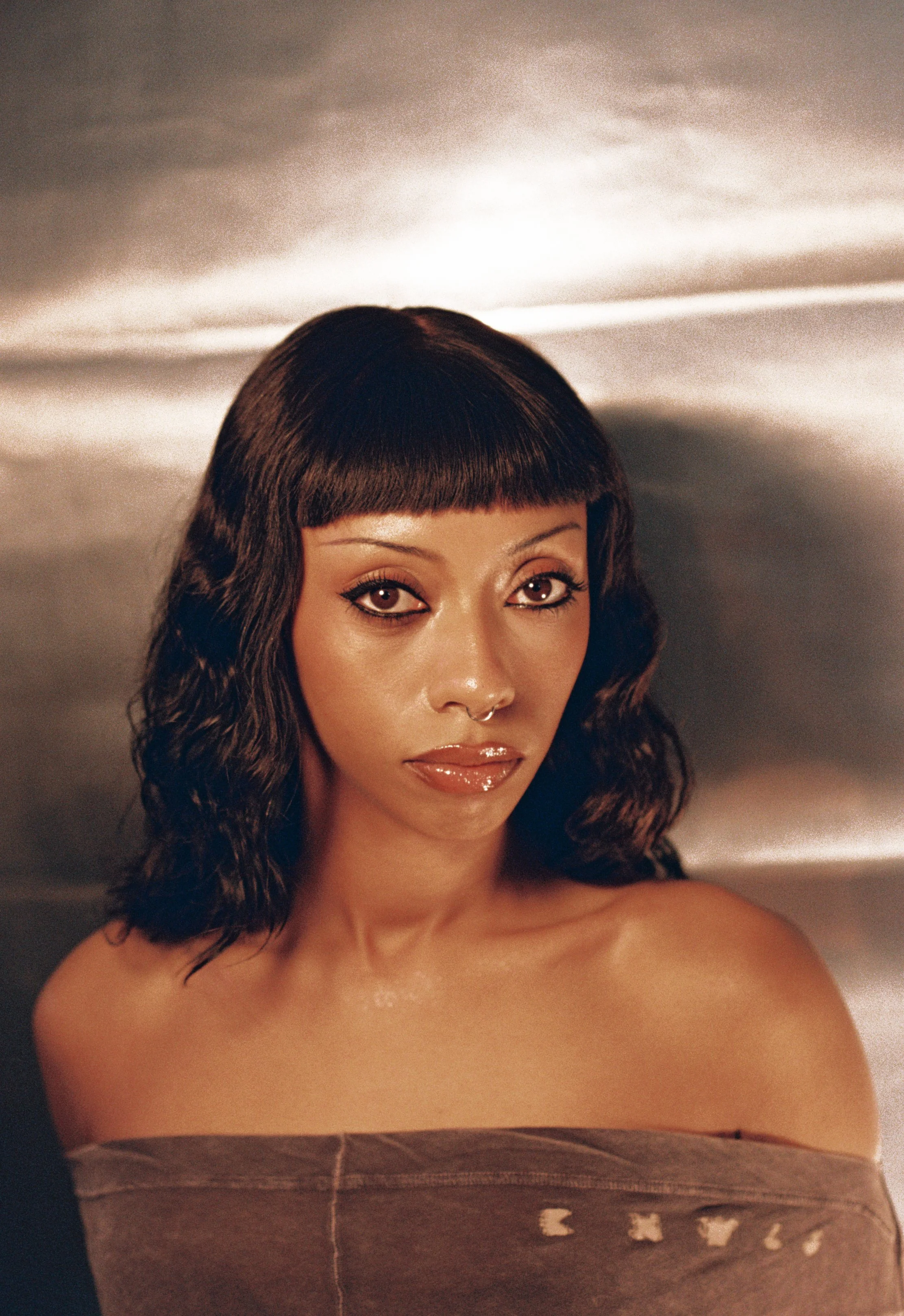
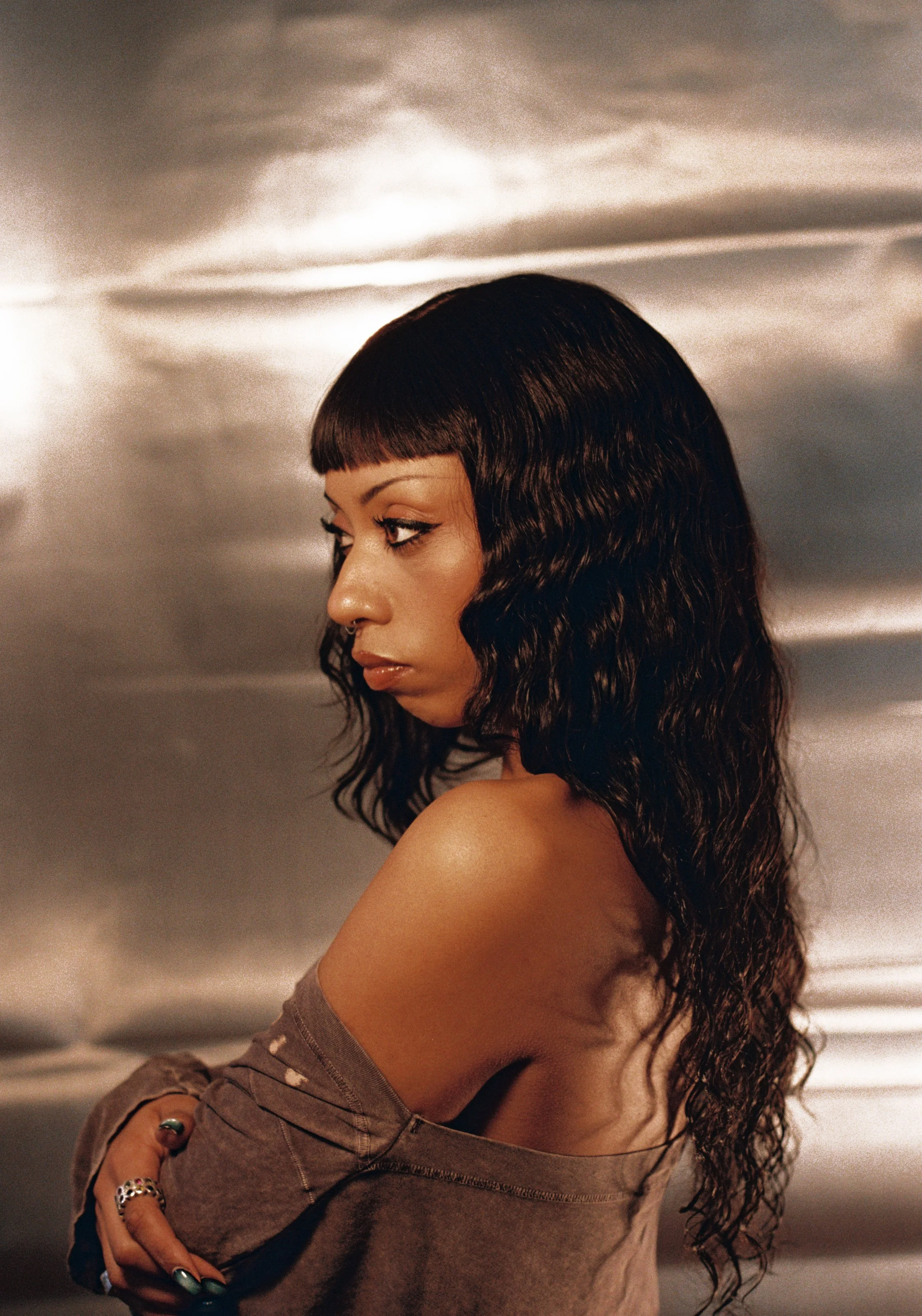
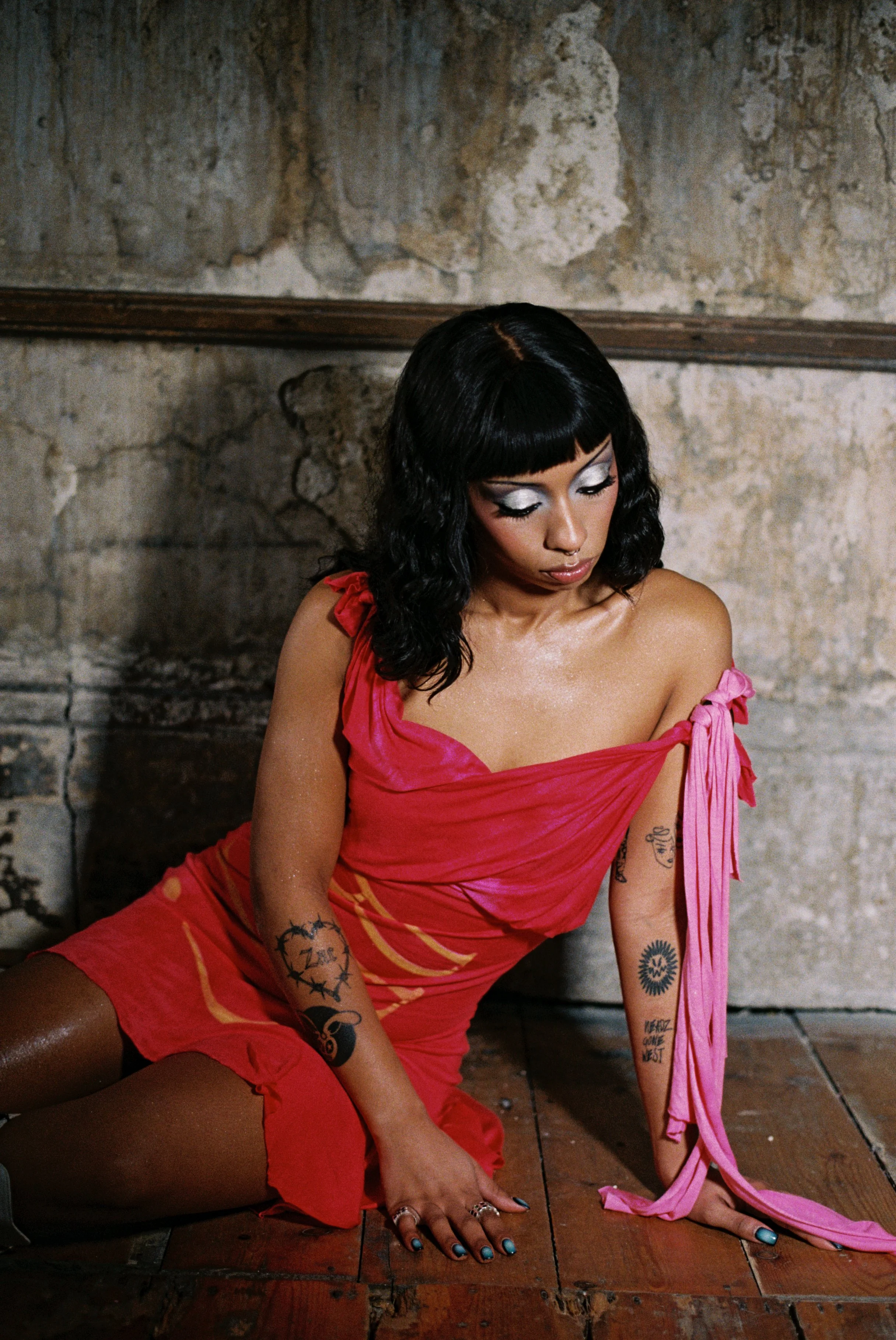
Dress: KNWLS | Ring: Bleue Burnham
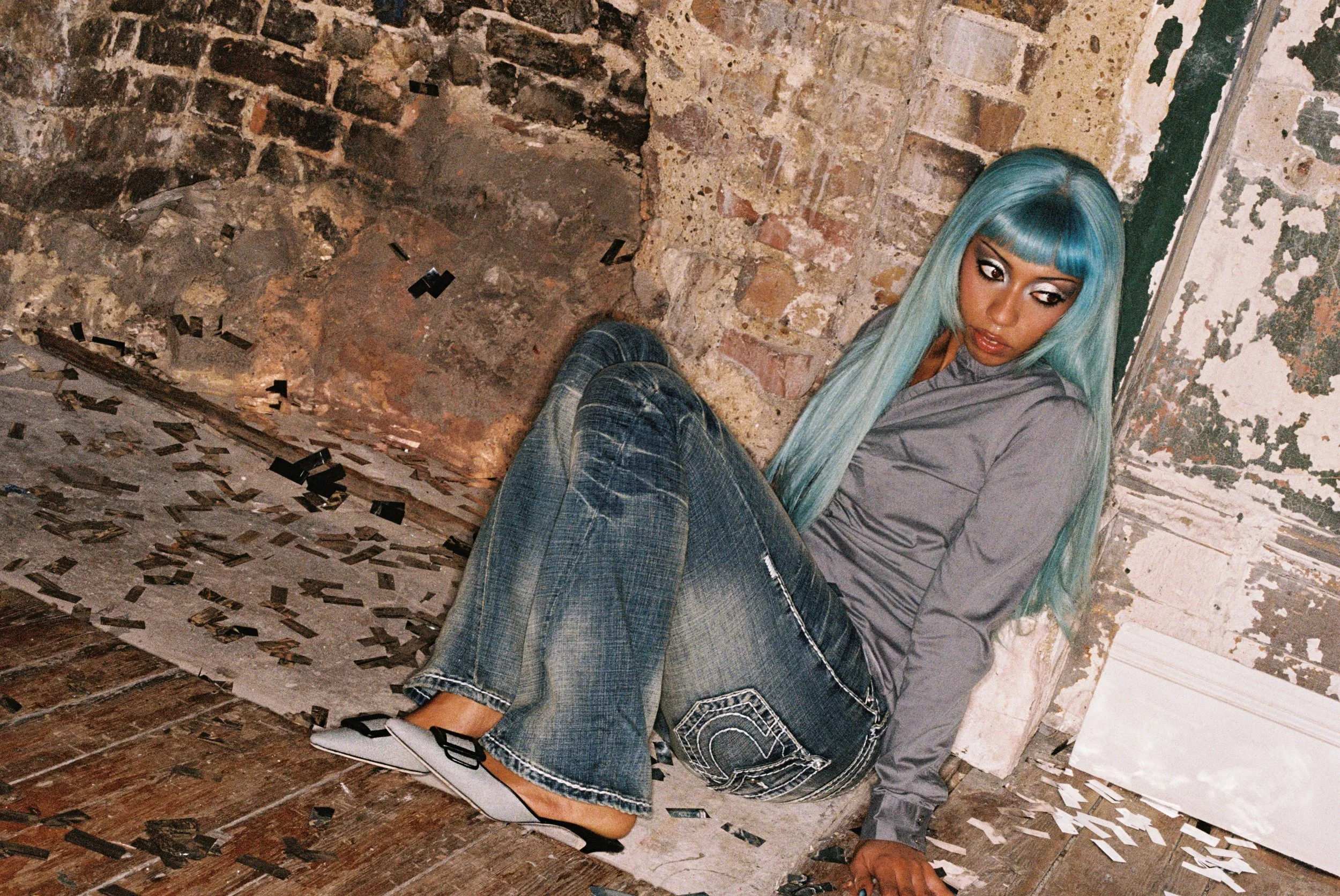
Shirt: Vintage | Jeans: True Religion | Shoes: Manolo Blahnik
“I feel a lot of pressure to make “Baianá” over and over again. Or even“Forbidden Feelingz”. I just feel like I made those tunes for fun. I don’t want to make the same song again. I think my music prior to this album and this era has been a little confusing to people.”
Silence is Loud’s charm comes exactly from the fizzy youthfulness and naivety of the artist who made it. It would not work now, precisely because Nia is not the same person she was when she started out.
She does the intelligent thing here, building on the cheeky Britpop writing and unrepentant jungle beats of work past while giving space to the assured melancholy and introversion our mid-twenties force upon us all; it is a sonic maturation in the clearest sense. “Boys in Blue,” a punk anthem jeering at the alarming decision by an ex to intimidate her by calling police to her door, is just a sample of the kind of assuredness she exhibits on the project.
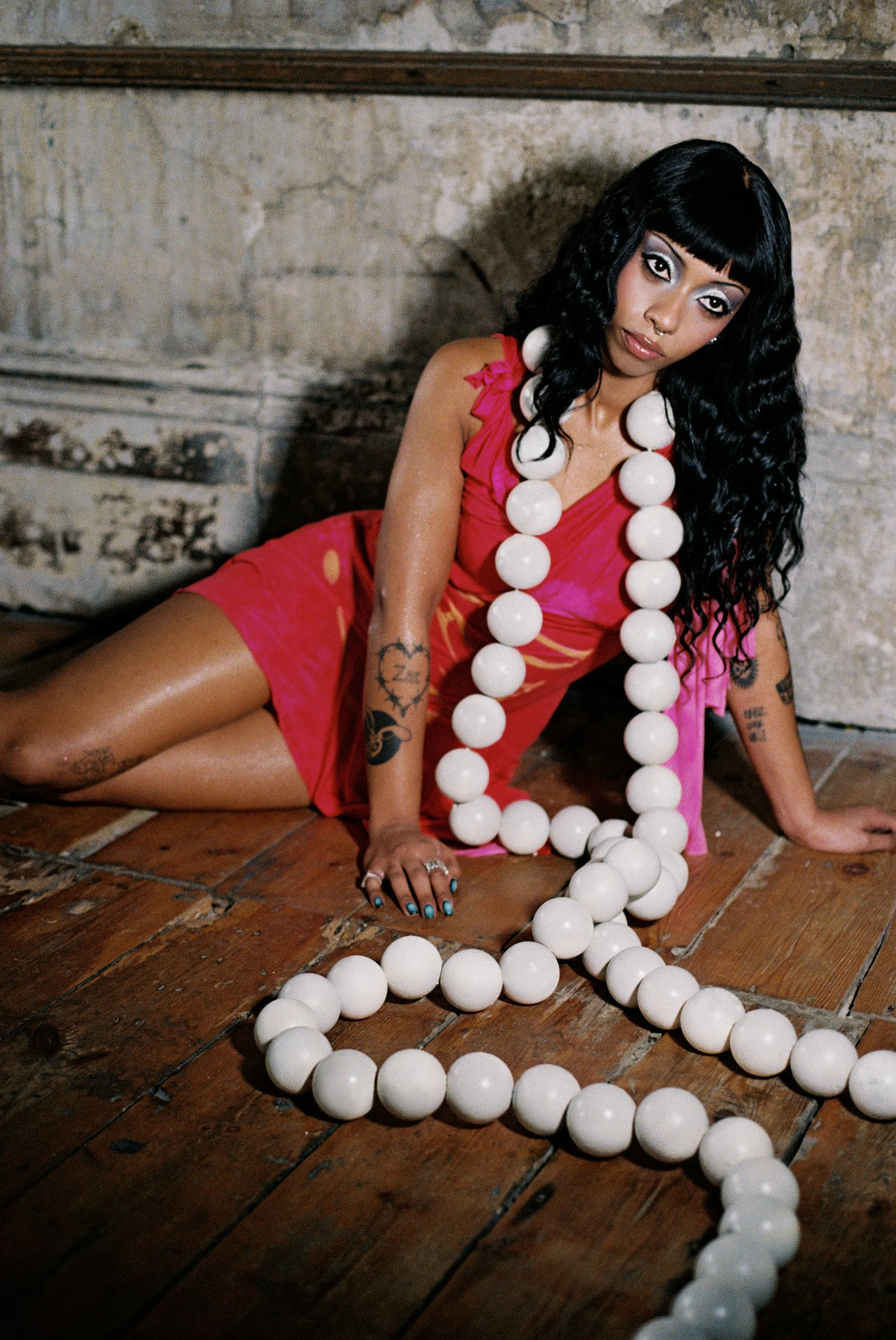
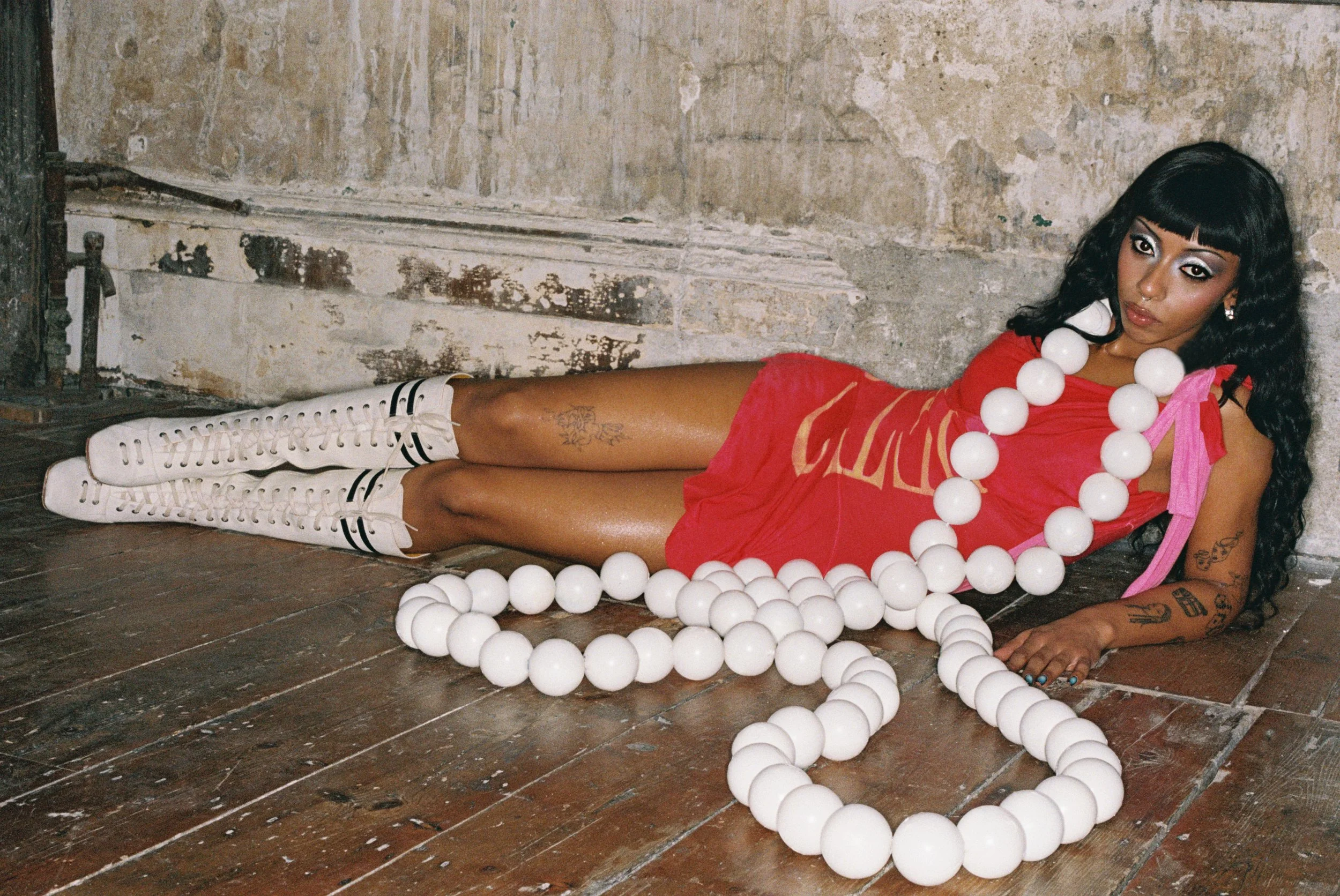
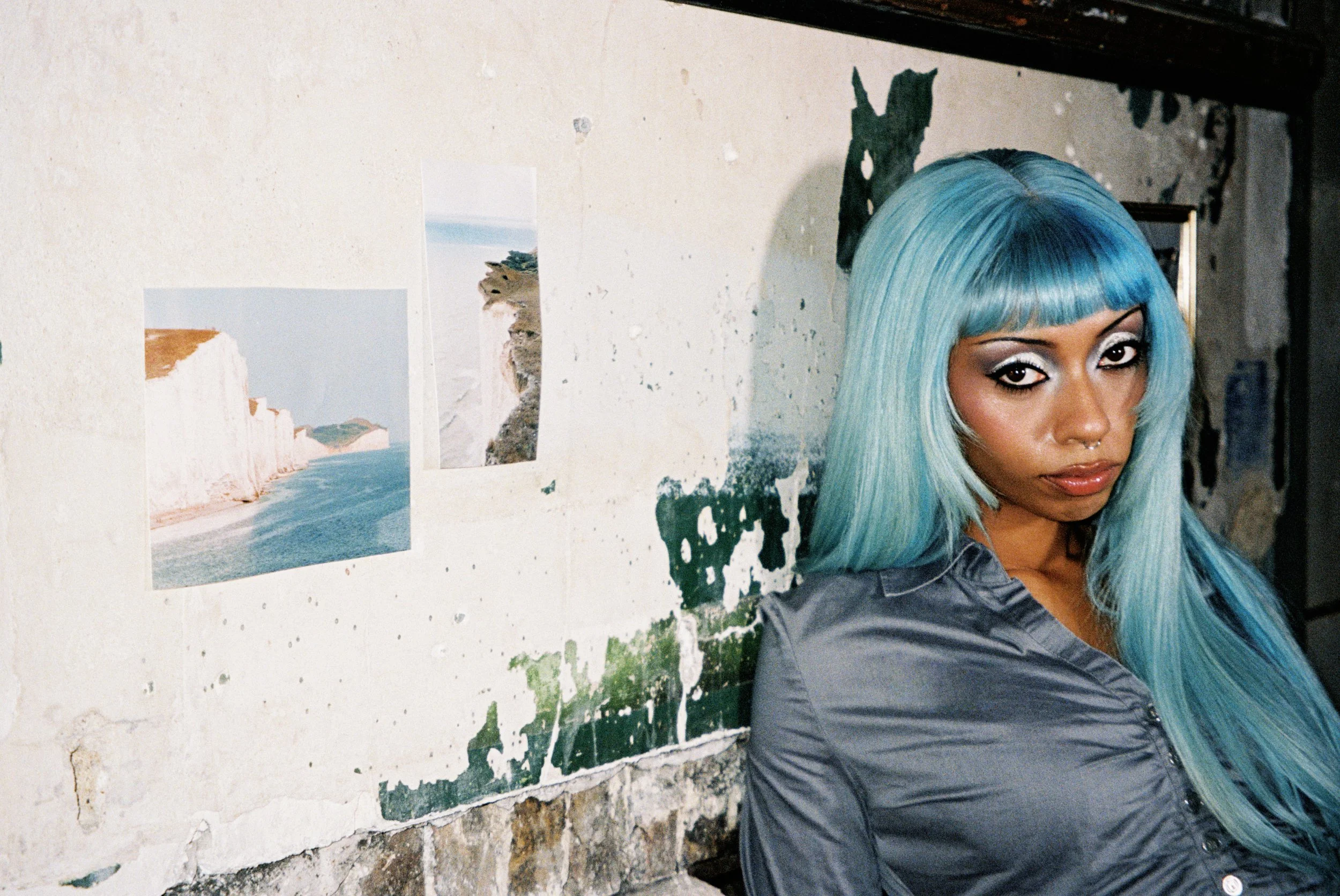
Dress: Big Ez | Boots: Lili Curia
“It’s definitely a more female gaze kind of album, so I want to see a lot more girls at the gigs this year.”
“I’m really happy with that song because it’s a middle finger, a bit of a victory lap. It’s so empowering. Sometimes I feel like I’m moaning?..It’s nice to have a song that’s not like ‘woe is me’. It’s nice to have a song that’s like, ‘I’m that girl. I can’t believe you even dared to do something like that.’”
Many would have licked their wounds in private, but being an emotional junglist requires a candidness that would have been impossible at 22 simply. The point is to cry in the club with your girlfriends and count your battle scars.
“I’ve always written really personal songs but because the production has been so intensely instrumental, I’ve kind of hidden behind the production in previous music. There’s moments of sparseness (on Emotional Junglist), stripped back vibes so I think you can hear what I’m saying a bit more.” She laughs self-deprecatingly. “Weirdly, even though I’ve always been front facing, I feel even more front facing in this era.”
I ask, on a whim, if she’s an introvert.
“I’m naturally a really, really shy person! As I child I was very shy, really quiet,” she says. “In this job though I feel like I have to force myself to be more extroverted than I naturally am.” Her aversion to chaos and attention has cropped up a few times (at one point she tells me that her preferred pre-show ritual is silence: “I like avoiding people before the shows. It sounds really bad but I really don’t like talking”) but you wouldn’t expect it of someone with such formidable energy on stage.
Now, she is once more preparing to face crowds and fans again, this time with an older, wiser version of Nia Archives.
“I’m putting myself out there again. I’ve been doing my own thing away from everyone’s criticism for the past year so I’m preparing to deal with that again.”
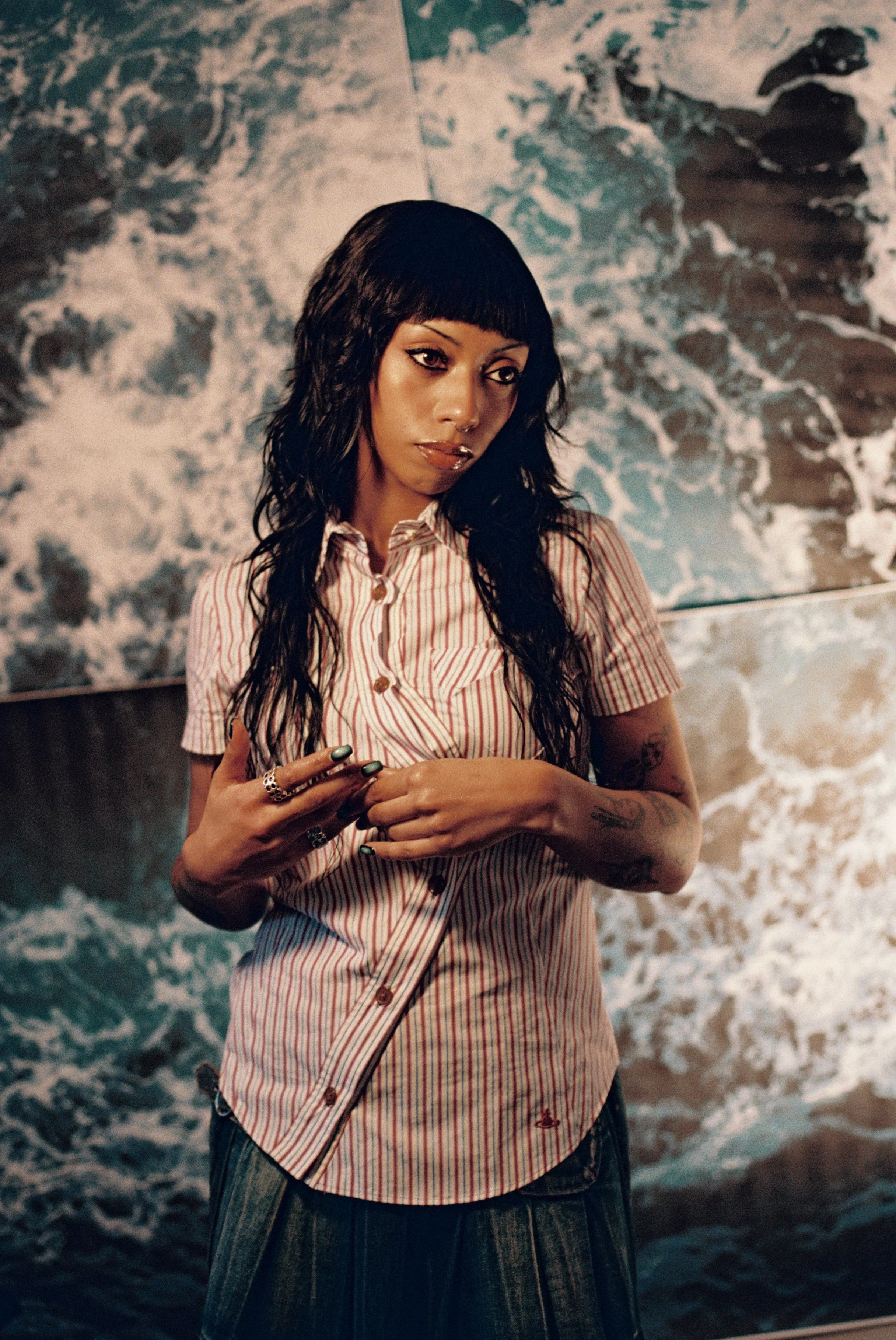
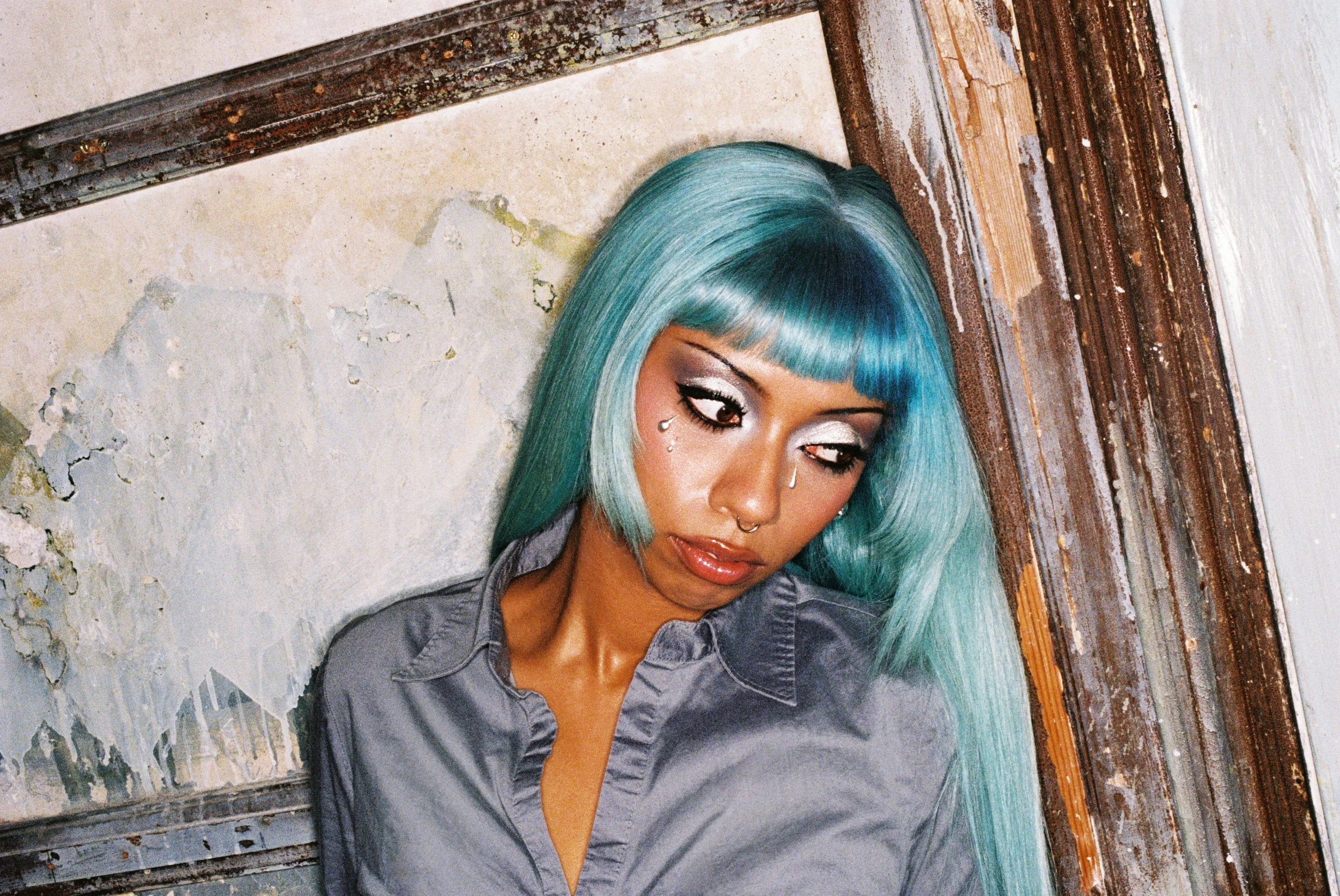
Shirt: Vintage Vivienne Westwood | Skirt: Vintage Miss Sixty | Shoes: Jimmy Choo
She’s being diplomatic about the backlash present in the discourse around both her experimentation across forms as well as the perceived ‘commerciality’ of her work now that her star has risen to BRIT-nominated heights. “Online is just negative vibes. I try to detach from it because people always have so much to say. Even today, I was scrolling TikTok just to wake up and the first thing I see is someone being negative about me.”
Punishment for visibility and mainstream success is not a new phenomenon. Pedestal tearing has become as integral a part of online fandom spaces as thirst edits and shipping culture. Die a hidden gem, undervalued and underpaid or be successful and pay for it with the cultural currency amassed earlier in your career. No artist seems to have squared this incongruous circle, of holding both democratic fame and underground genius.
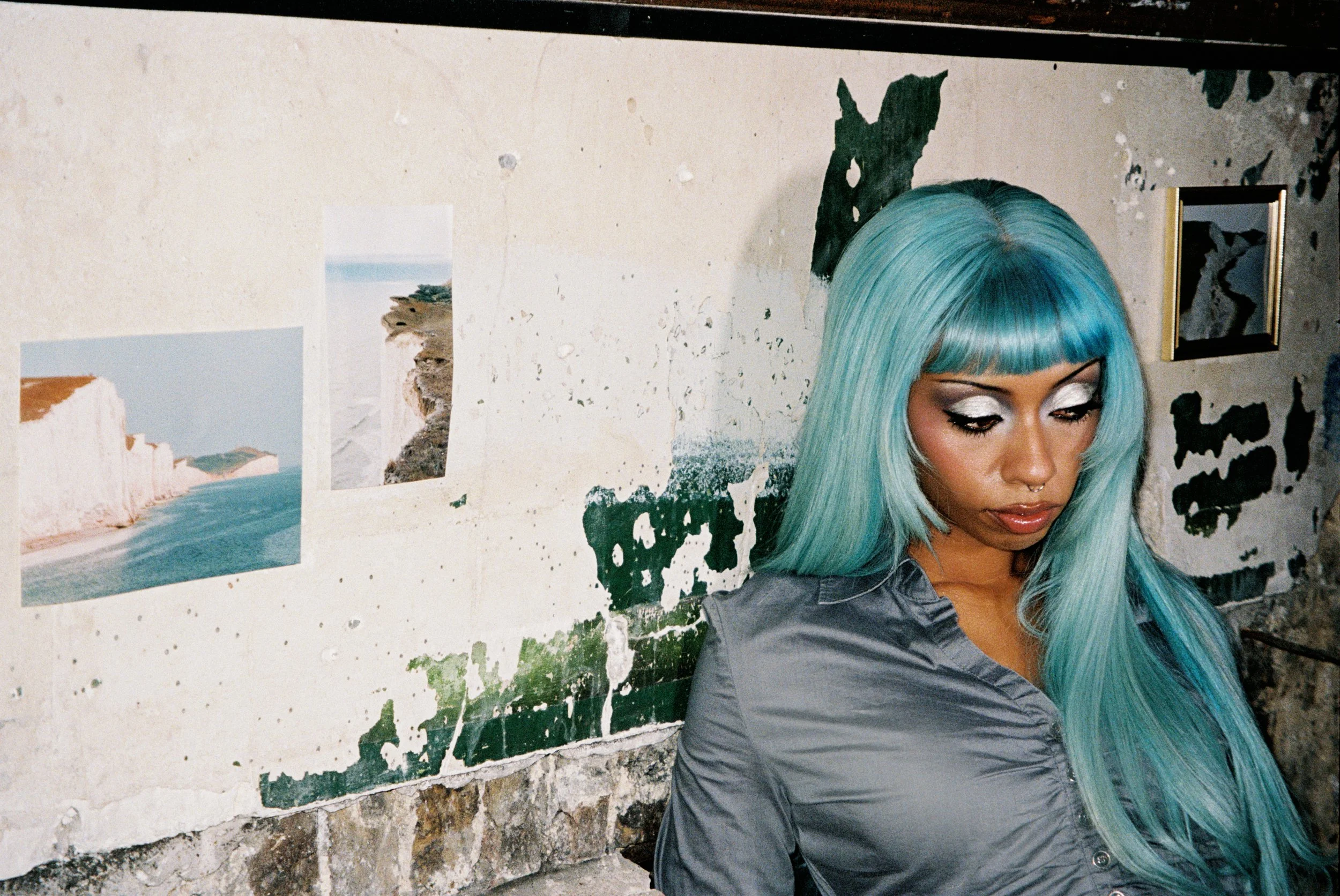
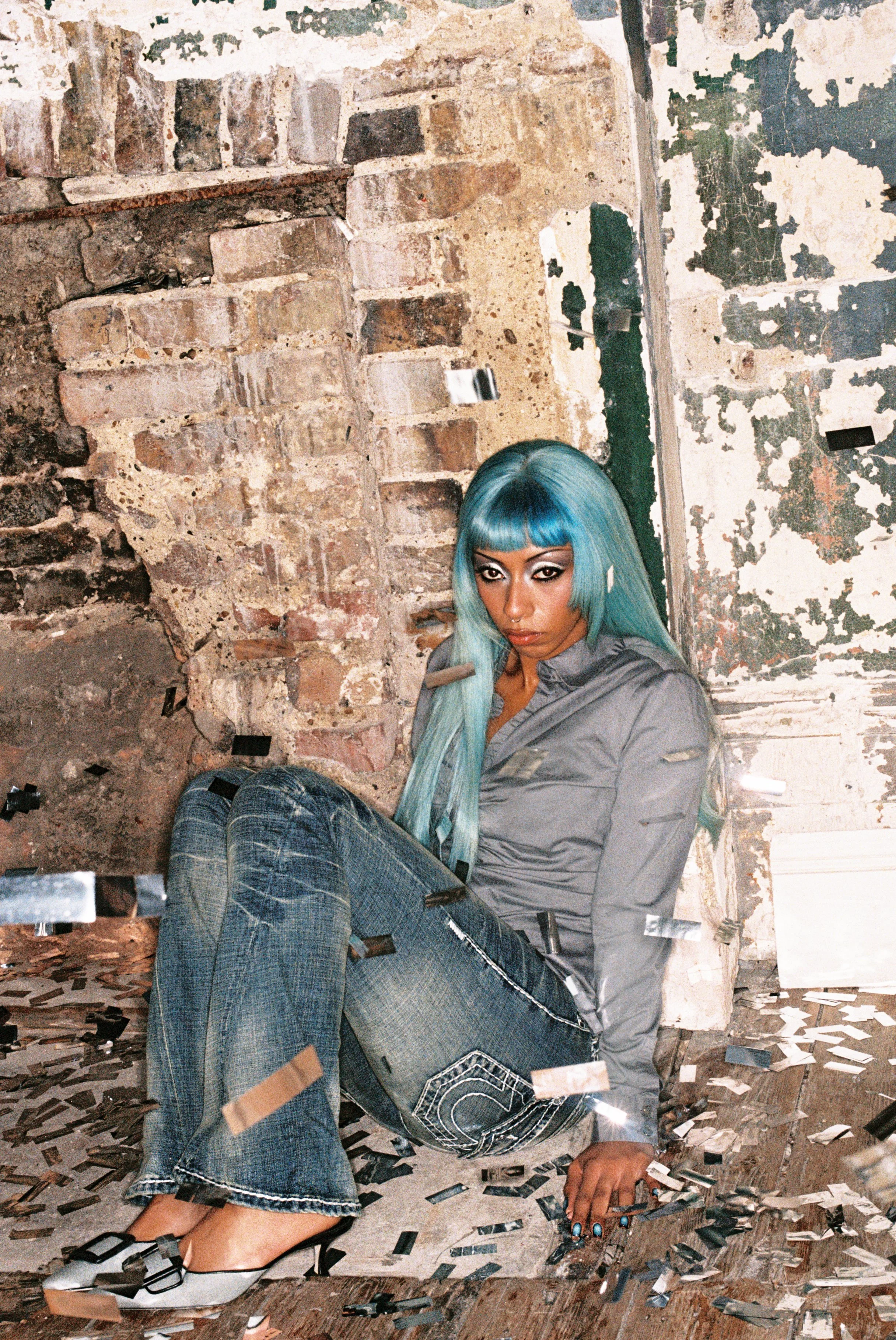
“That’s why everyone is moving to America, not just in music but in everything. It’s just very British. In Australia they call it tall poppy syndrome. When someone gets to a certain level…people start to resent that and they try to humble you. It’s a cultural thing. In many ways I think it’s good to be grounded but it’s kind of a shame when the community you give so much to can be negative when you do all the things they supported you doing. Skepta had that…I just think it’s part of the journey.”
“I care but I don’t because all the people talking don’t even make music. They’re always talking about junglist this, junglist that but I know all the original junglists.”
The other reason for this statue tearing is, of course, racial. A Black woman who has worked hard to diversify the scene raised up as the face of a co-opted genre of music was always going to draw venom. The rave scene has, like all underground scenes, a deep-rooted exclusionism that seeks to erase the mark of the pioneers. It is a sentiment that has crept back up in subtler statements about “dance floors being dead,” for instance. Nia’s take is as level headed as you’d expect. Commerciality is fine, “as long you don’t erase the people that created it because a lot of these people were Black, working class women and men and it’s really important that everyone involved in it, whether you’re underground or a popstar pay(s) homage to the people who came before you.”
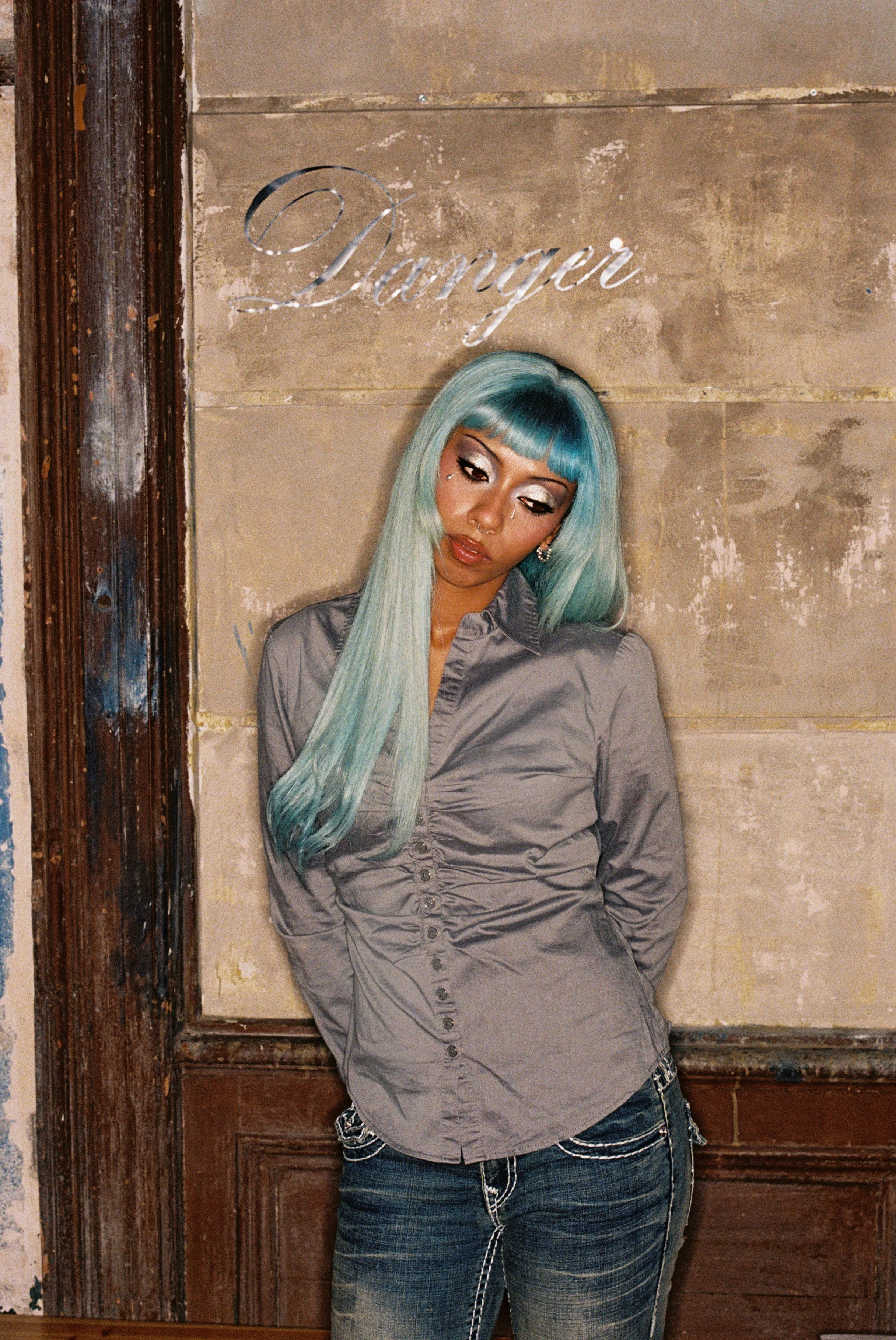
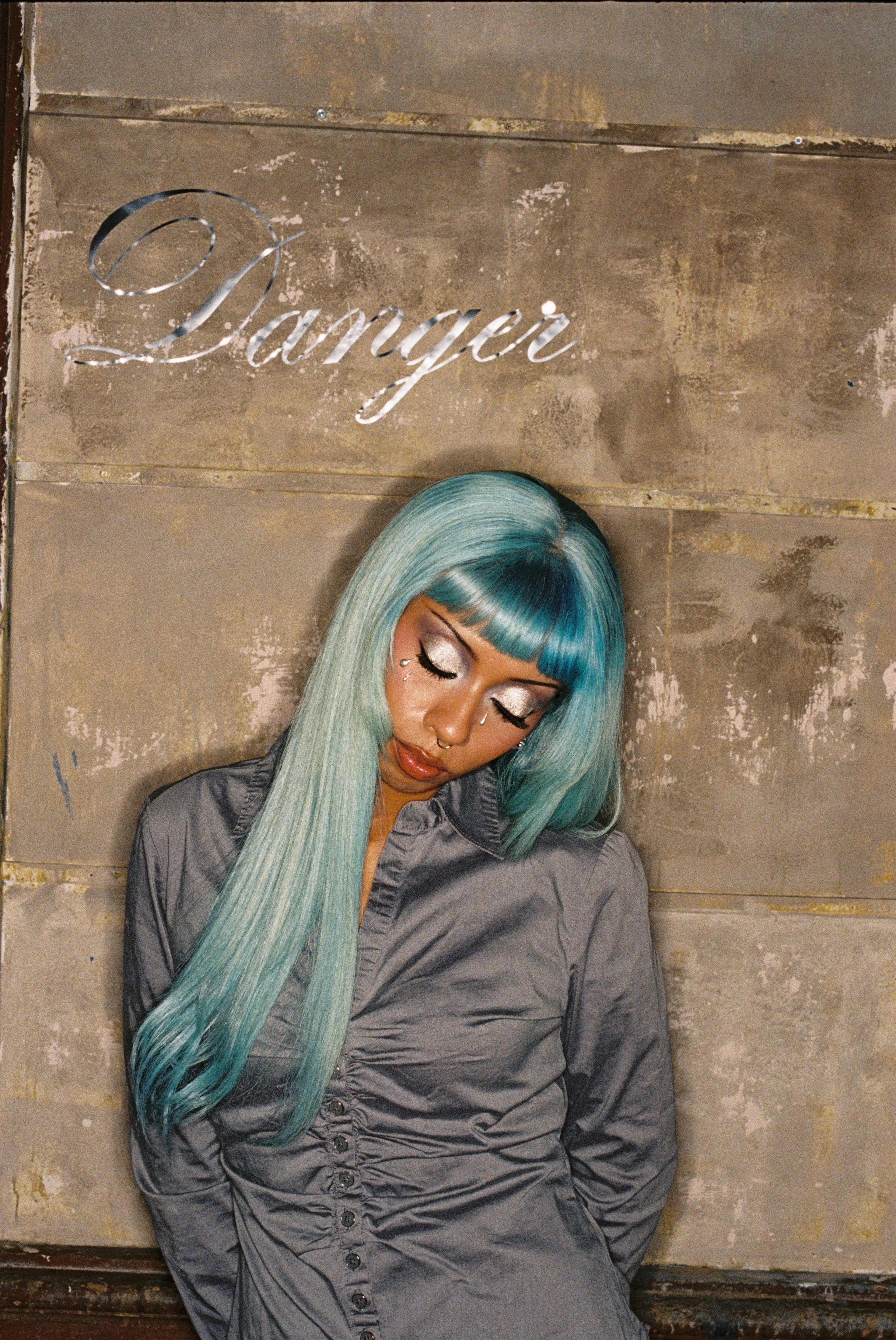
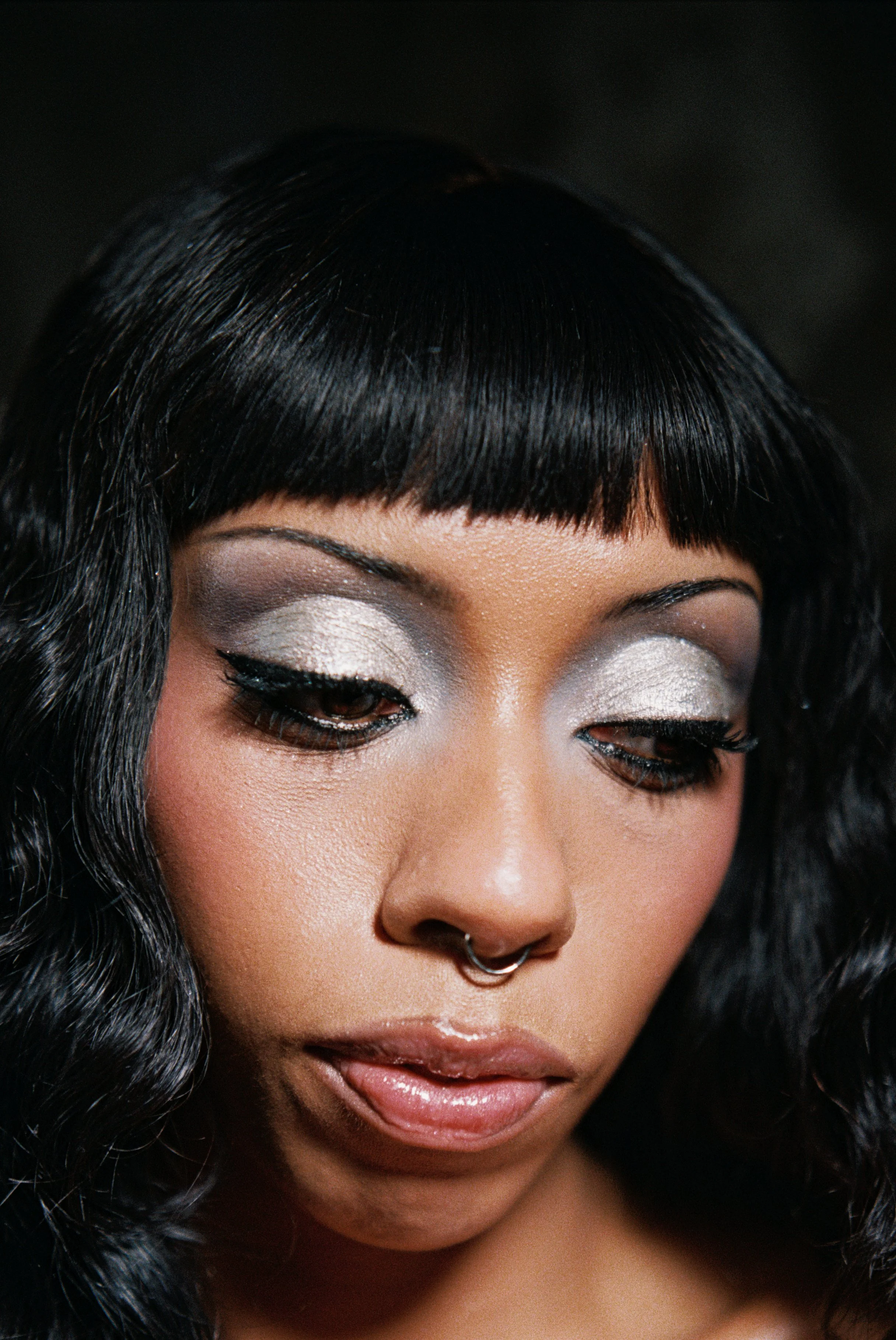
She builds further on the legacy of the DJ Kemistrys and DJ Storms by not copping to the pressure. As she gets closer and closer to the album’s release date, Nia hopes she leaves this era having opened jungle’s doors a little wider.
“It’s definitely a more female gaze kind of album, so I want to see a lot more girls at the gigs this year. I’m really excited about that because that’s where I’m at now. I’m ready to welcome a new audience.”
The Spring/Summer issue is out soon - you can pre-order your copy here.