What Has Happened to Fat Allyship?
Words: Chloe Grace Laws
This topic was chosen by and voted for our Dollhouse members. If you’d like the chance to decide what we cover, join the Dollhouse here.
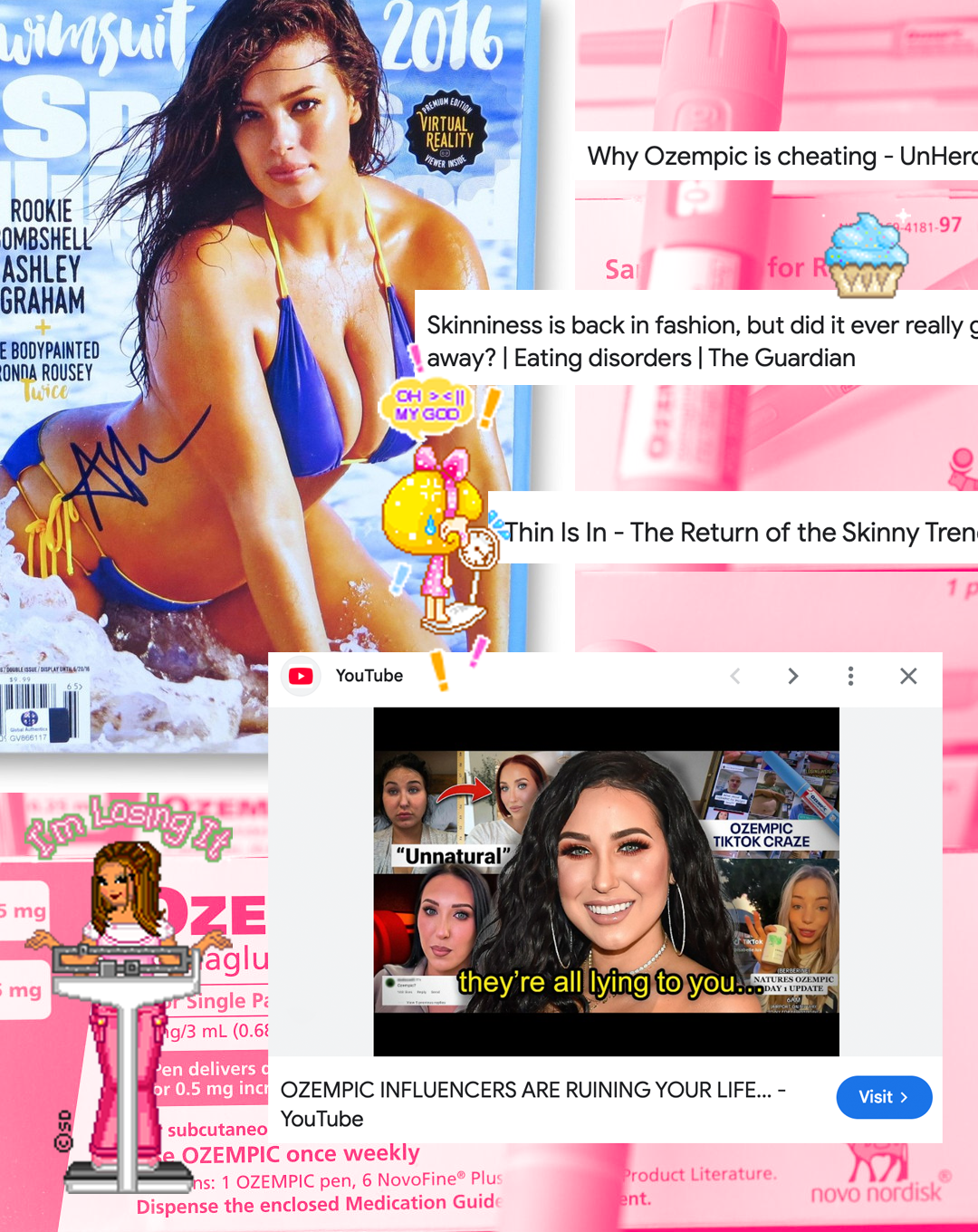
You’ve heard it by now: “thin is in.” Despite declarations such as these, skinniness isn’t just a trend - it is a constant in contemporary society’s narrow definitions of beauty, acceptability, health, and desirability. What has shifted, notably since GLP-1s skyrocketed in popularity since 2023, is just how thin is currently considered ideal, and this new reality is apparent everywhere: across the red carpets of Hollywood, TikTok trends, the return of extreme fad diets being marketed as “healthy”, and our collective language that demonises fatness. “Fat”, it seems, is once again a synonym for “bad”, “unhealthy”, or “ugly.”
Resistance to this surge in fatphobia has been minimal, although not through a lack of trying from activists, but because they are woefully outnumbered. Fat acceptance voices face relentless backlash and exhaustion, the Fat Liberation Movement feels like a hazy memory, and body positivity has largely been co-opted by apolitical, non-fat women who don’t experience marginalisation based on their bodies. It’s rough out there.
My own social media feeds, once full of fat creators, now scarcely platform them. Many of those creators have lost weight, stepped away, or been driven offline by constant abuse. Offline, the popularity of GLP-1 medications and their cultural impact have only intensified anti-fat sentiment. Fat allyship has shrunk: making fat jokes is no longer socially unacceptable, even in supposedly “woke” or leftist spaces. Fat people are once again being filmed in gyms, used as the butt of public pranks, and recast as fair game for verbal or physical abuse.
For Pheebs, 24, who runs the account @fatpheebs and posts about politics, disability, and queerness, this shift is especially visible online. “More so online than in person, I have found there's a lot more jokes around fat people or fat characters, from current media, or previous,” they say. “I think that people, especially thin people, are not realising how harmful this is and the shift that we're having … I think it is something that happens when we see an increase in far-right-wing politics and ideologies, as we see different marginalised groups get attacked more.”
___STEADY_PAYWALL___
During a brief period, from around 2015 until around 2023, fatphobic language appeared to become unacceptable in “woke” circles. The resurgence suggests that anti-fatphobic belief systems never actually took hold for the majority of people, even those who would self-define as being against inequality and bias. Instead, they performed it until it fell out of fashion, letting their real feelings show. In fact, the bias has been getting worse, more violent and more embedded in society.
“That cultural shift – induced by far-right politics, fascism, the cultural response to GLP-1s and a distortion of wellness – of recent years is not abstract; it is intensely lived.”
Philosopher Kate Manne noted in her book Unshrinking: How to Face Fatphobia, published in 2024, that “Harvard researchers reported in 2019 that of all of the six forms of implicit bias they investigated – race, skin tone, sexual orientation, age, disability, and body weight – anti-fatness is the only one that had gotten worse since 2007, when they began to research them. And the majority of people canvassed still harboured explicit anti-fat biases in 2016, at the end of the study.”
Fatphobia is more structural than most people like to accept. It’s often dismissed as a legitimate bias because people see it as fundamentally changeable and a “fault,” which is, ironically, fatphobic thinking. Many see fatphobia as something defined by personal struggle, not systemic oppression, but it is systemic, racial, and cultural. Sabrina Strings wrote in Fearing the Black Body: The Racial Origins of Fat Phobia that historically, “The image of fat black women as 'savage' and 'barbarous' in art, philosophy, and science, and as 'diseased' in medicine has been used to both degrade black women and discipline white women.” Today, these historical myths around fatness and systemic biases still hold strong, and racism and fatphobia remain intrinsically linked. Body weight has become a stand in for “wellness,” a word and environment which demonises fatness and is centred on whiteness (whilst stealing traditions from other cultures).
That cultural shift – induced by far-right politics, fascism, the cultural response to GLP-1s and a distortion of wellness – of recent years is not abstract; it is intensely lived. “I've always dealt with troll comments, and I'd say about 80% of the comments I get that are negative are to do directly with my weight and my size,” Pheebs told me.
If fat allyship feels as though it has disappeared, it’s because it has. What did exist over the last decade was a temporary cultural shift, much of which was performative, because fatphobia was never truly addressed as a systemic issue by the majority of institutions (like medicine). A comprehensive 2024 study found that in the UK there are significant inequities and persistent medical fatphobia, finding that women with severe obesity were 1.5 to 2x more likely to report poor experiences with their healthcare clinicians versus women with healthy weight.
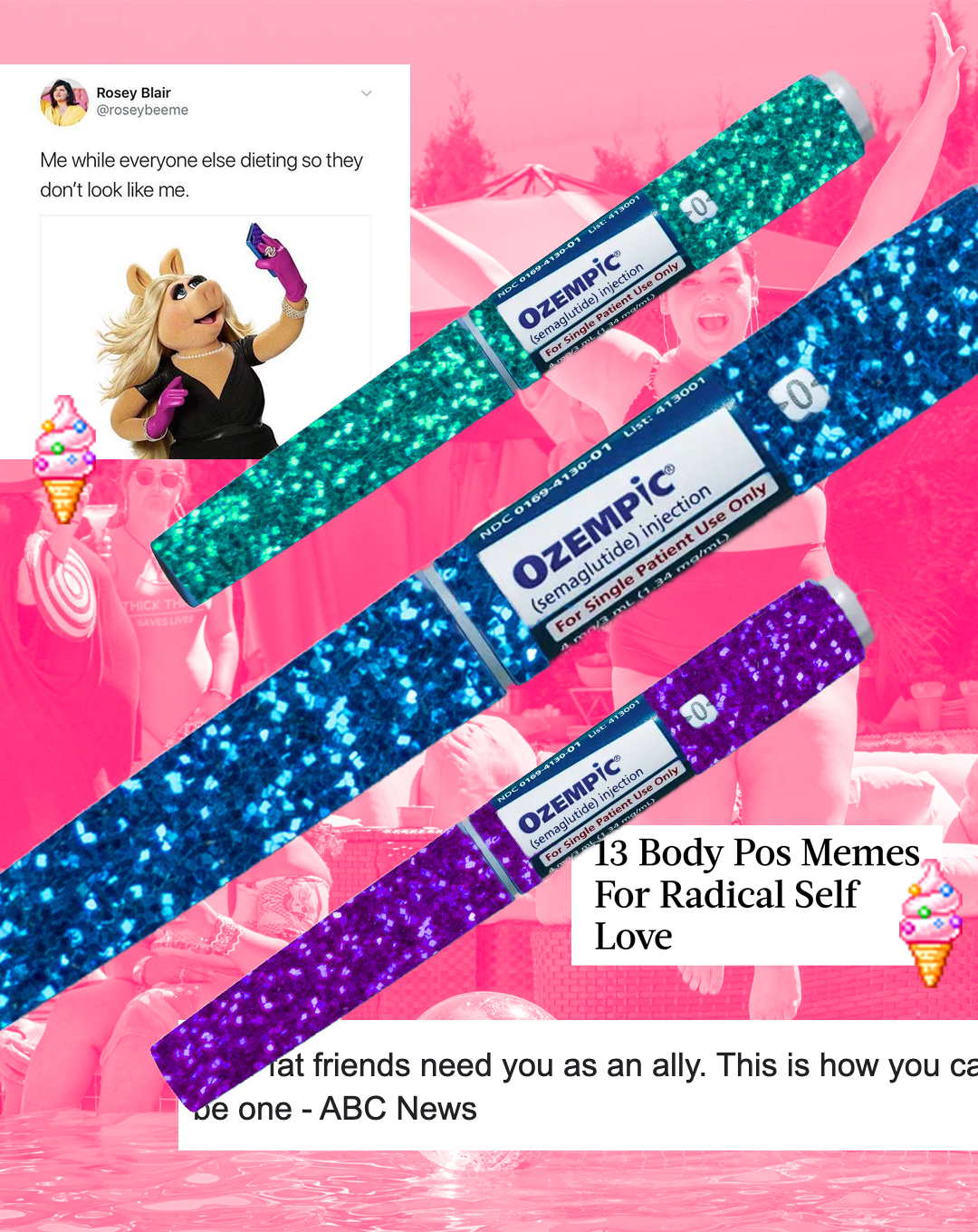
Many don’t feel that they need to be allies to fat people because they don’t actually see fat people as being structurally oppressed. Pheebs says they feel afraid to speak openly about fatness despite long experience discussing it, believing there’s a lack of support from thin people, largely due to limited understanding of how deeply ingrained fatphobia is in how people view themselves and others. Fatness is something society sells as a fault that can be cured, especially now that GLP-1s are heralded as a “miracle cure” to weight gain, and it drives this messaging home by playing on individualism and harnessing the cruelty of neoliberal capitalism, isolating people from community and discouraging any real forms of empathy and allyship.
For fat allyship to embed in society in any meaningful way, first, society would have to undo the mass dehumanisation of fat people. Then, it would have to accept and unpick how deeply entrenched anti-fatness is in our culture, thin people would have to confront how it affects their own lives, and a mass shift would need to happen in our language, media, and even in our leftist politics. Only then could real fat allyship exist. Until then, the brainrot epidemic will continue to hook itself into the brains of young women, telling them “nothing tastes as good as skinny feels” in increasingly manic ways, and propelling them to pour all their attention into their bodies, and not their personhood.